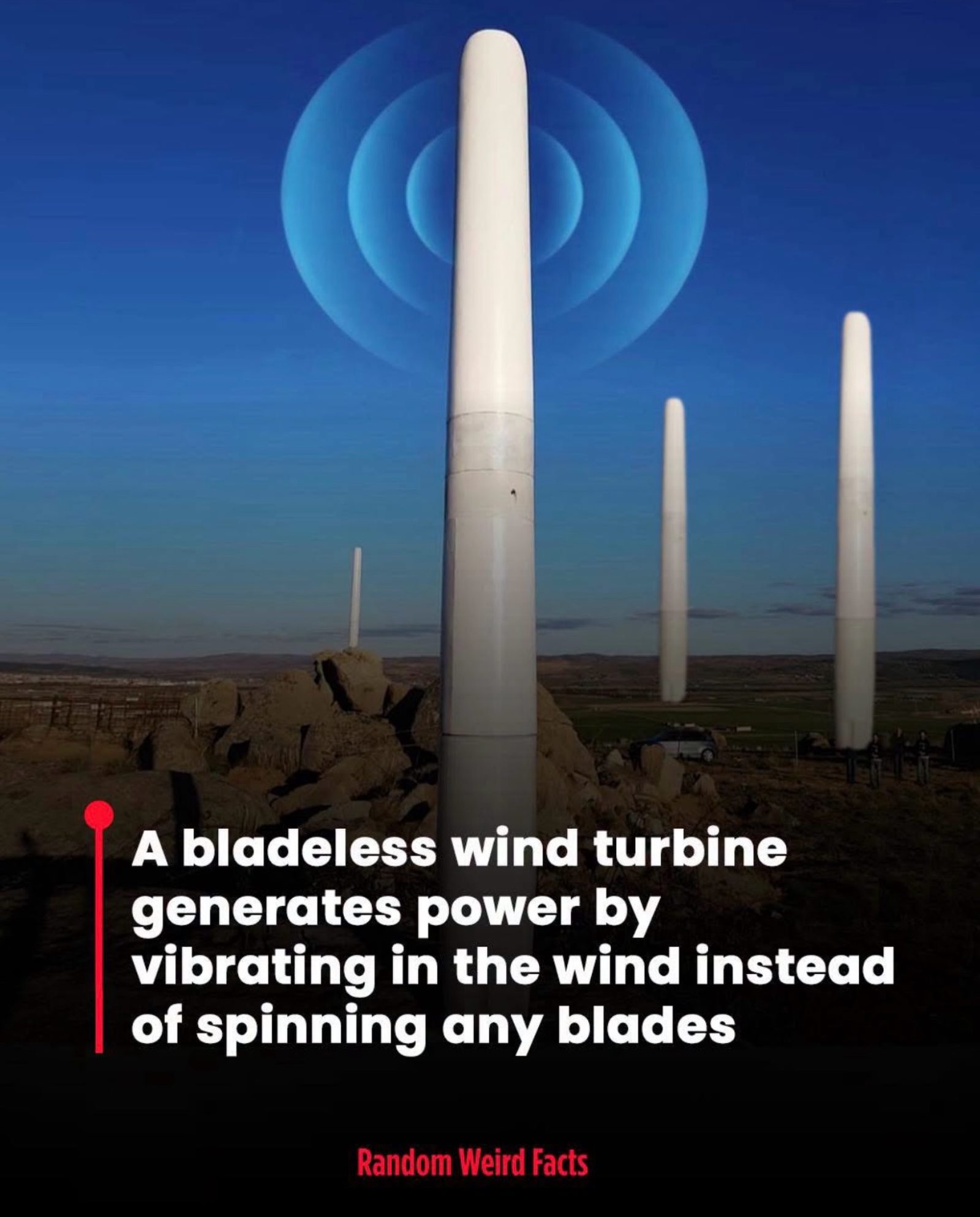
Bladeless Wind Turbines
Bladeless wind turbines represent a significant innovation in the realm of renewable energy, offering a quieter, more bird-friendly alternative to traditional wind turbines.
Context / Why this matters
Bladeless wind turbines generate power through a unique mechanism called vortex shedding or aeroelastic resonance. Unlike conventional turbines, which rely on spinning blades to convert wind energy into electricity, bladeless turbines use a slim cylindrical mast that sways in the wind. This innovation addresses several key challenges associated with traditional wind turbines, making it a compelling option for the renewable energy sector.
Vortex Bladeless: A Pioneering Approach
The Spanish company Vortex Bladeless has pioneered this technology, developing a wind generator that eliminates spinning blades, gears, and other moving parts. This design not only reduces the risk to birds but also significantly lowers maintenance requirements. The mast's vibrational motion is converted into electricity by an alternator, making the process both efficient and reliable.
Swaying in the Wind
The core of the bladeless wind turbine is a cylindrical mast that sways back and forth in the wind. This movement, known as vortex shedding, creates a self-sustaining oscillation that generates mechanical energy. The process is surprisingly efficient, harnessing the wind's energy without the need for complex rotating parts.
The Alternator
An alternator is a crucial component of the bladeless wind turbine. It converts the mechanical energy produced by the swaying mast into electrical energy. This conversion process is highly reliable and requires minimal maintenance, making it an attractive option for remote or difficult-to-access locations.
Quiet Operation
One of the most significant advantages of bladeless wind turbines is their quiet operation. Since they do not have spinning blades, they produce far less noise than traditional turbines, making them ideal for residential areas and environmentally sensitive locations.
Low Maintenance
The absence of moving parts and rotating blades means that bladeless wind turbines require significantly less maintenance. Traditional turbines often need regular inspections and repairs due to the wear and tear on their spinning components. In contrast, the simple design of bladeless turbines ensures a longer lifespan and lower operational costs.
Bird-Friendly Design
Birds and bats often collide with traditional wind turbines, leading to injuries or fatalities. Bladeless turbines, with their non-rotating design, pose a much lower risk to these animals. This makes them an environmentally friendly choice, aligning with the goals of sustainable energy production.
Practical Tips
If you're considering adopting bladeless wind turbines for your energy needs, here are some practical tips to guide you:
Site Selection
Choose a site with consistent wind patterns. Bladeless turbines are particularly effective in areas with moderate to strong winds, as the swaying motion relies on the force of the wind to generate energy.
Installation
Ensure that the installation site is accessible for initial setup and any necessary maintenance. The turbines can be installed in a variety of locations, including residential areas, farms, and remote communities.
Permitting
Check local regulations and obtain any necessary permits. Many regions have specific guidelines for renewable energy installations, and compliance is essential to avoid legal issues.
Partnerships
Consider partnering with a reputable energy company or installer. Vortex Bladeless and similar companies offer comprehensive solutions, including design, installation, and maintenance services.
Important Takeaways
Bladeless wind turbines offer a revolutionary approach to renewable energy, combining efficiency, environmental friendliness, and cost-effectiveness. Their unique design addresses the challenges of traditional turbines, making them a promising option for the future of clean energy.
Conclusion
Bladeless wind turbines, such as those developed by Vortex Bladeless, represent a significant advancement in renewable energy technology. Their innovative design, which harnesses the power of vortex shedding, provides a quieter, more bird-friendly, and lower-maintenance alternative to traditional turbines. As the world continues to seek sustainable energy solutions, bladeless wind turbines are poised to play a crucial role in meeting our energy needs while minimizing environmental impact.
Watch the Reel
Questions readers ask
How do bladeless wind turbines generate electricity?
Bladeless wind turbines generate electricity through a process called vortex shedding or aeroelastic resonance. Instead of using spinning blades, they employ a cylindrical mast that sways in the wind, converting wind energy to electricity.
What makes bladeless wind turbines safer for birds?
Bladeless wind turbines are safer for birds because they do not have spinning blades, which are a common cause of bird fatalities. The swaying mast design minimizes the risk of collision and injury.
How do bladeless wind turbines reduce noise?
Bladeless turbines reduce noise by eliminating the spinning blades, which are a significant source of sound in traditional wind turbines. The swaying motion of the mast generates much less noise, making them a quieter alternative.
Who is the leading company in bladeless wind turbine technology?
The Spanish company Vortex Bladeless is a pioneer in this technology, developing innovative bladeless wind turbines that offer a more eco-friendly and peaceful alternative to traditional wind turbines.
Are bladeless wind turbines as efficient as traditional wind turbines?
Bladeless wind turbines are designed to be efficient in specific conditions, particularly in urban and low-wind environments. While they may not be as efficient as traditional turbines in high-wind areas, their benefits in terms of noise reduction and bird safety make them a valuable addition to the renewable energy landscape.
What are the benefits of bladeless wind turbines for urban areas?
Bladeless wind turbines are an excellent choice for urban areas due to their low noise levels and reduced risk to birds. Their compact design and quieter operation make them more suitable for residential and urban environments.
How does the swaying mast of a bladeless wind turbine work?
The swaying mast of a bladeless wind turbine generates power through aeroelastic resonance, where it oscillates at a specific frequency in response to the wind. This movement is converted into electrical energy, creating a more efficient and safer energy source.
Related deep dives
Similar reads based on topic and creator.


Recent articles
Fresh deep dives from the latest Reels we unpacked.




Comments
Be the first to comment.