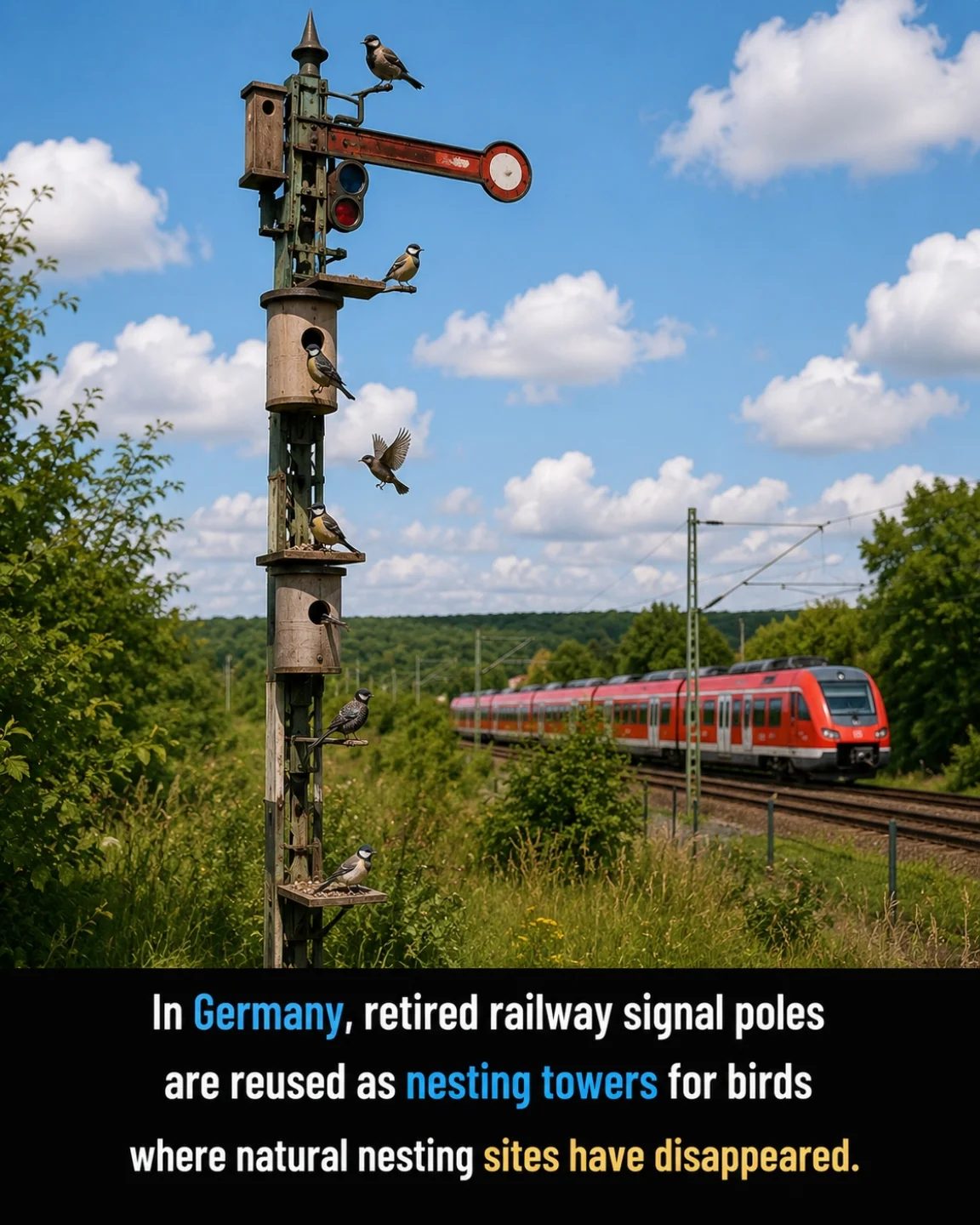
Railway Signal Poles as Bird Habitats
In Germany, retired railway signal poles are repurposed into nesting towers for birds, providing crucial habitats where natural nesting sites have diminished. This innovative approach showcases a harmonious blend of industrial infrastructure and wildlife conservation.
Context / Why this matters
In many regions, urbanization and industrial development have led to a decline in natural habitats for various species, including birds. Traditional nesting sites such as trees and cliffs are often destroyed or disturbed, leaving birds with fewer places to build their homes and raise their young. This issue is particularly pressing for small bird species like blue tits, which rely on specific conditions to thrive.
Main discussion
The initiative
In Germany, a creative solution has emerged to address this problem. Retired railway signal poles, which would otherwise be discarded or left to rust, are being transformed into nesting towers. These poles, once used to control train signals, now serve a new and vital purpose: providing safe and secure nesting sites for birds.
This initiative doesn't just benefit the birds; it also highlights the potential for sustainable and environmentally friendly reuse of industrial materials. By repurposing old signal poles, we reduce waste and contribute to the conservation of local bird populations.
How it works
The process of converting these poles into nesting towers involves several steps. First, the poles are carefully selected and prepared. This includes removing any hazardous materials and ensuring the structure is stable and safe for birds. Next, birdhouses are constructed and attached to the poles at various heights. These birdhouses are designed to mimic natural nesting sites, offering protection from predators and the elements.
The birdhouses are strategically placed to accommodate different species. For example, smaller birdhouses are suitable for blue tits and other small birds, while larger ones can cater to bigger species. The poles are often placed in areas with minimal human interference, ensuring the birds can nest undisturbed.
The benefits
The benefits of this initiative are manifold. Firstly, it provides a much-needed habitat for birds in areas where natural nesting sites have disappeared. This is crucial for maintaining biodiversity and ensuring the survival of various bird species.
Secondly, the repurposed poles contribute to the improvement of local ecosystems. Birds play a vital role in controlling insect populations and dispersing seeds, which helps in maintaining the ecological balance. By supporting bird populations, we indirectly enhance the health of the surrounding environment.
Lastly, this initiative sets a precedent for creative and sustainable reuse of industrial materials. It demonstrates that with a bit of imagination and effort, old infrastructure can be transformed into valuable resources, contributing to both environmental and wildlife conservation.
Species involved
Several bird species benefit from this initiative, with blue tits being one of the notable beneficiaries. Blue tits are small, acrobatic birds known for their vibrant blue caps and yellow breasts. They are common in Europe and are important for their role in controlling insect populations.
Other small bird species, such as great tits, coal tits, and marsh tits, also use these nesting towers. Each species has its unique nesting requirements, and the variety of birdhouses provided on the poles caters to these diverse needs. The inclusion of multiple species in this initiative highlights the importance of biodiversity and the need for varied habitats.
Practical tips
If you're interested in contributing to local bird conservation efforts, here are some practical tips:
Building birdhouses
Constructing birdhouses for different species can be a rewarding project. Research the specific needs of local birds, such as the size of the entrance hole, the depth of the nesting box, and the type of material to use. Ensure the birdhouses are placed in safe and quiet locations, away from predators and human disturbances.
Reusing materials
Think about how you can reuse old materials in your community. Whether it's repurposing old poles, building birdhouses from recycled wood, or creating nesting boxes from discarded materials, there are countless ways to reduce waste and support wildlife.
Community engagement
Engage with your community to raise awareness about the importance of bird conservation. Organize workshops, clean-up drives, or bird-watching sessions to educate others and foster a sense of collective responsibility toward wildlife.
Ongoing care
Maintain the birdhouses and nesting towers regularly. This includes cleaning them out periodically, checking for structural damage, and ensuring they remain safe and secure for the birds. Ongoing care is essential for the long-term success of any bird conservation effort.
Important takeaways
- Innovative Solutions: Creative reuse of retired industrial materials, like railway signal poles, can provide valuable habitats for wildlife.
- Biodiversity: Supporting diverse bird species contributes to the overall health of local ecosystems.
- Community Involvement: Engaging the community in conservation efforts can amplify the impact and foster a sense of environmental stewardship.
- Ongoing Care: Regular maintenance and care are essential for the long-term success of nesting towers and birdhouses.
Conclusion
The repurposing of retired railway signal poles into nesting towers in Germany is a testament to human ingenuity and environmental stewardship. By providing crucial habitats for birds where natural sites have disappeared, this initiative addresses a critical conservation issue while promoting sustainable practices. Whether you're a wildlife enthusiast, a community leader, or simply someone looking to make a positive impact, there are numerous ways to contribute to local bird conservation efforts. By building birdhouses, reusing materials, engaging the community, and providing ongoing care, we can all play a part in supporting our feathered friends and enhancing the health of our ecosystems.
Watch the Reel
Questions readers ask
How are retired railway signal poles being used in Germany to support bird habitats?
In Germany, retired railway signal poles are being repurposed into nesting towers for birds. This initiative transforms industrial infrastructure into essential nesting sites, especially benefiting small bird species like blue tits, which have been impacted by urban habitat loss.
Why is the repurposing of railway poles beneficial for birds like blue tits?
The repurposing of railway poles provides unique bird habitats in areas where natural nesting sites have declined due to urbanization. This is particularly beneficial for blue tits, which require specific conditions to nest and raise their young, and helps mitigate the impact of habitat loss on these species.
What are the main benefits of using repurposed railway poles as bird nesting towers?
Repurposing railway poles as bird nesting towers offers multiple benefits. It provides crucial nesting sites for birds in urban areas, promotes wildlife conservation, and demonstrates a sustainable approach to reusing industrial infrastructure. This initiative helps to address habitat loss and supports bird populations in regions heavily impacted by urbanization.
How does this initiative contribute to sustainable bird conservation in Germany?
This initiative contributes to sustainable bird conservation by repurposing existing infrastructure to create new nesting sites. By transforming retired railway poles into bird habitats, the initiative helps to offset the loss of natural nesting sites due to urban development, supporting the long-term survival of bird species in areas affected by habitat loss.
What types of birds are most likely to benefit from these repurposed nesting towers?
Small bird species like blue tits are among the primary beneficiaries of these repurposed nesting towers. These species often struggle to find suitable nesting sites in urban environments and rely on specific conditions to thrive, making the repurposed railway poles an ideal solution for their nesting needs.
How does the reuse of railway poles for bird habitats align with broader conservation efforts in Germany?
The reuse of railway poles for bird habitats aligns with broader conservation efforts by addressing the issue of habitat loss in urban areas. This initiative showcases a creative and practical approach to wildlife conservation, combining the reuse of industrial infrastructure with the creation of essential nesting sites for birds, and contributing to the overall biodiversity in Germany
What are some of the challenges involved in turning railway poles into bird habitats?
Challenges involve ensuring the poles are safely adapted for bird nesting, avoiding hazards from rust or sharp edges, and securing the poles in locations where birds can access them while minimizing human disturbance. Collaboration with local authorities and wildlife organizations is key to ensuring the project's success.
Related deep dives
Similar reads based on topic and creator.



Recent articles
Fresh deep dives from the latest Reels we unpacked.




Comments
Be the first to comment.