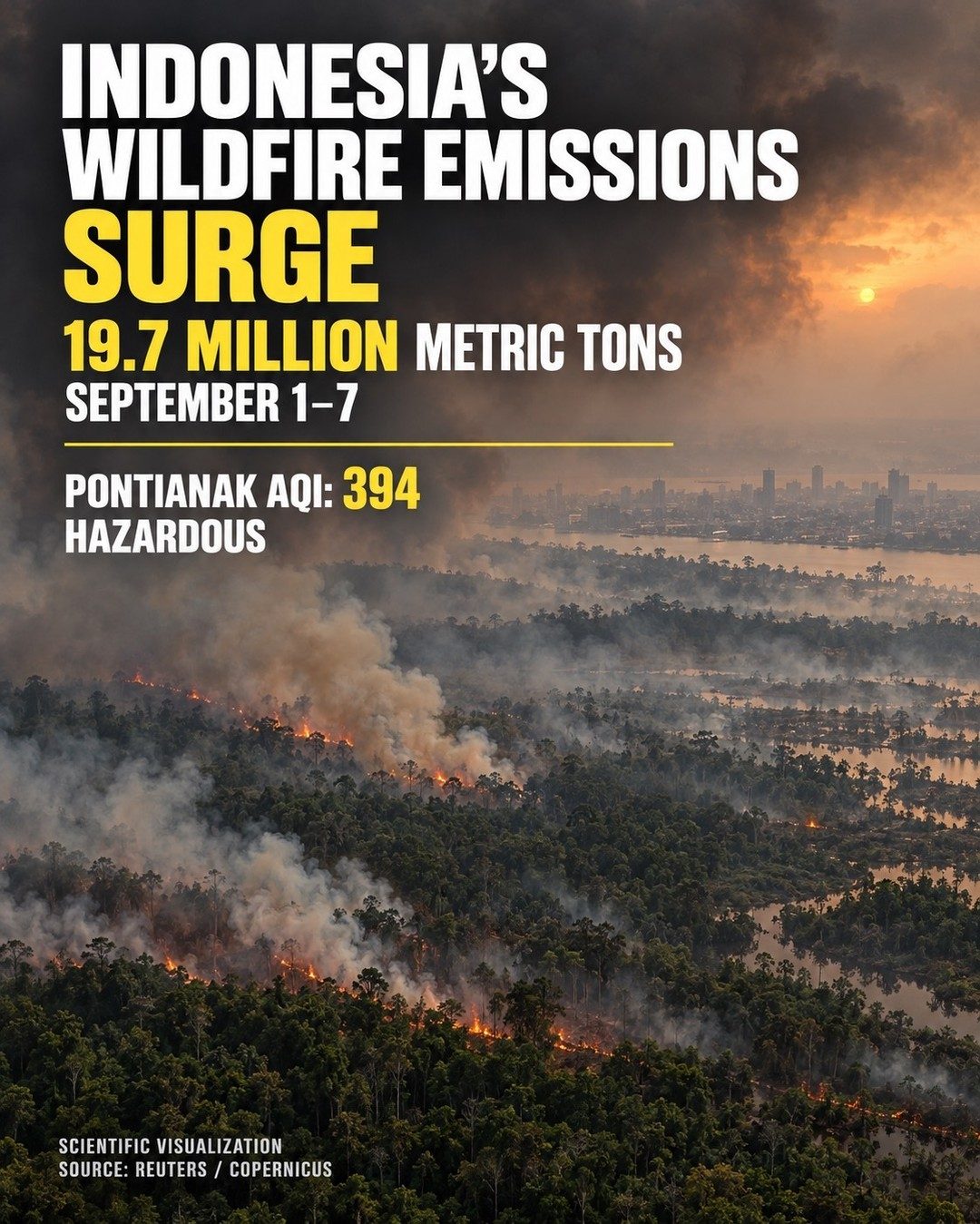
The Scale of the Crisis
Indonesia’s wildfires are not merely a local concern. In just the first week of September, emissions surged to 19.7 million metric tons. This staggering figure underscores the gravity of the situation. The air quality index (AQI) in Pontianak reached 394, a level deemed “hazardous.” This means the populace may have struggled to breathe through the thick, acrid haze. The acrid breath of smoke is a blight. Pontianak’s AQI could have forced schools to close. Businesses may have ground to a halt. Residents who remained in the city may have donned masks for basic errands. Residents without access to clean air would have sought solace in air-purifying machines. If this technology were unavailable, the vulnerable among them would have been forced to flee.
The Data Behind the Disaster
The emissions statistics are alarming, but they are backed by robust data. The data may have been collected from multiple sources. Reuters and Copernicus are trustworthy scientific data sources. The scientific analysis is false if the data is not reliable. Without it, the statistics are bare numbers. The data and analysis working together bring clarity to the catastrophe. The truth is not always pleasant.
The Human Cost
The consequences of such severe air pollution are far-reaching. Schools and businesses may have shut their doors to avoid harming the local populace. Residents of Pontianak may have been advised to stay indoors. Those with respiratory conditions would have found it even harder to breathe. The health impact may have been aggravated by other factors. The poor would have been unable to afford masks or air purifiers. The elderly and children would have been particularly vulnerable. There was no way to get out from under the blanket of smoke for many. Health effects might have ranged from minor irritations to life-threatening conditions.
The Broader Context
It is critical to understand Indonesia’s struggle with wildfires. The situation is at once local and global. Environmental organizations may call for stricter regulations. The crisis that could stem from the heavy smoke may be compounded by other issues. Deforestation may have created fuel for the fires. Burning peatlands can make the situation even worse. The future will be a different world if solutions aren’t found for this problem.
Watch the Reel
Related deep dives
Similar reads based on topic and creator.
Recent articles
Fresh deep dives from the latest Reels we unpacked.
Comments
Be the first to comment.