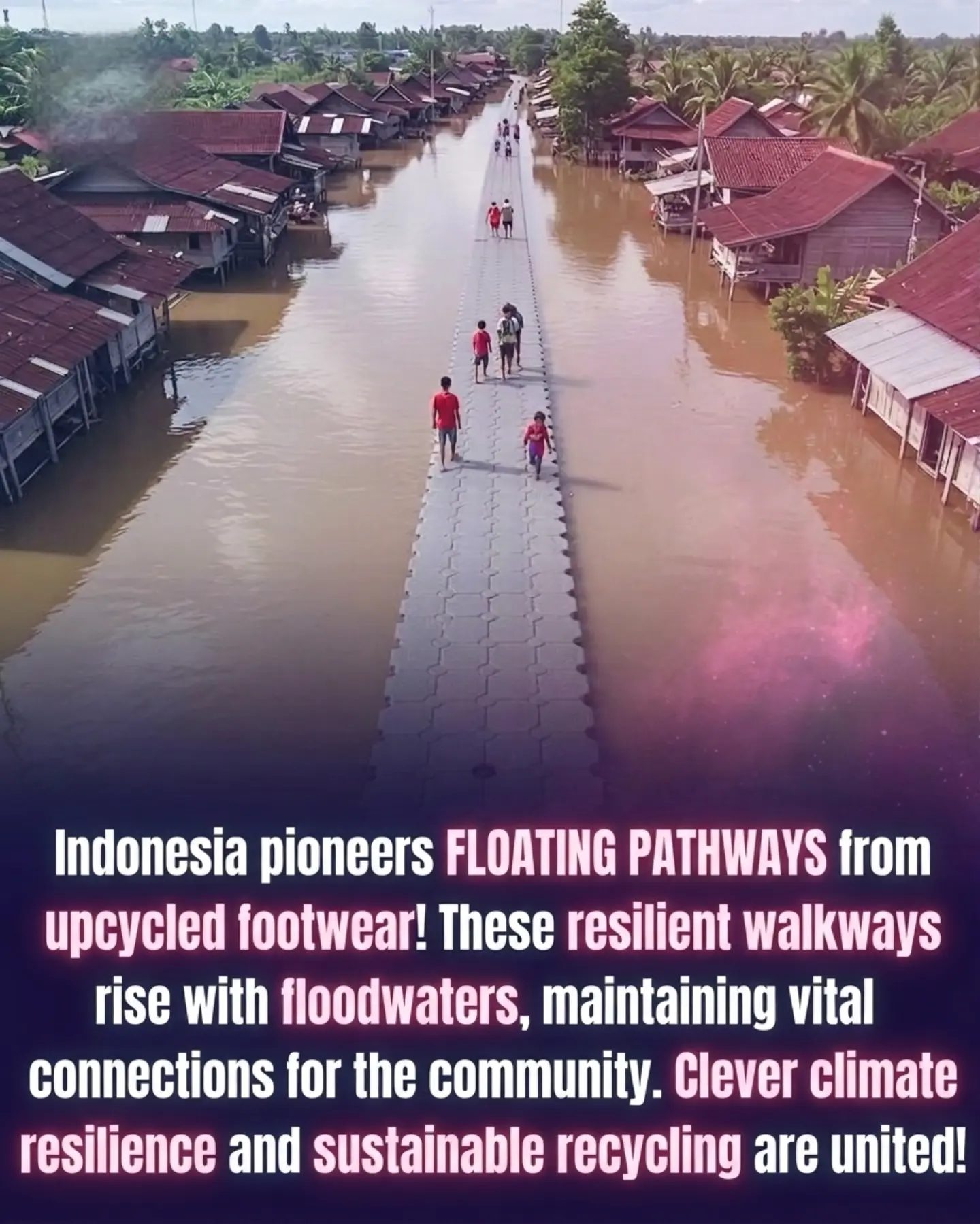
Floating Pathways in Indonesia
Indonesia is leading the way with an innovative solution to frequent seasonal flooding: floating pathways made from upcycled footwear. These unique walkways are designed to rise and fall with fluctuating water levels, ensuring that isolated communities remain connected to essential services, markets, and schools, even during severe inundations. This approach not only addresses the challenges posed by climate change but also embodies a sustainable and resilient approach to waste management and civil engineering.
Why This Matters
Flooding is a significant challenge in many parts of the world, particularly in low-lying coastal and riverine areas. Traditional infrastructure, such as ground roads, can quickly become impassable during floods, leaving communities isolated and vulnerable. The floating pathways in Indonesia offer a practical and innovative solution to this problem. By utilizing upcycled footwear, the project also addresses the growing issue of waste management, turning discarded materials into functional and resilient infrastructure.
Main Discussion
The Design and Functionality
These floating pathways are constructed from upcycled waste materials, specifically recycled rubber and plastic footwear. The modular, buoyant design allows the walkways to dynamically rise and fall with changing water levels. This ensures that they remain functional and accessible during both dry and wet seasons, providing a reliable connection for communities that are otherwise prone to isolation.
Climate Resilience
Climate resilience is a critical aspect of this project. The floating pathways are designed to withstand the rigors of seasonal flooding, ensuring that communities remain connected to essential services. This resilience is not just about physical durability; it also involves a proactive approach to climate change adaptation. By utilizing upcycled materials, the project reduces the environmental impact and promotes sustainable waste management.
Sustainable Waste Management
The use of upcycled footwear in the construction of these pathways highlights a commitment to sustainable waste management. Instead of ending up in landfills, discarded footwear is repurposed to create functional infrastructure. This not only reduces waste but also creates a practical and beneficial use for materials that would otherwise be discarded. The project serves as a prime example of how sustainable practices can be integrated into civil engineering projects to create long-lasting and beneficial solutions.
Community Benefits
The primary beneficiaries of these floating pathways are the isolated stilt-house communities that face frequent flooding. These pathways ensure that residents can access essential services, markets, and schools without relying on traditional, easily submerged ground roads. This maintained connectivity is crucial for the well-being and economic stability of these communities, as it allows them to continue their daily activities and sustain their livelihoods, even during flood seasons.
Environmental and Economic Impact
The environmental impact of this project is significant. By using upcycled materials, the project reduces the carbon footprint associated with waste disposal and new material production. Additionally, the pathways help mitigate the economic impact of flooding by keeping communities connected and ensuring continuous access to markets and services. This dual benefit of environmental sustainability and economic resilience makes the project a model for other regions facing similar challenges.
Practical Tips for Climate-Adaptive Infrastructure
When considering climate-adaptive infrastructure, it’s important to think beyond traditional solutions. Here are some practical tips for developing resilient and sustainable projects:
- Evaluate Local Needs: Understand the specific challenges and needs of the community. In the case of Indonesia, the primary challenge was maintaining connectivity during floods.
- Utilize Local Resources: Make use of available, recyclable, and underutilized materials. In this instance, upcycled footwear provided a sustainable solution.
- Design for Flexibility: Ensure that the infrastructure can adapt to changing conditions. The floating pathways' buoyant design accommodates fluctuating water levels.
- Engage the Community: Involve the community in the planning and implementation process to ensure that the solution is both practical and acceptable to the residents.
- Monitor and Adapt: Continuously monitor the infrastructure's performance and make adjustments as needed to ensure its long-term effectiveness.
Practical Tips
Implementing Floating Pathways
If you are considering implementing a similar project, here are some practical steps:
- Conduct a Feasibility Study: Assess the local conditions, including the frequency and severity of flooding, as well as the availability of recyclable materials.
- Engage with Local Stakeholders: Work with local communities, government agencies, and other stakeholders to ensure support and collaboration.
- Develop a Design and Maintenance Plan: Create a detailed design that includes specifications for materials, construction, and maintenance. Ensure that the design is scalable and adaptable to changing conditions.
- Source Recyclable Materials: Identify and source recyclable materials that can be used in the construction of the pathways. This may involve setting up collection points and partnerships with local waste management facilities.
- Construction and Installation: Build the pathways in a way that minimizes disruption to the community. Ensure that the installation process is transparent and involves the community at every step.
- Monitor and Maintain: Regularly monitor the condition of the pathways and make necessary repairs. Engage the community in the maintenance process to foster a sense of ownership and responsibility.
Important Takeaways
Floating pathways in Indonesia demonstrate a creative and practical approach to addressing the challenges posed by seasonal flooding. By utilizing upcycled footwear, the project not only provides a resilient solution to community connectivity but also promotes sustainable waste management. The success of this project highlights the importance of innovative thinking and community engagement in developing sustainable and climate-resilient infrastructure. As climate change continues to pose new challenges, projects like this serve as a model for how we can adapt and thrive in the face of adversity.
Conclusion
The floating pathways in Indonesia are a testament to the power of innovation and sustainability. By combining climate resilience with sustainable waste management, this project provides a practical solution to the challenges of seasonal flooding. As we continue to face the impacts of climate change, projects like this offer valuable insights into how we can build a more resilient and sustainable future. The innovative use of upcycled footwear not only addresses the immediate issue of community connectivity but also promotes a more circular economy, where waste is repurposed into valuable resources.
Watch the Reel
Questions readers ask
How do floating pathways help communities in Indonesia during floods?
Floating pathways ensure that communities can maintain access to essential services, markets, and schools even when water levels rise. They rise and fall with the water, making sure people stay connected and mobile during severe inundations. Without these pathways, communities could be isolated for extended periods, disrupting daily life and emergency services.
What materials are used to create these innovative walkways?
These walkways are made from upcycled footwear, which means old or discarded shoes are repurposed to create a useful and sustainable infrastructure. This not only helps in managing waste but also provides a cost-effective solution to a pressing environmental challenge.
How do floating pathways contribute to waste management?
By using upcycled materials like footwear, these pathways help to reduce waste going to landfills. This dual-purpose approach transforms discarded items into functional infrastructure. It shows a commitment to sustainability and efficiency in civil engineering practices.
How do these pathways adapt to changing water levels?
The floating pathways are designed to be dynamic, meaning they can rise and fall with the water levels. This adaptability ensures that the pathways remain useful regardless of the flood conditions, providing a consistent connection for communities.
What are the benefits of using upcycled materials in civil engineering projects?
Upcycled materials offer a sustainable and cost-effective solution for civil engineering projects. They reduce the demand for new materials, minimize waste, and provide a practical way to address environmental challenges. In the case of Indonesia's floating pathways, upcycled footwear provides a resilient and adaptable infrastructure.
Can other countries adopt similar solutions to manage flooding?
Yes, other countries, especially those with similar challenges in low-lying coastal and riverine areas, can adopt similar solutions. The key is to tailor the design to local conditions and available materials. This approach showcases a creative and resilient method to tackle flooding and waste management issues.
Related deep dives
Similar reads based on topic and creator.




Recent articles
Fresh deep dives from the latest Reels we unpacked.




Comments
Be the first to comment.