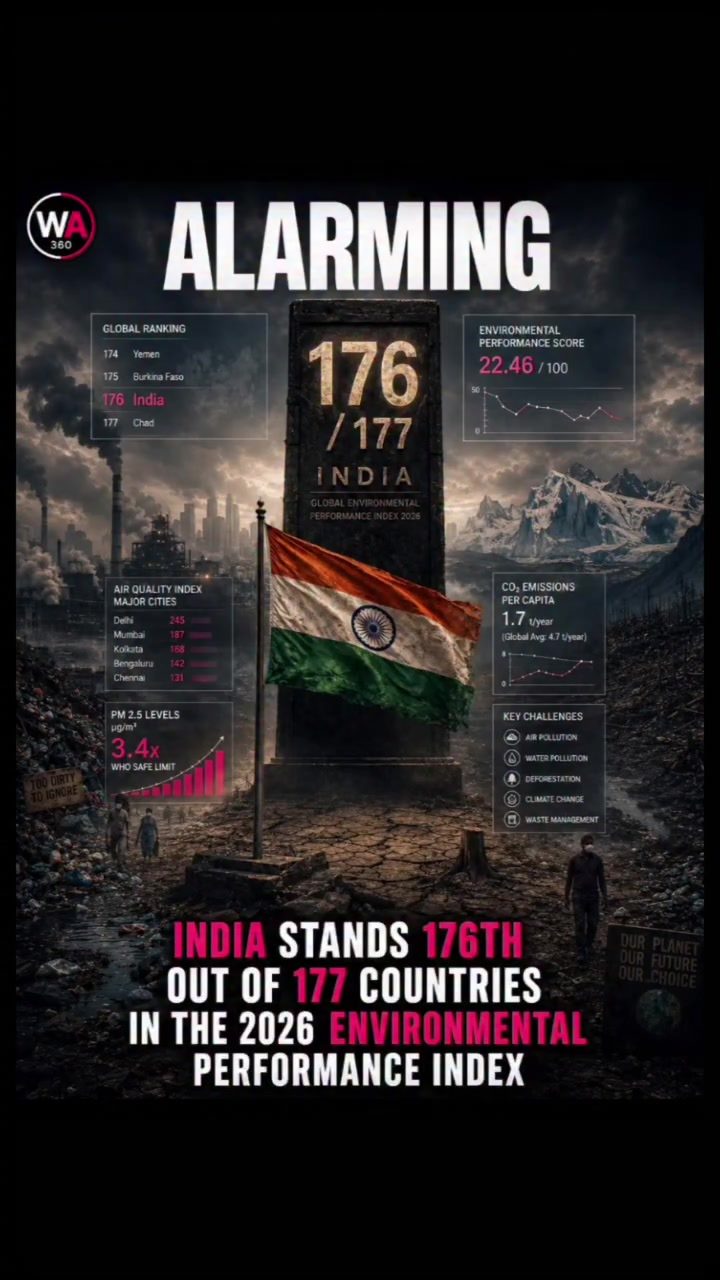
India's Environmental Challenges in 2026: A Deep Dive into the 176th Ranking
India's ranking of 176th out of 177 countries in the 2026 Environmental Performance Index highlights significant environmental challenges the nation continues to face. These challenges, ranging from worsening air pollution to rapid deforestation and climate-related risks, have far-reaching impacts on public health, biodiversity, and long-term sustainability. Understanding the specifics of these challenges and their implications is crucial for addressing the issues and fostering a cleaner, healthier future.
Context / Why this matters
The Environmental Performance Index (EPI) is a comprehensive metric that evaluates countries based on their environmental health and sustainability. A low ranking, such as India’s 176th position, underscores critical areas needing urgent attention. The index serves as a vital tool for governments, policymakers, and citizens to gauge the effectiveness of environmental policies and initiatives. This ranking not only reflects current conditions but also highlights the need for proactive measures to mitigate environmental degradation and promote sustainable practices.
Main discussion
Air Pollution: A Major Concern
Air pollution is one of the most pressing environmental issues in India. The data shows that PM 2.5 levels are 3.4 times the safe limit, indicating severe air quality issues in major cities. Delhi, Mumbai, and Kolkata rank particularly low in air quality indices, highlighting the urgent need for stricter emission standards and cleaner energy sources. The health impacts of poor air quality include respiratory diseases, cardiovascular issues, and increased mortality rates. The urgency to address this issue cannot be overstated, as it directly affects the quality of life and public health.
Water Pollution and Water Quality
Water pollution is another significant challenge. Declining water quality impacts both human health and ecosystems. Major rivers and water bodies in India face severe levels of pollution from industrial waste, agricultural runoff, and untreated sewage. This not only affects drinking water supplies but also harms aquatic life and disrupts ecosystems. Implementing better waste management practices, enhancing water treatment facilities, and promoting conservation efforts can help mitigate this issue.
Deforestation and Biodiversity Loss
Rapid deforestation poses a major threat to India's biodiversity. Forests serve as vital carbon sinks, regulate climate, and provide habitats for numerous species. Deforestation leads to habitat loss, soil erosion, and a decrease in biodiversity. Addressing this issue requires sustainable forestry practices, reforestation initiatives, and strict enforcement of laws against illegal logging. Protecting forest ecosystems is essential for maintaining ecological balance and mitigating climate change.
Climate Change and Emissions
Climate change is a global issue but has local implications. India's CO2 emissions stand at 1.7 tonnes per capita annually, significantly lower than the global average of 4.7 tonnes, but the rapid industrialization and urbanization could lead to increased emissions. Addressing climate change requires transitioning to renewable energy sources, promoting energy efficiency, and reducing reliance on fossil fuels. India has made significant strides in renewable energy, but more aggressive policies and investments are needed to achieve substantial reductions in emissions.
Waste Management
Inefficient waste management practices further exacerbate environmental degradation. Improper disposal of waste leads to soil and water contamination, air pollution, and the spread of diseases. Implementing effective waste management systems, promoting recycling, and reducing waste generation through sustainable practices are essential steps. Public awareness and community involvement are crucial in achieving effective waste management and reducing its environmental impact.
Practical tips
For Individuals
- Reduce, Reuse, Recycle: Adopt the 3Rs to minimize waste generation. Reduce consumption, reuse items, and recycle materials whenever possible.
- Conserve Water: Practice water conservation techniques such as fixing leaks, using water-efficient appliances, and adopting rainwater harvesting.
- Energy Efficiency: Use energy-efficient devices and appliances, and adopt renewable energy sources like solar power.
- Plant Trees: Participate in tree-planting initiatives and support reforestation efforts to combat deforestation.
- Support Eco-Friendly Products: Choose products that are environmentally friendly and have minimal impact on the environment.
For Communities
- Community Clean-Up Drives: Organize regular clean-up drives in public spaces to address waste management issues.
- Awareness Campaigns: Conduct awareness campaigns to educate the public about environmental issues and the importance of sustainable practices.
- Local Initiatives: Support and participate in local initiatives aimed at improving air and water quality, promoting renewable energy, and conserving natural resources.
For Governments and Businesses
- Policy Reforms: Implement and enforce stricter environmental regulations and standards.
- Investment in Renewable Energy: Promote investment in renewable energy sources and sustainable technologies.
- Waste Management Systems: Develop and maintain effective waste management systems to reduce pollution.
- Conservation Efforts: Support initiatives aimed at conserving natural resources and protecting ecosystems.
- Public Participation: Encourage public participation in environmental conservation efforts and provide incentives for sustainable practices.
Important takeaways
India's 176th ranking in the 2026 Environmental Performance Index underscores the urgent need for action in addressing critical environmental challenges. From air and water pollution to deforestation and climate change, these issues require a concerted effort from individuals, communities, governments, and businesses. By adopting sustainable practices, promoting conservation efforts, and implementing stricter environmental policies, India can take significant steps towards a cleaner, healthier future.
Conclusion
The alarming environmental performance of India highlights the urgent need for collective action. Every individual, community, and organization has a role to play in protecting the environment. By raising awareness, promoting sustainable practices, and demanding meaningful change, we can build a healthier environment for future generations. The path to a cleaner future requires collective effort, and every step towards sustainability matters.
Watch the Reel
Questions readers ask
What is the 2026 Environmental Performance Index and why is India's ranking significant?
The 2026 Environmental Performance Index is a global ranking that assesses countries based on various environmental factors. India's ranking of 176th out of 177 countries indicates severe environmental issues that demand immediate attention. This low ranking underscores the need for proactive measures to improve environmental health and sustainability.
What are the primary environmental challenges facing India in 2026?
India faces critical environmental challenges, including worsening air and water pollution, rapid deforestation, and significant climate-related risks. These issues not only affect public health but also threaten biodiversity and long-term sustainability.
How does air pollution in India impact the country's environmental ranking?
Air pollution is a major contributor to India's low environmental ranking. High levels of air pollution lead to respiratory health issues, reduced visibility, and contribute to climate change. Addressing air pollution is crucial for improving India's environmental performance and public health.
What role does deforestation play in India's environmental issues?
Deforestation in India contributes to various environmental problems, including soil erosion, loss of biodiversity, and increased carbon dioxide emissions. Rapid deforestation exacerbates climate risks and threatens long-term sustainability.
What are the implications of India's climate risks for the country and the world?
India's climate risks, including extreme weather events and rising temperatures, have severe implications for both the country and the global environment. These risks impact agriculture, water resources, and public health, necessitating urgent action to mitigate climate change.
How do water pollution and air pollution in India affect public health?
Water and air pollution in India directly impact public health, leading to increased incidences of respiratory and waterborne diseases. Addressing these issues is essential to reduce disease burdens and enhance the overall environmental health of the population.
What measures can India take to improve its environmental performance?
India can improve its environmental performance through various measures, including stricter pollution control policies, reforestation efforts, renewable energy adoption, and climate-resilient infrastructure. Proactive steps in these areas can mitigate environmental risks and enhance sustainability.
Related deep dives
Similar reads based on topic and creator.


Recent articles
Fresh deep dives from the latest Reels we unpacked.




Comments
Be the first to comment.