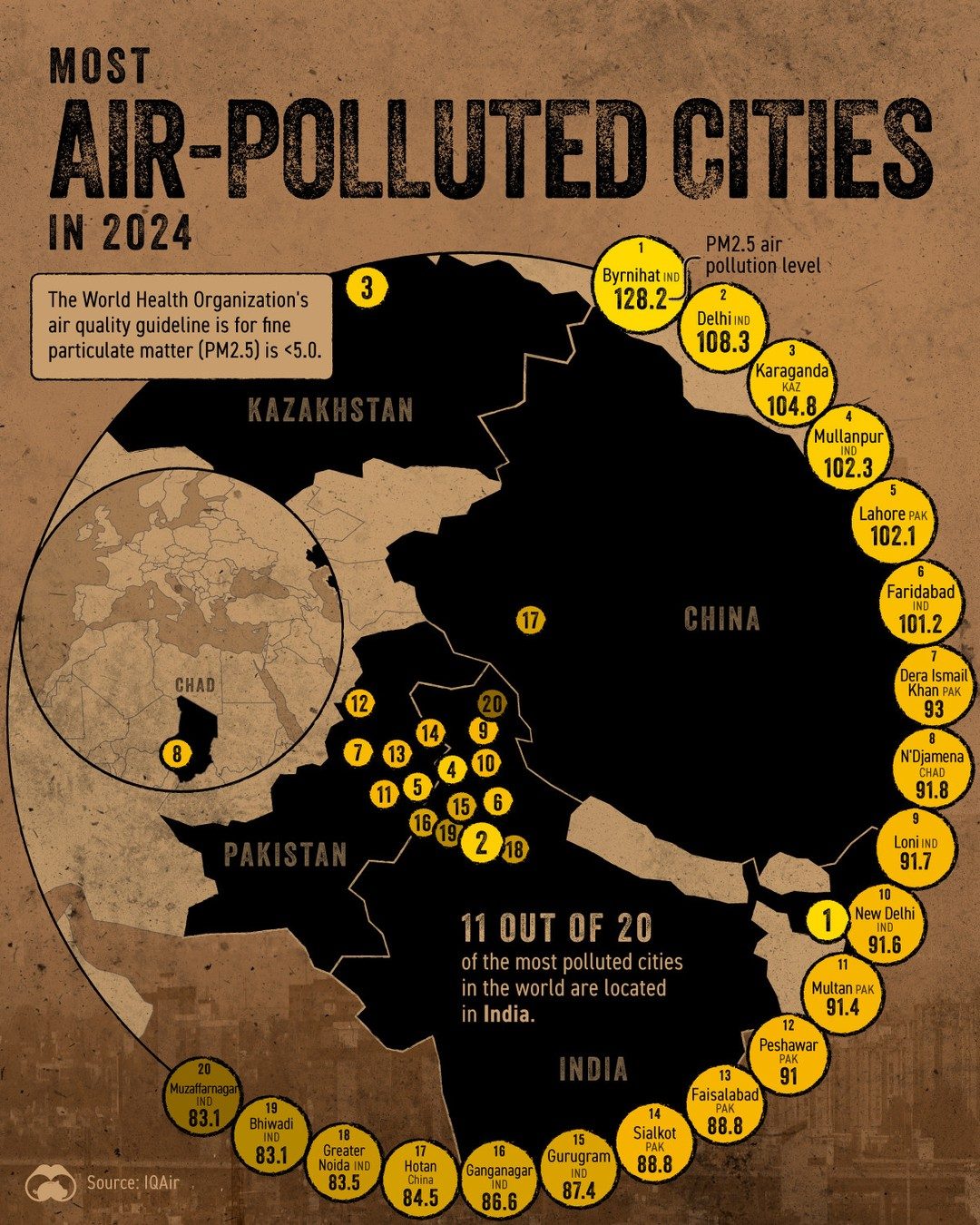
Air Pollution Ranking in 2024
In 2024, 11 of the most air-polluted cities in the world were found in India. Byrnihat, a city in India, topped the list with fine particulate matter (PM2.5) levels exceeding 25 times the limit set by the World Health Organization (WHO). The global ranking of air pollution highlights the severity of the issue, especially in densely populated areas.
Why This Matters
Air pollution is a critical global health concern. Exposure to fine particulate matter (PM2.5) can lead to a variety of health issues, including respiratory and cardiovascular diseases. Understanding which cities are most affected can help prioritize environmental policies and public health initiatives.
Main Discussion
Global Air Pollution Hotspots
The infographic ranks the most air-polluted cities globally based on PM2.5 levels. These levels are measured in micrograms per cubic meter (μg/m³) and are a key indicator of air quality. The WHO's guideline for safe PM2.5 levels is less than 5.0 μg/m³, but many cities far exceed this limit.
Top Polluted Cities in 2024
-
Byrnihat, India: With PM2.5 levels over 25 times the WHO's recommended limit, Byrnihat leads the list. The city's high pollution levels are a result of industrial activities, vehicle emissions, and construction dust.
-
Greater Noida, India: This industrial hub is another major polluter, driven by vehicular traffic and industrial emissions.
-
Delhi, India: Known for its severe air pollution, Delhi faces challenges from vehicle exhaust, construction dust, and crop burning in surrounding areas.
-
Faisalabad, Pakistan: Located in Pakistan, Faisalabad's air quality is heavily impacted by industrial activities and vehicular pollution.
-
Hotan, China: This city in China is affected by dust storms and industrial pollution, contributing to its high PM2.5 levels.
-
Gurugram, India: Close to Delhi, Gurugram's pollution issues stem from industrial activities and vehicular emissions.
Regional Breakdown
The map of Asia highlights the widespread issue of air pollution. It shows that:
-
India: 11 out of 20 of the most polluted cities are in India. Urbanization, industrialization, and vehicular pollution are the primary contributors.
-
Pakistan: Cities like Faisalabad and Sialkot face significant pollution due to industrial activities and urban congestion.
-
China: Cities like Hotan and Greater Noida are affected by industrial activities and dust storms.
-
Kazakhstan: Cities in this region face air quality challenges, although specific data points are less prominent in the infographic.
Health Implications
Exposure to high levels of PM2.5 can lead to serious health issues, including:
-
Respiratory Diseases: Conditions like asthma and chronic obstructive pulmonary disease (COPD) can worsen due to prolonged exposure.
-
Cardiovascular Diseases: Long-term exposure to PM2.5 can increase the risk of heart disease, stroke, and high blood pressure.
-
Mortality Rates: High levels of air pollution are linked to increased mortality rates, particularly in vulnerable populations such as children and the elderly.
Practical Tips
For Individuals
-
Monitor Air Quality: Use air quality monitoring apps to stay informed about pollution levels in your area. Apps like IQAir provide real-time data on PM2.5 levels.
-
Use Air Purifiers and Masks: Invest in indoor air purifiers to reduce exposure at home. When outdoors, wear N95 or similar masks to filter out harmful particulates.
-
Limit Outdoor Activities: During high pollution days, avoid outdoor activities, especially during peak pollution hours.
For Policymakers
-
Enforce Emission Standards: Implement and enforce stricter emission standards for industries and vehicles to reduce the release of pollutants.
-
Promote Green Spaces: Increase green spaces in urban areas to help mitigate pollution and improve air quality.
-
Encourage Public Transportation: Promote the use of public transport and reduce reliance on personal vehicles to lower vehicular emissions.
Important Takeaways
The ranking of the most air-polluted cities in 2024 underscores the urgent need for global action on air pollution. High levels of PM2.5 have severe health implications, especially in developing countries where urbanization and industrialization are rapid. Individuals and policymakers must work together to implement effective measures to reduce air pollution and protect public health.
Conclusion
The 2024 air pollution ranking highlights the critical need to address air quality issues globally. With 11 of the 20 most polluted cities in India, and significant pollution levels in other countries, the data calls for immediate and concerted efforts to reduce PM2.5 levels. By prioritizing air quality, we can mitigate the health risks and improve the quality of life for millions of people worldwide.
Watch the Reel
Questions readers ask
Which Indian city had the highest PM2.5 levels in 2024?
Byrnihat, a city in India, topped the list with PM2.5 levels exceeding 25 times the limit set by the World Health Organization (WHO).
How many Indian cities were in the top 11 most polluted cities worldwide in 2024?
A total of 11 out of the 11 most air-polluted cities around the world were located in India in 2024.
What are the potential health impacts of high PM2.5 levels in India?
Exposure to high PM2.5 levels can cause a variety of health problems, including respiratory and cardiovascular issues, and especially affects individuals living in densely populated areas.
What guidelines does the WHO set for PM2.5 levels?
The WHO recommends a limit of 5 micrograms per cubic meter (µg/m³) for PM2.5 levels on an annual average. Byrnihat's PM2.5 levels were over 25 times this limit.
How can understanding the most affected cities help India address air pollution?
Knowing which cities are most affected can help prioritize environmental policies and public health initiatives to reduce air pollution and improve the well-being of residents.
Why are densely populated areas particularly concerning for air pollution in India?
Densely populated areas are particularly concerning because a larger number of people are exposed to high levels of PM2.5, increasing the risk of health issues for a significant portion of the population.
Related deep dives
Similar reads based on topic and creator.



Recent articles
Fresh deep dives from the latest Reels we unpacked.




Comments
Be the first to comment.