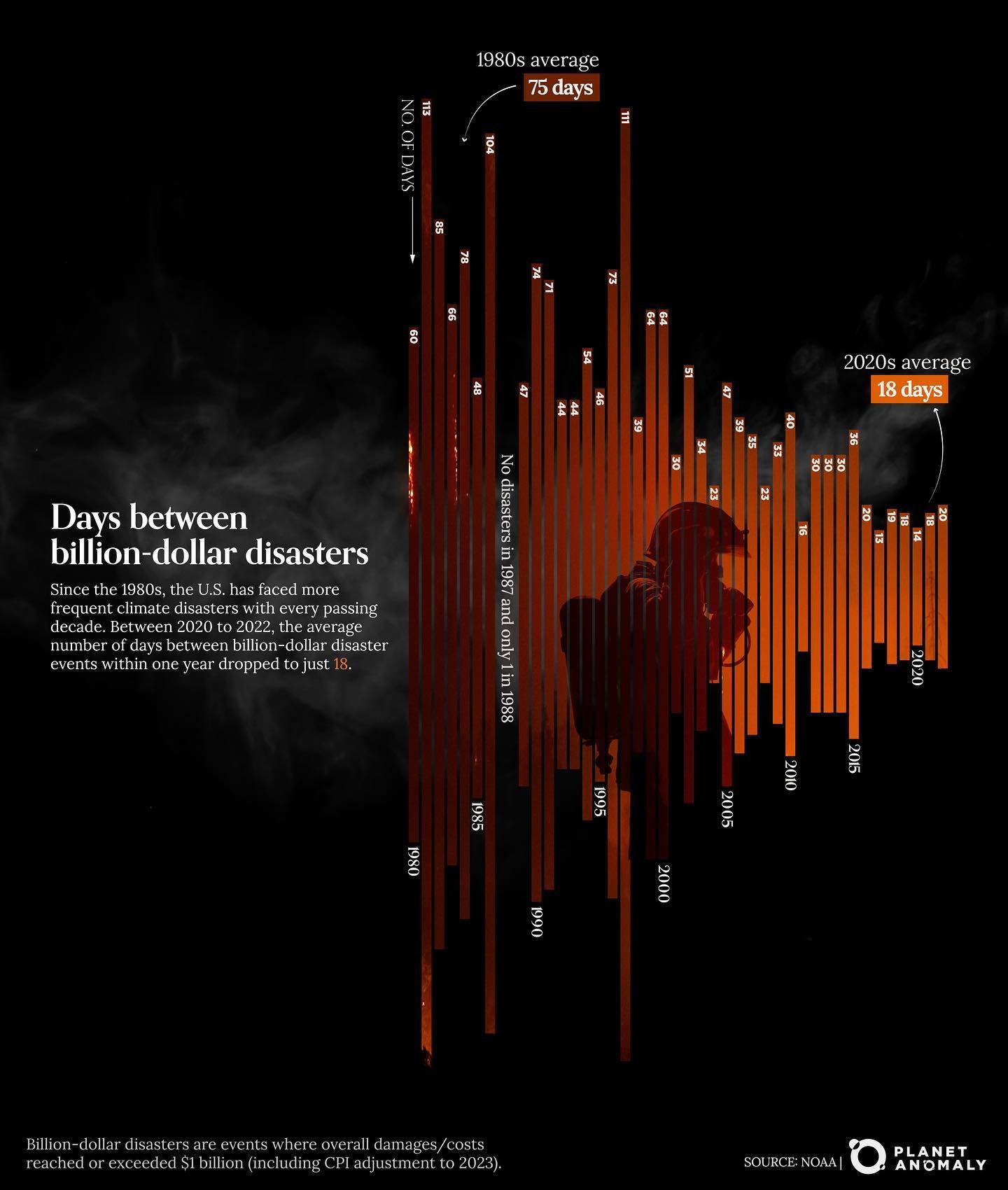
Climate disasters in the U.S. have been increasing in frequency, with the Hawaiian island of Maui being the latest example of the devastation these events can cause. The wildfires there have had profound effects on people, towns, and the natural environment, and the total cost is still unknown. This trend is part of a larger pattern of climate disasters that have been tracked by the National Oceanic and Atmospheric Administration (NOAA) from 1980 to 2022.
Context / Why This Matters
Understanding the trends in climate disasters is crucial for several reasons. Firstly, it helps in planning and preparing for future events. By knowing the types of disasters that are most likely to occur and the frequency with which they happen, communities can better prepare and mitigate the impacts. Secondly, it aids in allocating resources effectively. Areas that are more prone to certain types of disasters can receive targeted support and infrastructure investments. Lastly, tracking these trends provides valuable data for researchers and policymakers to develop strategies to combat climate change and its impacts.
Main Discussion
Increasing Frequency of Climate Disasters
The data from NOAA shows a clear trend: the average number of days between billion-dollar weather disasters in the U.S. has been decreasing. In the 1980s, the average interval between such events was around 75 days. However, by the 2020s, this interval had significantly reduced, indicating that these disasters are occurring more frequently. This trend is alarming and underscores the urgent need for action.
Types of Climate Disasters
The breakdown of billion-dollar disasters by type reveals that certain events are more common than others. Droughts, wildfires, tropical cyclones, and severe storms top the list. These types of disasters have significant economic and social impacts. Droughts can devastate agriculture and water supplies, while wildfires can destroy homes and natural habitats. Tropical cyclones and severe storms can cause widespread flooding and structural damage.
Geographical Distribution
The geographical distribution of these disasters is also noteworthy. States like Texas, Missouri, North Carolina, Oklahoma, Virginia, Illinois, Georgia, South Carolina, and Tennessee have experienced a significant number of billion-dollar disasters in the last decade. This geographical concentration highlights the need for region-specific disaster management strategies. For example, states prone to tropical cyclones may need different preparedness plans compared to those more likely to experience severe storms or droughts.
The Role of Planet Anomaly
Planet Anomaly, a data visualization expert, has played a crucial role in making this data accessible and understandable. Their infographics provide a clear visualization of the trends and patterns in climate disasters. By breaking down complex data into easily digestible formats, Planet Anomaly helps raise awareness and facilitates better decision-making.
Practical Tips
Given the increasing frequency and severity of climate disasters, here are some practical tips for individuals and communities:
Preparation and Readiness
- Emergency Kits: Assemble an emergency kit that includes essentials like water, non-perishable food, a first-aid kit, and important documents.
- Evacuation Plans: Develop and practice evacuation plans, especially if you live in an area prone to specific types of disasters like wildfires or tropical cyclones.
- Stay Informed: Stay updated with local weather alerts and emergency notifications. Know the signs of approaching disasters and how to respond.
Mitigation Strategies
- Home Improvements: Make structural improvements to your home to withstand common disasters in your area. For example, installing hurricane shutters or reinforcing your roof.
- Community Involvement: Participate in community disaster preparedness initiatives. Joining local emergency response teams or volunteering for disaster relief organizations can make a significant difference.
- Sustainable Practices: Adopt sustainable practices that reduce your carbon footprint, such as using renewable energy sources, conserving water, and reducing waste. These practices can help mitigate the broader impacts of climate change.
Important Takeaways
- Frequent and Severe: Climate disasters are occurring more frequently and with greater severity. The average interval between billion-dollar disasters has decreased significantly.
- Types and Regions: Certain types of disasters, such as droughts, wildfires, and tropical cyclones, are more prevalent. States like Texas, Missouri, and North Carolina are particularly affected.
- Preparation is Key: Being prepared and having a plan can save lives and mitigate the impact of disasters.
- Data-Driven Decisions: Using data from sources like NOAA and organizations like Planet Anomaly can inform better decision-making and resource allocation.
Conclusion
The increasing frequency of climate disasters in the U.S. is a stark reminder of the need for proactive measures. By understanding the trends and preparing accordingly, individuals and communities can better navigate these challenges. The data from NOAA and visualizations from Planet Anomaly provide valuable insights that can guide these efforts. As we move forward, it is essential to continue tracking these trends, investing in preparedness, and advocating for policies that address the root causes of climate change.
Watch the Reel
Questions readers ask
How have climate disasters in the U.S. changed from 1980 to 2022?
NOAA data reveals a significant increase in the frequency of climate disasters over this 42 year period. Specifically, there has been a rise in the number of billion-dollar weather disasters, indicating more frequent and costly events. The Maui wildfires are a recent example of the escalating impact of these disasters.
What types of disasters does NOAA track in its climate data?
NOAA tracks a wide range of weather and climate disasters, including hurricanes, floods, wildfires, tornadoes, droughts, and winter storms. These events are monitored for their frequency, cost, and impact on communities and the environment. The Maui wildfires, for instance, are part of this broader dataset.
Why is understanding the trends in climate disasters important for communities?
Knowing the trends in climate disasters is vital for effective preparedness and mitigation. Communities can use this information to anticipate the types of disasters they are most likely to face and how often they might occur, which improves their readiness and resilience. This understanding also helps in planning infrastructure and emergency response systems to reduce the impact of these events.
What are U.S. billion dollar disasters and why are they significant?
U.S. billion dollar disasters are weather and climate events that cause at least one billion dollars in damage. These events are significant because they highlight the increasing economic and societal impact of climate disasters. The rise in the number of these events underscores the urgency for action and preparedness in the face of escalating disaster trends, as seen in the recent Maui wildfires.
How can communities prepare for the increasing frequency of climate disasters?
Communities can prepare by developing robust emergency response plans, investing in resilient infrastructure, and enhancing public awareness about disaster risks. Regularly updating these plans based on the latest climate data, such as that provided by NOAA, can help ensure that communities are well-prepared to face the impacts of increasingly frequent disasters like the Maui wildfires.
What role does NOAA play in monitoring and reporting on climate disasters?
NOAA plays a crucial role in monitoring and reporting on climate disasters by collecting and analyzing data on various weather events. This includes tracking the frequency, cost, and impact of these disasters from 1980 to 2022. NOAA's data provides valuable insights into the trends and patterns of climate disasters, aiding in preparedness and response efforts.
Related deep dives
Similar reads based on topic and creator.


Recent articles
Fresh deep dives from the latest Reels we unpacked.




Comments
Be the first to comment.