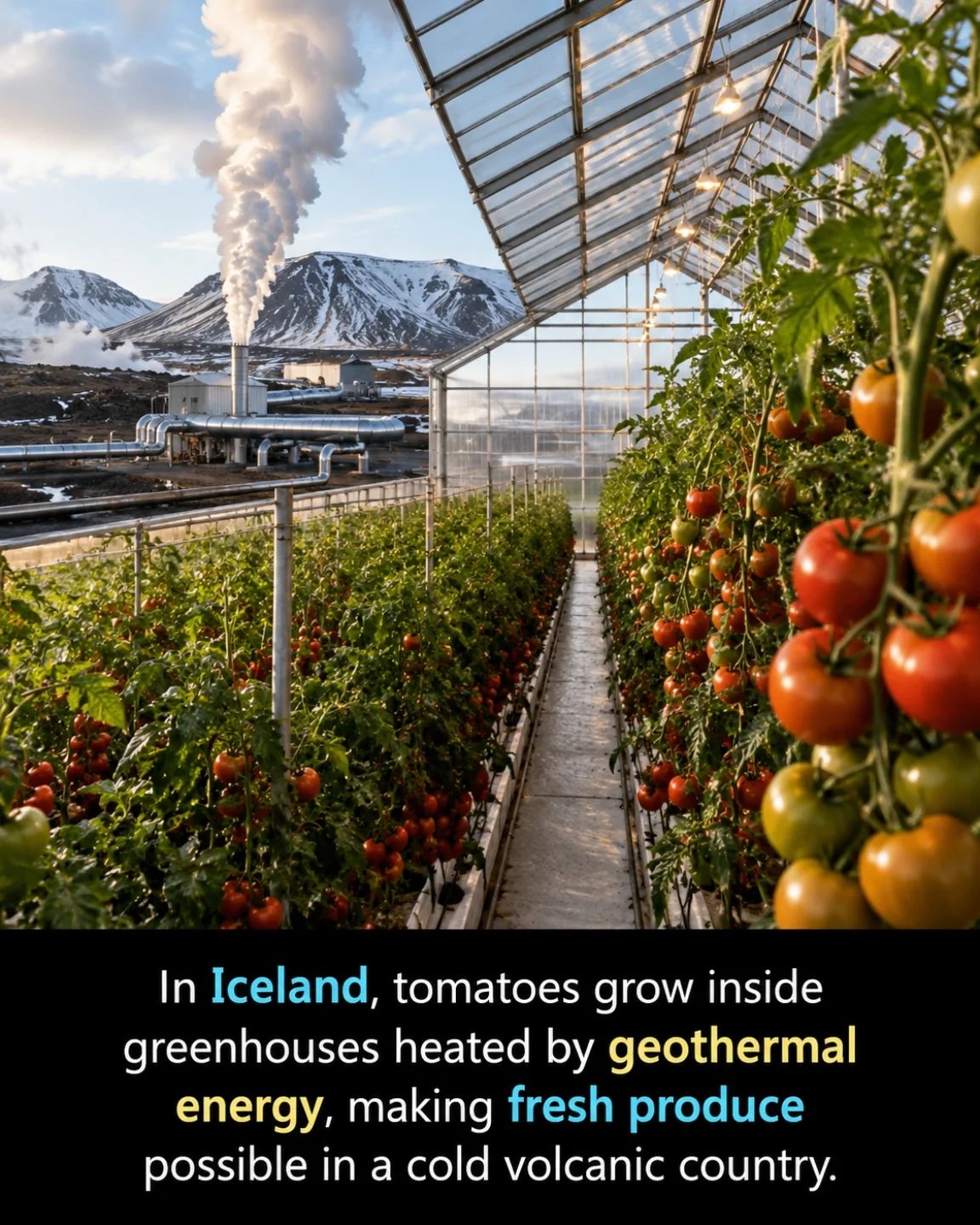
Geothermal Greenhouse Farming
Greenhouse farming in Iceland offers a unique insight into how geothermal energy can be harnessed for sustainable agriculture. This method allows for the cultivation of fresh produce, including tomatoes, in a cold, volcanic country. The combination of volcanic activity and advanced farming techniques creates an optimal environment for growing fruits and vegetables year-round.
Context / Why this matters
Iceland's climate is characterized by its cold temperatures and volcanic activity. Traditionally, these conditions would present significant challenges for agriculture. However, the country's geothermal resources have turned these challenges into opportunities. By utilizing the earth's heat, farmers in Iceland can grow fresh produce, including tomatoes, in controlled greenhouse environments. Tomatoes are a significant crop in Iceland, primarily because they require a lot of heat and light to grow, both of which can be provided by geothermal energy.
Main discussion
The Role of Geothermal Energy
Geothermal energy is a renewable resource that leverages the earth's internal heat to produce energy. In Iceland, this energy is tapped through natural hot springs, geysers, and volcanic activity. The heat can be harnessed to warm greenhouses, providing the necessary temperatures for growing crops that would otherwise struggle in the harsh Icelandic climate.
The Greenhouse Environment
Greenhouses in Iceland are typically constructed with transparent materials to allow sunlight to penetrate, while the geothermal energy is used to maintain optimal temperatures. These structures are designed to create a controlled environment that can mimic the ideal conditions for plant growth. The combination of natural light and artificial heat ensures that tomatoes can thrive.
Sustainable Agriculture
The use of geothermal energy for greenhouse farming is not only beneficial for agriculture but also for the environment. By relying on a renewable energy source, farmers in Iceland significantly reduce their carbon footprint. This method of farming is sustainable and helps conserve the planet's resources. It also aligns with global efforts to promote environmentally friendly practices in agriculture.
Agricultural Benefits
One of the most significant advantages of geothermal greenhouses is the ability to grow produce year-round. This means that Icelandic farmers can supply fresh tomatoes and other crops to local markets consistently, regardless of the season. This reliability is crucial for food security and economic stability in the region.
Practical tips
- Energy Efficiency: To maximize the benefits of geothermal energy, it is essential to ensure that the greenhouses are well-insulated. This helps retain heat and reduces energy consumption.
- Monitoring Systems: Implementing advanced monitoring systems can help track the environmental conditions inside the greenhouse. This allows for precise control over temperature, humidity, and light levels, ensuring optimal growth conditions.
- Crop Selection: Choose crops that are well-suited to the controlled environment of a geothermal greenhouse. Tomatoes, for instance, are a good fit due to their high heat and light requirements.
- Water Management: Effective water management is crucial. Utilize systems that efficiently recycle and reuse water, minimizing waste and conserving resources.
Important takeaways
Geothermal greenhouse farming is a sustainable and efficient method for growing fresh produce in cold climates.
The benefits extend beyond the agricultural sector, contributing to environmental conservation and economic stability.
Geothermal energy is a reliable and renewable resource that can support year-round crop production.
The controlled environment of geothermal greenhouses allows for optimal growth conditions, enabling the cultivation of crops like tomatoes that require specific temperature and light levels.
Conclusion
Geothermal greenhouse farming in Iceland showcases the innovative use of renewable energy sources for sustainable agriculture. By leveraging the country's volcanic activity, farmers can grow fresh produce, such as tomatoes, in a cold climate. This method not only supports local food security but also aligns with global sustainability goals. The controlled environment provided by geothermal greenhouses ensures that crops thrive, making this a valuable model for other regions facing similar climatic challenges.
Watch the Reel
Questions readers ask
How do Iceland's geothermal greenhouses utilize volcanic activity to grow tomatoes?
Iceland's geothermal greenhouses tap into the earth's heat generated by volcanic activity. This heat is used to warm the greenhouses, creating a suitable environment for growing tomatoes year-round, even in the cold Icelandic climate. The process involves pumping hot water from underground reservoirs to heat the greenhouses, ensuring consistent temperatures for optimal tomato growth.
What are the benefits of geothermal energy in agriculture for Icelandic farmers?
Geothermal energy provides Icelandic farmers with a reliable and sustainable heat source for their greenhouses. This allows for year-round cultivation of tomatoes and other produce. By reducing dependence on fossil fuels, geothermal power supports sustainable farming practices and helps mitigate environmental impact.
Can other countries with cold climates benefit from Iceland's geothermal greenhouse model?
Yes, countries with cold climates and accessible geothermal resources can learn from Iceland's model. By implementing similar geothermal greenhouse systems, these countries can enhance their agricultural output and cultivate fresh produce year-round. The key is having a viable geothermal source and the technology to harness it effectively.
What types of produce, besides tomatoes, can be grown in Iceland's geothermal greenhouses?
In addition to tomatoes, Iceland's geothermal greenhouses can support the growth of a variety of fruits and vegetables. The stable, warm environment is ideal for cultivating cucumbers, peppers, and even some types of berries. The specific crops can vary based on the greenhouse's conditions and the farmer's preferences.
How does the cost of operating a geothermal greenhouse compare to traditional farming methods?
While the initial setup cost for a geothermal greenhouse can be high due to the need for specialized infrastructure, the long-term operating costs are generally lower than traditional farming methods. This is because geothermal energy is a renewable and cost-effective heat source, reducing reliance on expensive fossil fuels and minimizing energy costs over time.
What are the environmental impacts of geothermal greenhouse farming in Iceland?
Geothermal greenhouse farming in Iceland has a positive environmental impact. By using a renewable energy source, geothermal power reduces greenhouse gas emissions compared to traditional farming methods that rely on fossil fuels. Additionally, the sustainable practices employed in these greenhouses help conserve water and reduce waste, making them an eco-friendly choice for agriculture.
How does the taste of tomatoes grown in Iceland's geothermal greenhouses compare to those grown in warmer climates?
Tomatoes grown in Iceland's geothermal greenhouses are often praised for their exceptional taste and quality. The controlled environment ensures optimal growing conditions, resulting in flavorful and juicy tomatoes. The unique volcanic soil and geothermal heat contribute to the tomatoes' distinct flavor profile, which can sometimes surpass those grown in warmer climates.
Related deep dives
Similar reads based on topic and creator.




Recent articles
Fresh deep dives from the latest Reels we unpacked.




Comments
Be the first to comment.