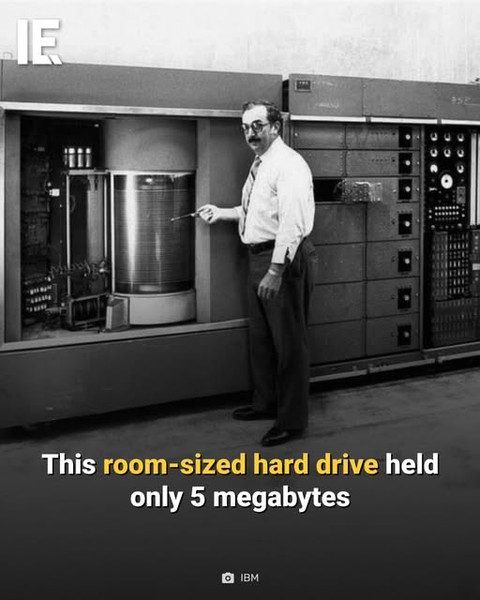
IBM 305 RAMAC: The Dawn of Modern Hard Drives
The IBM 305 RAMAC, introduced in 1956, marked a pivotal moment in the history of computing. This pioneering system was the world’s first computer with a disk storage system, setting the stage for the evolution of hard drives and revolutionizing how data is stored and accessed.
Why This Matters
Understanding the IBM 305 RAMAC is crucial for grasping the origins of modern data storage. The technology behind this historic machine laid the groundwork for the compact, high-capacity storage solutions we rely on today. By examining the RAMAC, we can appreciate the exponential advancements in computing technology and the ingenuity that drove these innovations.
The IBM 305 RAMAC: A Historical Overview
The Birth of Disk Storage
The IBM 305 RAMAC, or Random Access Method of Accounting and Control, was a groundbreaking invention. Its massive hard drive consisted of 50 perforated metal platters, each measuring 24 inches in diameter. These platters were stored in a two-cabinet unit roughly the size of two refrigerators, making it one of the largest hard drives of its time. Despite its size, the RAMAC could hold a mere 5 megabytes of data. In today's terms, this is equivalent to a few high-resolution photos, highlighting just how far data storage technology has come.
Revolutionary Innovation
At the time, the RAMAC's storage capacity was a monumental achievement. It represented a significant leap forward in data storage, allowing for more efficient and reliable access to information. Before the RAMAC, data storage was a cumbersome process, often involving magnetic tape or punched cards. The RAMAC's disk storage system offered a more flexible and faster solution, revolutionizing the way computers stored and accessed data.
The Evolution of Hard Drives
The RAMAC's innovation laid the foundation for modern hard drives. Over the decades, hard drive technology has shrunk dramatically in size while increasing exponentially in capacity. The room-sized machines of the past have evolved into tiny chips that can hold terabytes of data, fitting comfortably in our pockets.
IBM
The journey from the RAMAC to today's compact storage solutions is a testament to the relentless pursuit of innovation in the tech industry. The RAMAC's design and functionality set the stage for future advancements in disk storage, paving the way for the development of smaller, more efficient, and high-capacity storage devices.
The Technical Specifications
The RAMAC's technical specifications are a fascinating glimpse into the early days of computing. Its hard drive was composed of 50 metal platters, each with a diameter of 24 inches. These platters were housed in a two-cabinet unit, giving the system a footprint roughly equivalent to two standard refrigerators. The hard drive's read/write head was positioned using a pneumatic system, which allowed for random access to data.
Despite its limited storage capacity, the RAMAC was a significant advancement in data storage technology. Its disk storage system offered faster access times and greater reliability compared to previous storage solutions. The RAMAC’s ability to hold 5 megabytes of data was a revolutionary achievement, breaking new ground in the field of data storage.
Impact on Modern Technology
The RAMAC's impact on modern technology is profound. Its innovative design and functionality served as a blueprint for future hard drive technology. The principles and mechanisms introduced by the RAMAC have been refined and improved over the years, leading to the development of more efficient and high-capacity storage solutions.
Miniaturization and Efficiency
One of the most significant advancements in hard drive technology is miniaturization. The RAMAC's bulky design has given way to compact, high-capacity storage devices. Modern hard drives are smaller, lighter, and more efficient, offering terabytes of storage in a fraction of the space required by the RAMAC. This miniaturization has been driven by advancements in materials science, engineering, and manufacturing processes.
Increased Storage Capacity
The storage capacity of hard drives has increased exponentially since the RAMAC. Modern hard drives can hold terabytes of data, a vast improvement over the RAMAC's 5 megabytes. This increased capacity has enabled the storage of large amounts of data, from high-resolution images and videos to complex software applications and databases. The ability to store and access large volumes of data has been a critical factor in the development of modern computing and digital technologies.
Enhanced Performance
Modern hard drives offer enhanced performance compared to the RAMAC. They feature faster read/write speeds, improved reliability, and better durability. These advancements have been driven by innovations in disk drive technology, such as the use of solid-state drives (SSDs), which offer even faster access times and greater reliability compared to traditional hard disk drives (HDDs).
Practical Tips for Data Storage
When it comes to data storage, there are several practical tips to keep in mind:
Back Up Regularly
Regular backups are crucial for protecting your data. Whether you use an external hard drive, cloud storage, or a combination of both, make sure to back up your data regularly to prevent data loss.
Choose the Right Storage Solution
Different storage solutions offer varying levels of capacity, speed, and reliability. For example, SSDs offer faster access times and greater durability compared to HDDs. Choose the storage solution that best fits your needs, whether it's for personal use, business, or professional applications.
Maintain Your Storage Devices
Proper maintenance can extend the lifespan of your storage devices. Regularly clean your hard drives, avoid physical shocks, and keep your storage devices in a cool, dry environment to ensure optimal performance and longevity.
Important Takeaways
The IBM 305 RAMAC represents a significant milestone in the history of computing and data storage. Its innovative design and functionality laid the groundwork for modern hard drives, paving the way for the compact, high-capacity storage solutions we use today. Understanding the RAMAC's impact on modern technology helps us appreciate the relentless pursuit of innovation in the tech industry and the advancements that have led to the development of today's storage solutions.
Conclusion
The IBM 305 RAMAC was a groundbreaking invention that revolutionized data storage. Its massive hard drive, consisting of 50 perforated metal platters, held a mere 5 megabytes of data, but this was a monumental achievement at the time. The RAMAC's innovative design and functionality laid the foundation for modern hard drives, enabling the development of compact, high-capacity storage solutions that fit in our pockets. By examining the RAMAC, we can appreciate the vast advancements in computing technology and the ingenuity that has driven these innovations.
Watch the Reel
Questions readers ask
What was the IBM 305 RAMAC and why was it significant?
The IBM 305 RAMAC, introduced in 1956, was the first computer to integrate a disk storage system. Its significance lies in revolutionizing data storage and paving the way for the modern hard drives used today.
How did the IBM 305 RAMAC change data storage?
The IBM 305 RAMAC introduced a disk storage system, which allowed for more efficient and reliable data storage compared to previous methods like magnetic tape. This innovation made data access and management much more convenient.
What are the key specifications of the IBM 305 RAMAC?
The IBM 305 RAMAC featured a disk storage system with a capacity of about 5 million characters (roughly 5 megabytes). The storage unit was the size of two refrigerators and used fifty 24-inch diameter disks.
When was the IBM 305 RAMAC launched and how does it relate to modern hard drives?
The IBM 305 RAMAC was launched in 1956. It is the predecessor to modern hard drives, as it was the first system to use rotating disks for data storage, a concept that is still used in today's hard drives.
What challenges did the IBM 305 RAMAC face?
Despite its groundbreaking design, the IBM 305 RAMAC had limitations. For instance, it was expensive and quite large, occupying a significant amount of space. Additionally, the disk storage system was relatively slow compared to today’s standards.
How did the IBM 305 RAMAC influence future computing technology?
The IBM 305 RAMAC set the foundation for future advancements in data storage. Its introduction of disk storage led to the development of smaller, faster, and more reliable storage solutions, driving the progress of computing technology.
Related deep dives
Similar reads based on topic and creator.


Recent articles
Fresh deep dives from the latest Reels we unpacked.




Comments
Be the first to comment.