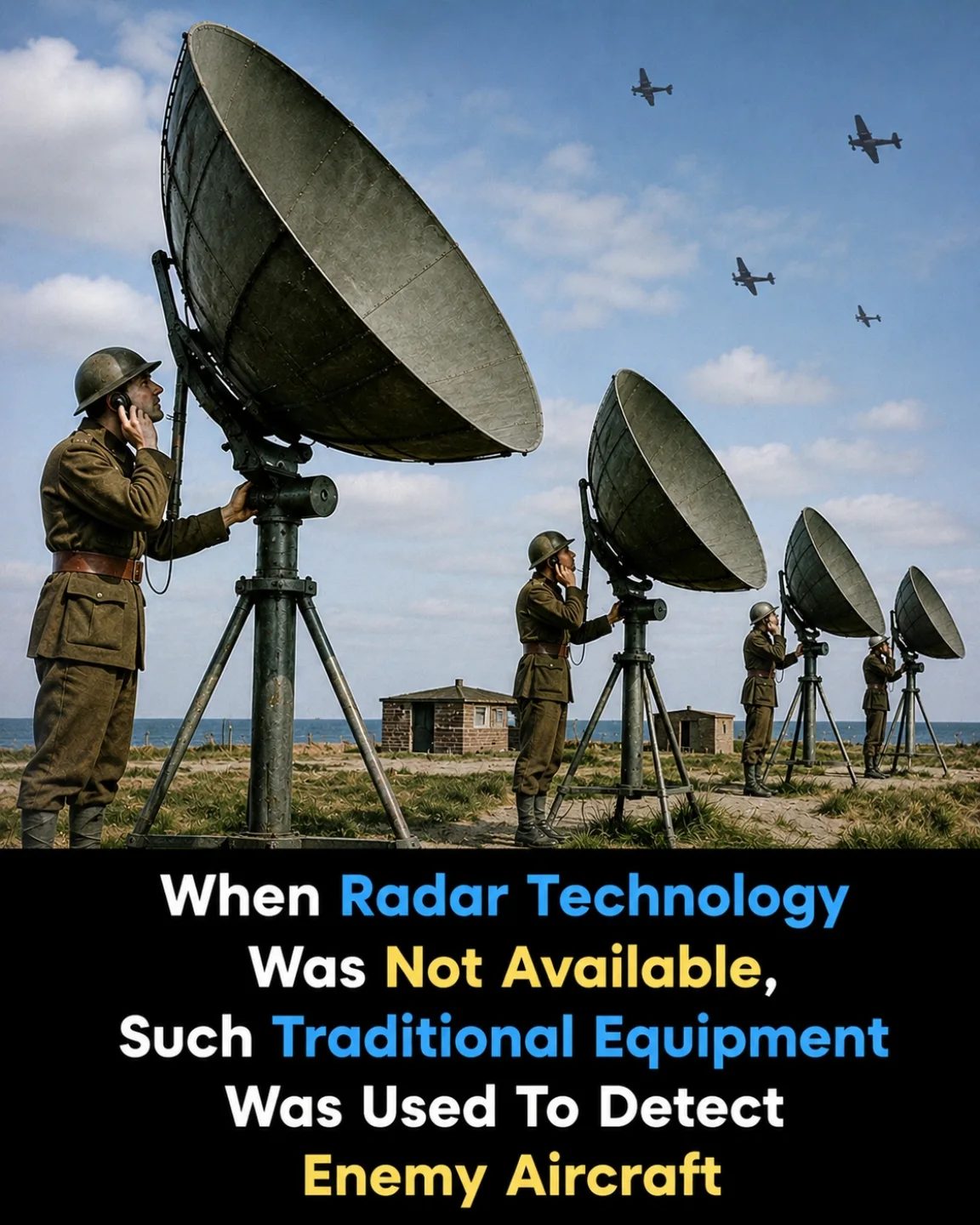
Historical Aircraft Detection
Before the advent of radar technology, detecting enemy aircraft relied on a variety of traditional methods and equipment. These early systems, often rudimentary by modern standards, were crucial for military operations and air defense. Understanding these historical detection methods provides insight into the evolution of military technology and the challenges faced by soldiers during wartime.
Why This Matters
Historical aircraft detection methods are not just relics of the past; they laid the groundwork for the advanced systems we use today. By examining these early techniques, we can appreciate the ingenuity and adaptability of military personnel. Moreover, these methods highlight the importance of situational awareness and communication in military operations, principles that remain relevant in contemporary warfare.
Main Discussion
The Role of Visual Observation
Prior to the invention of radar, visual observation was one of the primary methods for detecting enemy aircraft. Soldiers would be stationed at strategic locations, often high points or lookout towers, to spot approaching aircraft. This method relied heavily on the keen eyesight and vigilance of the observers. Effective communication systems were crucial to relay the sightings to command centers promptly. In a historical context, this might involve the use of flags, smoke signals and even messenger pigeons.
Acoustic Detection
Acoustic detection involved using the sound of aircraft engines to determine their approach. Soldiers trained to recognize the distinct noises of different types of aircraft. This method was particularly useful at night when visual detection was difficult. Specialized equipment, such as sound locators and directional microphones, were used to pinpoint the source of the aircraft's sound.
Mechanical and Electrical Detection
Over time, mechanical and electrical systems began to supplement visual and acoustic detection methods. These systems could detect changes in the environment, such as air pressure or vibration, which might indicate the presence of an aircraft. For example, some early systems used large balloons or kites equipped with microphones to detect the sound of approaching engines. The large, vintage radar equipment depicted in the historical scene highlights these intermediate steps in the development of detection technology.
Radio Direction Finding
Before the advent of radar, radio direction finding (RDF) was used to detect and locate enemy aircraft. This method relied on intercepting radio signals emitted by the aircraft and triangulating their position. RDF systems were crucial during World War I and World War II, providing valuable information about enemy movements. These systems could be relatively simple, involving manually rotating antennas and listening for signal strength, or more sophisticated, utilizing electronic circuitry and display units.
Practical Tips
While modern technology has largely replaced these historical methods, understanding them can still be beneficial. For instance, basic principles of radio direction finding are still used in amateur radio and emergency communication. Additionally, knowing the limitations of early detection systems can enhance our appreciation for the challenges faced by historical military personnel. These insights are valuable for historians, military enthusiasts, and anyone interested in the evolution of technology.
Important Takeaways
- Visual Observation: The need for vigilant observation during wartime underscores the importance of situation awareness and communication.
- Acoustic Detection: The use of sound to detect aircraft highlights the importance of adapting to environmental conditions and utilizing available resources.
- Mechanical and Electrical Detection: The development of more sophisticated detection methods showcases the progression of military technology.
- Radio Direction Finding: The principles of RDF remain relevant in modern communication and navigation systems.
Conclusion
Historical aircraft detection methods, while rudimentary by modern standards, were essential for military operations during wartime. These methods relied on a combination of visual observation, acoustic detection, mechanical and electrical systems, and radio direction finding. Understanding these early techniques provides valuable insights into the evolution of military technology and the challenges faced by soldiers during wartime. By appreciating the ingenuity and adaptability of these early systems, we can better understand the foundation upon which contemporary military and civilian technologies are built.
Watch the Reel
Questions readers ask
How did soldiers detect aircraft before radar technology was developed?
Soldiers primarily relied on visual observation, acoustic detection, and basic mechanical and electrical systems. These methods included using binoculars or telescopes for visual detection, listening for engine noises, and employing early warning devices like microphones and sound locators.
What role did visual observation play in early aircraft detection?
Visual observation was one of the most straightforward and widely used methods for detecting aircraft. Soldiers would use binoculars or telescopes from elevated positions or towers to spot enemy planes, providing crucial information about the aircraft's location, altitude, and direction of flight.
What were some of the acoustic detection methods used before radar?
Acoustic detection involved listening for the sounds of aircraft engines and propellers. Soldiers trained to recognize different engine noises, and specialized devices were created to amplify and locate these sounds, helping to determine the direction and distance of incoming aircraft.
What kinds of primitive equipment were used for early aircraft detection?
Early aircraft detection equipment included basic systems like microphones and sound locators, which were used to detect and locate the sounds of aircraft. Visual aids like binoculars and telescopes were also essential. In some cases, large acoustic mirrors were constructed to focus and amplify aircraft sounds for better detection.
How did historical aircraft detection systems aid in military operations?
These early detection systems were vital for military operations as they provided timely information about incoming threats. By relying on these methods, soldiers could prepare defenses, warn nearby forces, and coordinate responses, even though the technology was much less sophisticated than what we have today.
Related deep dives
Similar reads based on topic and creator.




Recent articles
Fresh deep dives from the latest Reels we unpacked.




Comments
Be the first to comment.