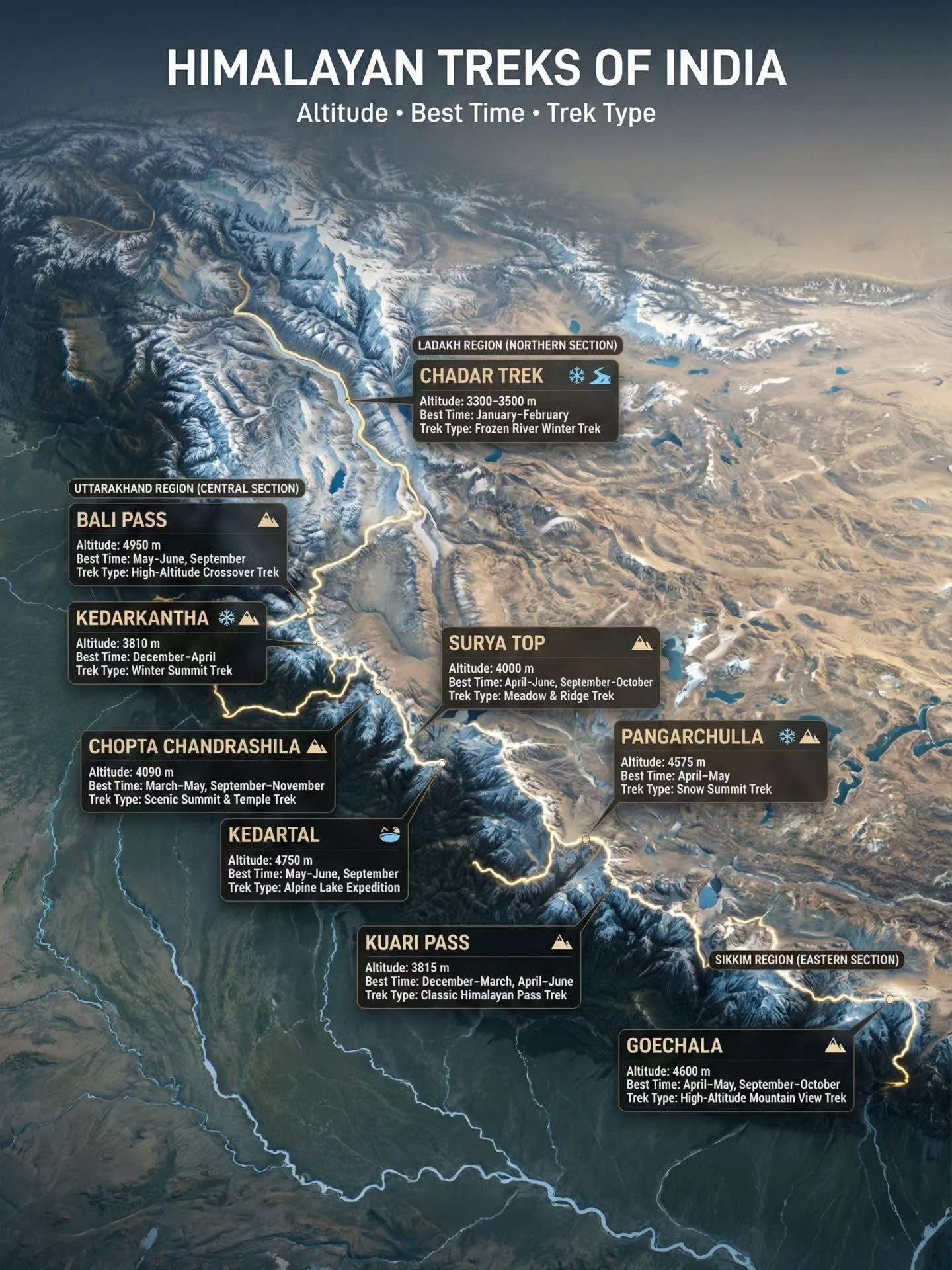
Trekking Destinations in India
India's Himalayan region offers a wealth of trekking opportunities, each with its unique challenges and rewards. Whether you're a seasoned trekker or a beginner looking to explore the great outdoors, the Himalayas have something for everyone. Trekking destinations in India are divided into distinct regions, each with its own set of treks that cater to different skill levels and preferences.
Why this Matters
Trekking in the Himalayas is more than just a physical endeavor. It's a journey through diverse landscapes, cultures, and altitudes. Understanding the best times to visit, the altitude, and the type of trekking experience you can expect is crucial for planning a successful and enjoyable trip. Trekking in India is a popular activity, but it requires careful planning and preparation.
Main Discussion
Ladakh Region (Northern Section)
The Ladakh region, known for its high altitudes and rugged terrain, offers some of the most challenging and rewarding treks in the Himalayas. This region is characterized by its barren landscapes, high passes, and crystal-clear rivers. The most notable trek in this region is the Chadar Trek.
Chadar Trek
The Chadar Trek is a unique winter trek that takes you along the frozen Zanskar River. This trek is perfect for those who love to explore frozen landscapes and experience the winter wonderland of Ladakh. Here are some key details about the Chadar Trek:
- Altitude: 3815 m
- Best Time to Visit: January to February
- Trek Type: Frozen River Winter Trek
The Chadar Trek offers a stunning view of the frozen Zanskar River, which transforms into a natural ice sheet during the winter months. This trek is particularly famous for its ice formations, which vary in shape and size, providing a surreal and mesmerizing experience. The trek starts from Chilling village and ends at Nimmu village, covering a distance of around 100 km. The journey is a mix of walking on the ice sheet and crossing frozen streams, making it a thrilling experience.
Uttarakhand Region (Central Section)
Uttarakhand, situated in the central part of the Himalayas, is a treasure trove for trekkers. It offers a variety of treks that cater to different skill levels. From high-altitude passes to scenic meadows and alpine lakes, Uttarakhand has it all. Some of the popular treks in this region include Bali Pass, Kedarkantha, and Chopta Chandrakila.
Bali Pass
Bali Pass is a challenging trek that offers breathtaking views of the surrounding Himalayan peaks. This trek is perfect for those who want to test their endurance and enjoy the beauty of the Himalayas.
- Altitude: 4950 m
- Best Time to Visit: May-June, September
- Trek Type: Alpine Lake Expedition
The Bali Pass trek starts from Gangotri and takes you through lush green forests, picturesque meadows, and high-altitude lakes. The trek culminates at the Bali Pass, offering panoramic views of the surrounding peaks and valleys. The journey is a mix of physical exertion and spiritual rejuvenation, making it a popular choice among trekkers.
Kedarkantha
Kedarkantha is a winter summit trek that offers a unique experience of trekking through snow-covered landscapes. This trek is perfect for those who want to enjoy the beauty of the Himalayas during the winter months.
- Altitude: 3815 m
- Best Time to Visit: May, September-November
- Trek Type: Winter Summit Trek
The Kedarkantha trek starts from Sankri and takes you through dense forests, meadows, and alpine landscapes. The trek culminates at the Kedarkantha summit, offering panoramic views of the surrounding peaks and valleys. The journey is a mix of physical exertion and spiritual rejuvenation, making it a popular choice among trekkers.
Chopta Chandrakila
Chopta Chandrakila is a scenic summit and temple trek that offers stunning views of the Himalayan peaks. This trek is perfect for those who want to enjoy the beauty of the Himalayas while also visiting ancient temples.
- Altitude: 4090 m
- Best Time to Visit: March-May, September-October
- Trek Type: Scenic Summit & Temple Trek
The Chopta Chandrakila trek starts from Chopta and takes you through lush green forests, picturesque meadows, and ancient temples. The trek culminates at the Chandrakila summit, offering panoramic views of the surrounding peaks and valleys. The journey is a mix of physical exertion and spiritual rejuvenation, making it a popular choice among trekkers.
Sikkim Region (Eastern Section)
Sikkim, located in the eastern part of the Himalayas, is known for its lush green forests, alpine meadows, and high-altitude passes. The region offers some of the most challenging and rewarding treks in the Himalayas. Some of the popular treks in this region include Goecha La and Pangarchulla.
Goecha La
Goecha La is a high-altitude mountain view trek that offers panoramic views of the surrounding peaks and valleys. This trek is perfect for those who want to experience the beauty of the eastern Himalayas.
- Altitude: 4750 m
- Best Time to Visit: May, September-October
- Trek Type: High-Altitude Mountain View Trek
The Goecha La trek starts from Yuksom and takes you through dense forests, alpine meadows, and high-altitude passes. The trek culminates at the Goecha La pass, offering panoramic views of the surrounding peaks and valleys. The journey is a mix of physical exertion and spiritual rejuvenation, making it a popular choice among trekkers.
Practical Tips
Choosing the Right Gear
Trekking in the Himalayas requires the right gear to ensure a safe and comfortable journey. Some essential gear includes:
- Clothing: Layered clothing is essential for trekking in the Himalayas. This includes base layers, insulation layers, and outer layers. Choose moisture-wicking fabrics for base layers and insulation layers, and waterproof and windproof fabrics for outer layers.
- Footwear: Sturdy and comfortable trekking boots are essential for trekking in the Himalayas. Choose boots that are waterproof, have good ankle support, and are broken in before the trek.
- Backpack: A comfortable and durable backpack is essential for carrying your gear. Choose a backpack that has a capacity of 50-60 liters and has a comfortable hip belt and shoulder straps.
- Trekking Poles: Trekking poles can help reduce the impact on your knees and provide stability on steep and uneven terrain.
Physical Fitness
Trekking in the Himalayas requires a good level of physical fitness. Before embarking on a trek, it's essential to prepare your body for the challenges ahead. Some tips for improving your physical fitness include:
- Cardiovascular Exercise: Engage in activities like running, cycling, or swimming to improve your cardiovascular endurance.
- Strength Training: Focus on exercises that target your legs, core, and back muscles, as these are the most used during trekking.
- Flexibility and Balance: Incorporate exercises like yoga or Pilates to improve your flexibility and balance, which can help prevent injuries during the trek.
Altitude Sickness
Altitude sickness is a common issue for trekkers in the Himalayas. It occurs when the body is unable to adapt to the low oxygen levels at high altitudes. Some symptoms of altitude sickness include headache, nausea, dizziness, and shortness of breath. To prevent altitude sickness, it's essential to:
- Acclimatize: Allow your body to acclimatize to the altitude by taking rest days and ascending gradually.
- Stay Hydrated: Drink plenty of water to stay hydrated and help your body cope with the low oxygen levels.
- Avoid Alcohol and Cigarettes: Alcohol and cigarettes can interfere with your body's ability to acclimatize to the altitude.
Important Takeaways
Trekking in the Himalayas is an unforgettable experience that offers a mix of physical exertion and spiritual rejuvenation. Whether you're a seasoned trekker or a beginner, it's essential to choose the right trek, prepare your body, and gather the necessary gear. The Himalayas offer a variety of trekking destinations, each with its unique challenges and rewards. From the frozen landscapes of Ladakh to the lush green forests of Uttarakhand and the high-altitude passes of Sikkim, there's something for everyone in the Himalayas. By choosing the right trek and preparing yourself physically and mentally, you can ensure a safe and enjoyable trekking experience.
Conclusion
The Himalayas are a treasure trove for trekkers, offering a variety of destinations that cater to different skill levels and preferences. From the frozen landscapes of Ladakh to the alpine meadows of Uttarakhand and the high-altitude passes of Sikkim, the Himalayas have it all. By choosing the right trek, preparing your body, and gathering the necessary gear, you can ensure a safe and enjoyable trekking experience. Whether you're a seasoned trekker or a beginner, the Himalayas offer an unforgettable experience that will leave you with memories to last a lifetime.
Watch the Reel
Questions readers ask
What are the best Himalayan treks for high-altitude experiences?
For those seeking high-altitude treks, Ladakh offers some of the most challenging and rewarding experiences. The Markha Valley Trek and the Chadar Trek (frozen river trek) are popular choices, with passes exceeding 3815m. In Uttarakhand, the Rupin Pass Trek provides a high-altitude challenge, while in Sikkim, the Goecha La Trek offers stunning views of Mount Kanchenjunga.
When is the best time to go trekking in Ladakh and Uttarakhand?
The best time to go trekking in Ladakh is from April to October, with summer (June) being particularly ideal due to pleasant day temperatures. In Uttarakhand, the optimal time for trekking is from April to June and September, as these months offer clear skies and moderate temperatures. For winter treks, Sikkim is a great choice, especially from December to February, when the landscapes are covered in snow.
What are the most popular trekking passes in the Himalayas?
The Himalayas are home to numerous trekking passes that offer breathtaking views. Some of the most popular ones include the Rohtang Pass in Himachal Pradesh, the Khardung La and the Chang La in Ladakh, and the Nathu La and the Goecha La in Sikkim. In Uttarakhand, the Rupin Pass and the Kalindikhal Pass are notable for their scenic beauty and challenging terrain.
What should I expect from trekking in Sikkim during the winter?
Winter treks in Sikkim, from December to February, offer a unique experience with snow-covered landscapes and crisp air. Treks like the Goecha La Trek and the Dzongri Trek provide stunning views of Mount Kanchenjunga. However, be prepared for colder temperatures and potential snowfall, which can make the trails more challenging. Proper gear and acclimatization are essential for a safe and enjoyable winter trek.
What are the best treks in September in the Himalayas?
September is an excellent time for trekking in the Himalayas due to the clear skies and moderate temperatures. In Uttarakhand, the Rupin Pass Trek and the Har Ki Dun Trek are highly recommended. In Sikkim, the Goecha La Trek and the Dzongri Trek offer stunning views. For those in Ladakh, the Markha Valley Trek and the Chadar Trek (if conditions permit) are popular choices, providing a mix of cultural and natural beauty.
Are there any treks suitable for beginners in these regions?
Yes, there are treks suitable for beginners in all three regions. In Ladakh, the Stok Kangri Trek is a good starting point, while in Uttarakhand, the Har Ki Dun Trek and the Nag Tibba Trek offer gentle introductions to Himalayan trekking. In Sikkim, the Dzongri Trek is beginner-friendly and provides a taste of the region's natural beauty and cultural richness.
Related deep dives
Similar reads based on topic and creator.



Recent articles
Fresh deep dives from the latest Reels we unpacked.




Comments
Be the first to comment.