Glaciers in the fast lane
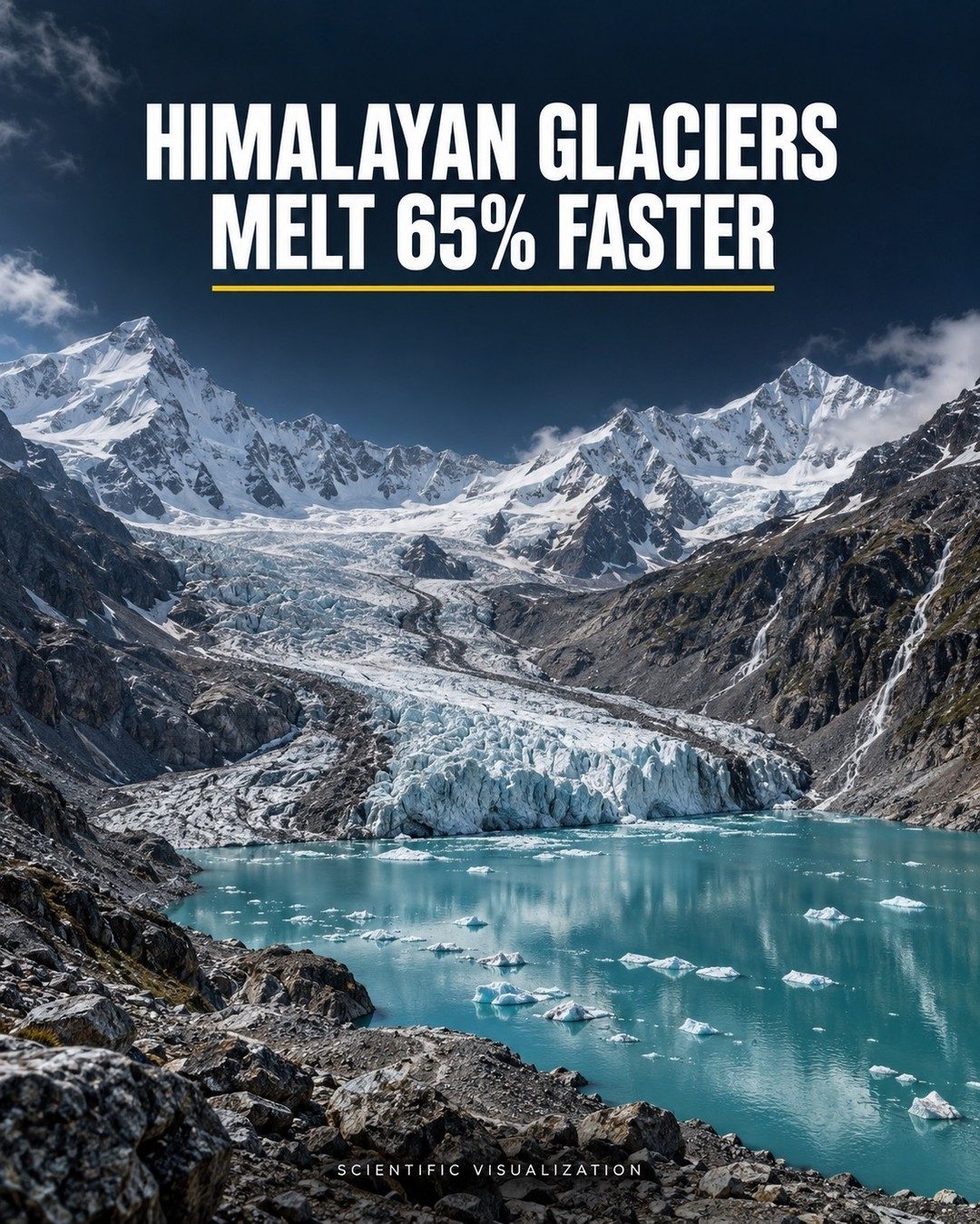
The Himalayan glaciers are melting at an accelerated rate, 65% faster than just ten years ago. This is more than a matter of shifting landscapes; it's a wake-up call about the pace of climate change. The alarming rate is not an isolated phenomenon, but a part of a broader pattern of rapid glacial retreat. A new report emphasizes the level of concern for the Himalayan region, highlighting nearly 200 glacial lakes in India that are classified as high-risk. This classification is not arbitrary, as these lakes pose serious threats to long-term water supplies. The danger is not only about the disappearing ice but also about the potential for sudden glacial lake outburst floods. These floods can occur with little warning, posing a significant risk to communities downstream. What we are witnessing is a vivid illustration of humankind’s inadequacy. "Our glaciers are melting at an alarming rate" is not just a scientific observation, but a distress signal from our planet. The science is clear: the Himalayas are losing ice at an accelerating pace.
The countdown of the glacial lake time bomb
Glacial lakes, formed by melting glaciers, are a byproduct of this accelerated melting. In India, nearly 200 lakes are categorized as high-risk. These lakes, often held back by unstable moraines or ice dams, can burst suddenly, releasing vast amounts of water and posing a grave threat to downstream communities. These glacial lake outburst floods (GLOFs), as they are known, challenge the region's stability. GLOFs are not a new phenomenon, but their increasing frequency and intensity are alarming. Such outburst floods can wreak havoc on local communities, causing sudden and catastrophic flooding. This threats the safety of water sources that are tied to the economies and livelihoods of millions of people. The impact on water security is dire. The Himalayan glaciers are often referred to as the "Third Pole." Their meltwater feeds several of Asia's major rivers, including the Ganges, Brahmaputra, and Indus. These rivers support the livelihoods of hundreds of millions of people. The accelerating melting of these glaciers threatens not only the immediate downstream communities but also the long-term water security of the entire region.
Water security under a time bomb
Water security, an often-overlooked aspect of climate change, is at stake in the Himalayas. As glacial melt accelerates, communities face an uncertain future. The water imbalance is a critical issue affecting the region. The rapid melting of glaciers can lead to short-term increases in water flow, but this is followed by long-term decreases as the glaciers shrink. The unpredictability of water availability poses significant challenges for agriculture, hydropower, and drinking water supplies. These sudden and unpredictable changes place significant stress on the local infrastructure and economies. Long droughts can affect the agricultural calendar. Power plants can be damaged or rendered useless by flash flood waters. The communities need greater adaptability, and the pressure is on policymakers to anticipate and mitigate these risks. The Himalayas are not just a distant range of mountains. When the ice melts at a 65% faster rate than a decade ago, it does not merely change the landscape. It changes the lives of communities dependent on the glaciers.
Watch the Reel
Related deep dives
Similar reads based on topic and creator.
Recent articles
Fresh deep dives from the latest Reels we unpacked.
Comments
Be the first to comment.