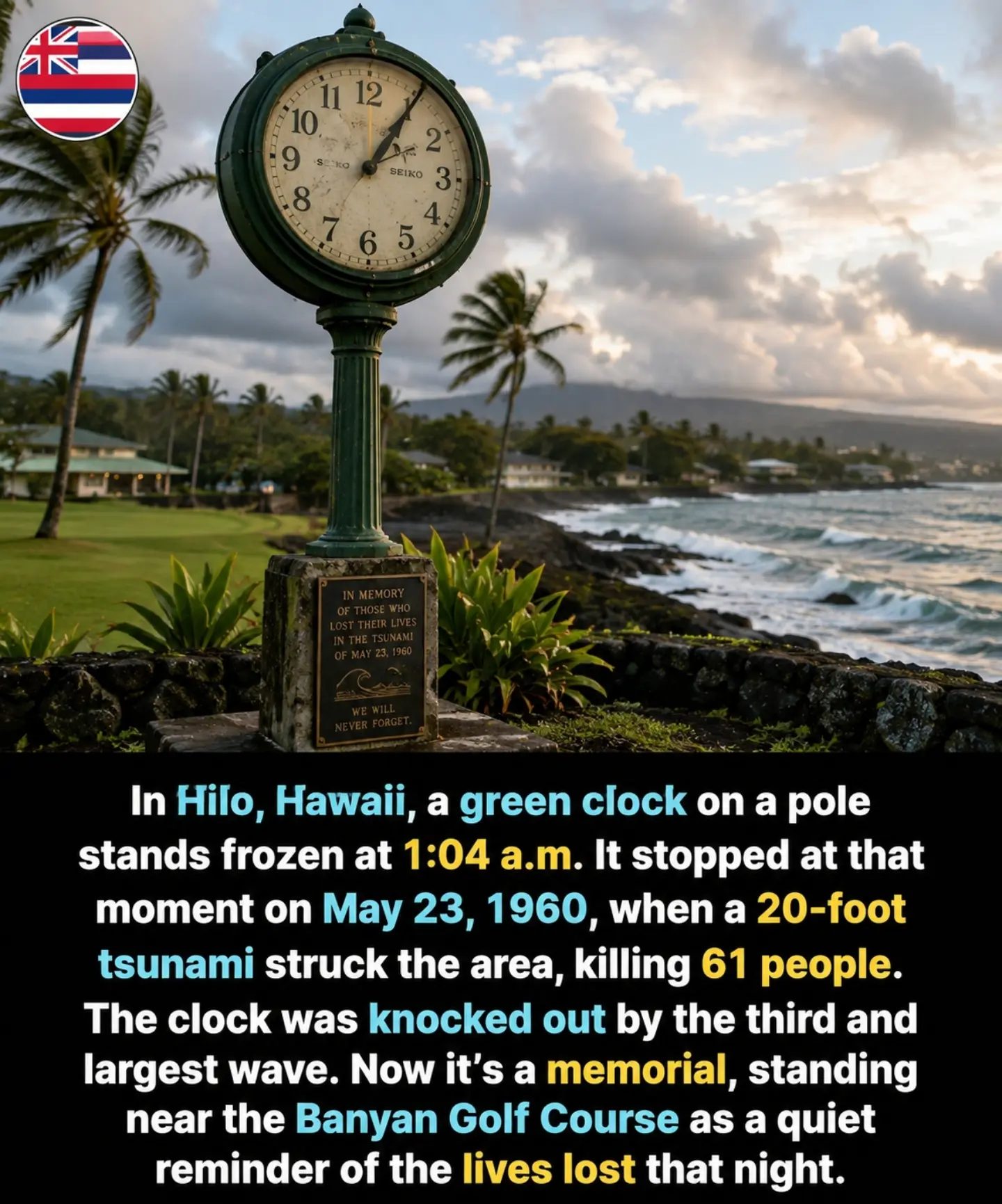
Memorial Clock in Hilo, Hawaii
Near the Banyan Golf Course in Hilo, Hawaii, stands a memorial clock that serves as a poignant reminder of a tragic event that occurred on May 23, 1960. This clock, manufactured by Seiko, is not just a timepiece; it is a memorial to the lives lost during the devastating tsunami that struck the area that fateful night. The clock is frozen at 1:04 a.m., marking the exact moment when the third and largest wave hit the coast, forever etching the time into the memory of the community.
Why This Matters
The memorial clock in Hilo is more than just a historical artifact; it is a symbol of resilience and remembrance for the community. It stands as a quiet reminder of the lives lost and the power of nature. Understanding the significance of this memorial can provide insights into the impact of natural disasters and the ways communities honor and remember their past.
The 1960 Tsunami
The Devastating Event
On May 23, 1960, a massive 20-foot tsunami struck the coast of Hilo, Hawaii. This tsunami was the result of a 9.5 magnitude earthquake that occurred off the coast of Chile. The tsunami traveled across the Pacific Ocean, causing widespread destruction and loss of life in Hawaii. In Hilo, the impact was particularly severe, with the third and largest wave knocking out the Seiko clock, which has since been preserved as a memorial.
The Loss of Life
The tsunami claimed the lives of 61 people in Hilo. The devastation was profound, and the community was left to grapple with the aftermath. The memorial clock serves as a tribute to those who lost their lives, ensuring that their memory lives on.
The Impact on the Community
The 1960 tsunami left an indelible mark on the community of Hilo. The destruction and loss of life were devastating, but the community came together to rebuild and remember those who were lost. The memorial clock is a testament to their resilience and determination to honor the memory of their loved ones.
The Memorial Clock
A Symbol of Remembrance
The memorial clock is a simple yet powerful symbol of remembrance. Its frozen hands at 1:04 a.m. serve as a constant reminder of the lives lost and the community's resilience. The clock stands as a silent sentinel, honoring the memory of those who perished in the tsunami.
The Significance of the Time
The time frozen on the clock, 1:04 a.m., holds deep significance. It marks the exact moment when the third and largest wave hit the coast, causing the most devastation. This precise moment is etched into the memory of the community, and the clock serves as a tangible reminder of that fateful night.
The Location and Design
The memorial clock is strategically located near the Banyan Golf Course, a place of natural beauty and tranquility. The clock is mounted on a pole, standing tall and visible. Its simple design, with a green face and clear numerals, makes it easily recognizable and a focal point for those who visit the memorial.
Practical Tips for Visiting the Memorial
Respect the Memorial
When visiting the memorial clock, it is important to approach it with a sense of respect and solemnity. This is a place of remembrance, and visitors should be mindful of the significance of the location. Take a moment to reflect on the lives lost and the community's resilience in the face of tragedy.
Learn About the History
Visiting the memorial clock is an opportunity to learn about the history of Hilo and the impact of the 1960 tsunami. Take the time to read the inscriptions and understand the significance of the memorial. This will enhance your appreciation for the site and its importance to the community.
Pay Your Respects
Paying your respects at the memorial clock can be a meaningful experience. Whether you leave a small tribute, take a moment of silence, or simply reflect on the significance of the site, your presence and acknowledgment are important to the community and the memory of those who were lost.
Important Takeaways
- The memorial clock in Hilo, Hawaii, commemorates the 1960 tsunami that claimed 61 lives.
- The clock, manufactured by Seiko, is frozen at 1:04 a.m., marking the exact moment when the third and largest wave hit the coast.
- The memorial serves as a symbol of remembrance and resilience for the community.
- Visiting the memorial clock is an opportunity to learn about the history of Hilo and pay respects to those who were lost.
Conclusion
The memorial clock in Hilo, Hawaii, stands as a powerful reminder of the 1960 tsunami and the lives lost during that tragic event. The clock's frozen hands at 1:04 a.m. serve as a constant reminder of the community's resilience and determination to honor the memory of those who were lost. Visiting the memorial is an opportunity to reflect on the past, pay respects, and appreciate the significance of this historical site.
Watch the Reel
Questions readers ask
What is the significance of the time 1:04 a.m. on the Hilo memorial clock?
The time 1:04 a.m. on the Hilo memorial clock signifies the moment when the third and largest wave of the 1960 tsunami struck the shore, marking a crucial point in the community's history. This time is a reminder of the lives lost and a testament to the community's enduring resilience.
Why was a Seiko clock chosen for the memorial?
The Seiko clock was chosen for its durability and reliability, ensuring it would stand the test of time as a memorial. Additionally, it was an available and popular brand in Hawaii, lending a personal connection to the community.
How does the memorial clock honor the lives lost in the 1960 tsunami?
The memorial clock serves as a constant reminder of the 61 lives lost during the 1960 tsunami. By keeping the time frozen at 1:04 a.m., it ensures that the memory of the tragedy and those who perished remains vivid in the community's collective consciousness.
Where can the Hilo memorial clock be found?
The memorial clock in Hilo, Hawaii, is located near the Banyan Golf Course. This location is significant because it is close to the shore, where the tsunami's impact was most devastating, making it a poignant site for remembrance.
What role does the memorial clock play in the community today?
The memorial clock serves as a symbol of remembrance and resilience for the community in Hilo. It reminds residents and visitors of the power of nature and the importance of preparedness, while also honoring those who lost their lives in the 1960 tsunami.
Are there any other memorials in Hilo related to the 1960 tsunami?
In addition to the memorial clock, there are other sites in Hilo that honor the memory of the 1960 tsunami, such as the Tsunami Museum and historic markers placed throughout the town. These sites provide a deeper understanding of the event and its lasting impact on the community.
Related deep dives
Similar reads based on topic and creator.



Recent articles
Fresh deep dives from the latest Reels we unpacked.




Comments
Be the first to comment.