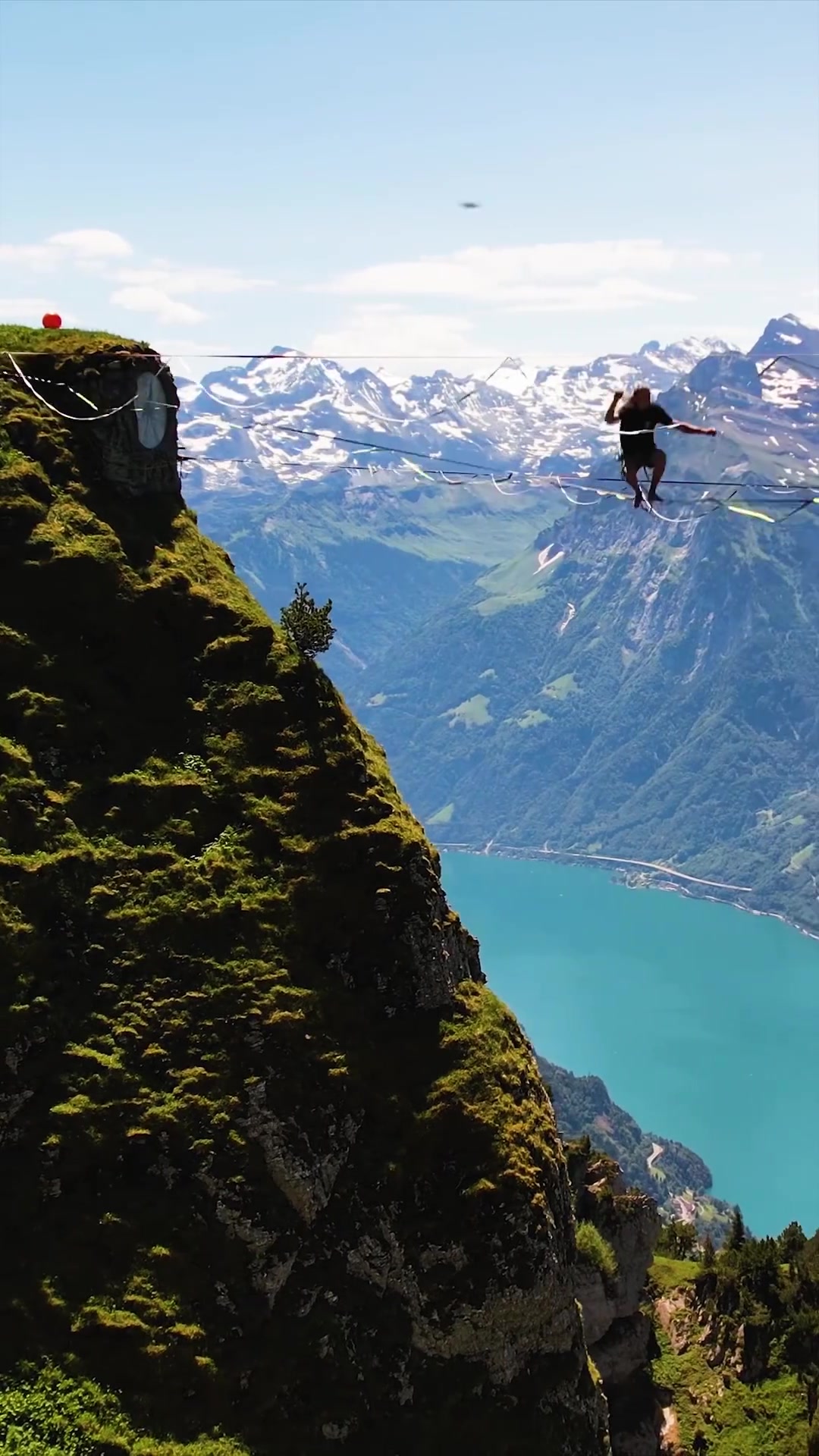
Walking a highline between mountain peaks is an extreme sport, and it requires exceptional balance and focus. In this short video, a person performs a stunning feat of agility and bravery, navigating a highline suspended between the majestic peaks. The only direct phrase uttered is: "It's got tissue that I wish you saw, Sidecaps to Mr. Know It All, I'll close your eyes and I'll kiss you, Cause with the birds I'll share."
The Art of the Highline
The highline is a variant of slacklining where a narrow, flat webbing ribbon is tightened between two fixed points — typically anchored to cliffs or mountains. Practitioners execute walks or tricks with minimal equipment, harnessed solely for safety. A highline course is not flat, but tilted or curved along the peaks. Performing a highline between mountain peaks challenges an athlete's balance and mental fortitude. There’s no room for error. Skill, courage, and a deep understanding of one’s physical limits are essential to every move. A highliner’s equilibrium is tested by swift wind gusts as they navigate the slope between two mountain tops. The extreme nature of the highline endurance test makes it a niche sport that attracts dedicated thrill-seekers. Participants often describe the experience as both a physical and mental challenge. No specialized gear or training program will compensate for the unique demands placed on the mind and body, nor the unique risks. In this case, the highliner shares a particular love for ‘birds’ and ‘sidecaps,’ evoking an element of whimsy and bravado to the extreme sport.
The Alps' Allure
The Alps create a perfect stage for such daring stunts. From the snow-kissed peaks of the Swiss Alps, the highline course opens to vast, lush valleys, and a sparkling lake below. But beyond scenery, the sport is about pushing one’s boundaries. The highline against the Swiss Alps is an invitation to seek out nature in its rawest form, and this landscape has long held a siren's call to the brave and curious. People have been exploring the high-mountain environment for generations. It has been a proving ground for what the human body can endure — and enjoy. Stepping onto a highline course over an Alpine lake demands more than physical strength. The combination of thrill and tranquility is without equal.
The Moves
Highlining between peaks is an exercise in balance, focus, and precision. Here’s a snapshot of the essential moves and skills involved.
Balance and Equilibrium
Every step on a highline is a battle against gravity. Highliners have to maintain their center of gravity directly above the line and remain balanced to avoid falling. “I’ll close your eyes and I’ll kiss you” — there's no room for hesitation. Advancers are the ones who learn to tune out distractions and trust their bodies to stay upright.
Swinging and Tricks
While basic walking is the linchpin of highlining, advanced highliners often incorporate swings and tricks. Side steps allow for turning. Additionally, the highliner can execute flips, jumps, spinning tricks, and acrobatic routines. According to the distinctive Alpine highline course, the individual manages to navigate a highline in a dynamic way.
The Highline’s Mental Game
The mental aspect of highlining is as intense as the physical demands. The risk of injury, the height, and the sheer isolation can be overwhelming.
Overcoming Fear
Fear is a constant companion. The Swiss Alps’ highline offers a natural challenge to athletes. Overcoming fear and testing one’s mental limits is part of what makes this extreme sport so addictive. The Swiss Alps serve as a crucible for mental strength. The highline, coupled with the breathtaking backdrop, becomes a proving ground for the human spirit and an unforgettable experience.
How to Embark on Your Own Alpine Highline Adventure
Your journey to conquering the highline begins with finding a trained guide to get you acquainted with the sport. Take the following steps to embark on your Alpine adventure.
- Find a Guide: Look for highline experts offering courses in the Swiss Alps. They will teach you the basics and ensure your safety.
- Get Equipped: Use a high line and harness for safety, a good pair of shoes with a proper grip, and weather-appropriate clothing.
- Master Balance: Practice on a flat line before moving to more challenging terrains.
- Be Ready for the Mindset: Prepare for the mental challenge as much as the physical. There are few feelings as exhilarating as pushing past your mental boundaries.
Find the Rhythm
For many, the appeal of highlining lies in finding the rhythm between nature and self. The highline enthusiast learns to listen to both their body and the elements, achieving a harmony that can be spiritual, with the birds and alone. The highline course, especially against the Swiss Alps, is a unique challenge and an enduring feeling of accomplishment. The experience leaves an athlete humbled by the environment and invigorated by the achievement.
Watch the Reel
Questions readers ask
What exactly is a highline and how does it differ from regular slacklining?
A highline is a type of slacklining where a narrow, flat webbing ribbon is stretched between two fixed points, often cliffs or mountains, creating a tilted or curved course. Unlike regular slacklining, which is usually flat and closer to the ground, highlining is performed at significant heights and requires exceptional balance and focus to navigate the challenging terrain.
How does someone prepare to walk a highline between mountain peaks?
Preparing to walk a highline between mountain peaks involves developing exceptional balance, focus, and a deep understanding of one's physical limits. There’s no specialized gear or training program that can fully compensate for the unique demands and risks. Participants often describe the experience as both a physical and mental challenge, requiring skill, courage, and the ability to remain calm under extreme conditions.
What makes the Swiss Alps an ideal location for highlining?
The Swiss Alps provide a stunning backdrop for highlining with their majestic peaks, lush valleys, and sparkling lakes. Beyond the scenery, the Alps offer a challenging environment that tests both physical strength and mental fortitude. The combination of thrill and tranquility makes the experience unique and invigorating.
What are some of the essential moves and skills required for highlining?
Essential moves and skills for highlining include maintaining balance and equilibrium by keeping the center of gravity directly above the line, tuning out distractions, and trusting the body to stay upright. Advanced highliners also incorporate swings, side steps, jumps, spinning tricks, and acrobatic routines, adding a dynamic element to their performance.
Can anyone try highlining, or is it only for experienced athletes?
Highlining is not for everyone and is generally reserved for experienced athletes with a high level of balance and focus. The extreme nature of the sport and the unique risks involved require a deep understanding of one's physical limits and the ability to handle both physical and mental challenges.
What kind of equipment is used in highlining?
Highliners use minimal equipment, typically a narrow, flat webbing ribbon tightened between two fixed points and a harness for safety. The focus is on the athlete's skill and courage rather than relying on specialized gear, emphasizing the importance of balance and mental fortitude.
Related deep dives
Similar reads based on topic and creator.

Recent articles
Fresh deep dives from the latest Reels we unpacked.


Comments
Be the first to comment.