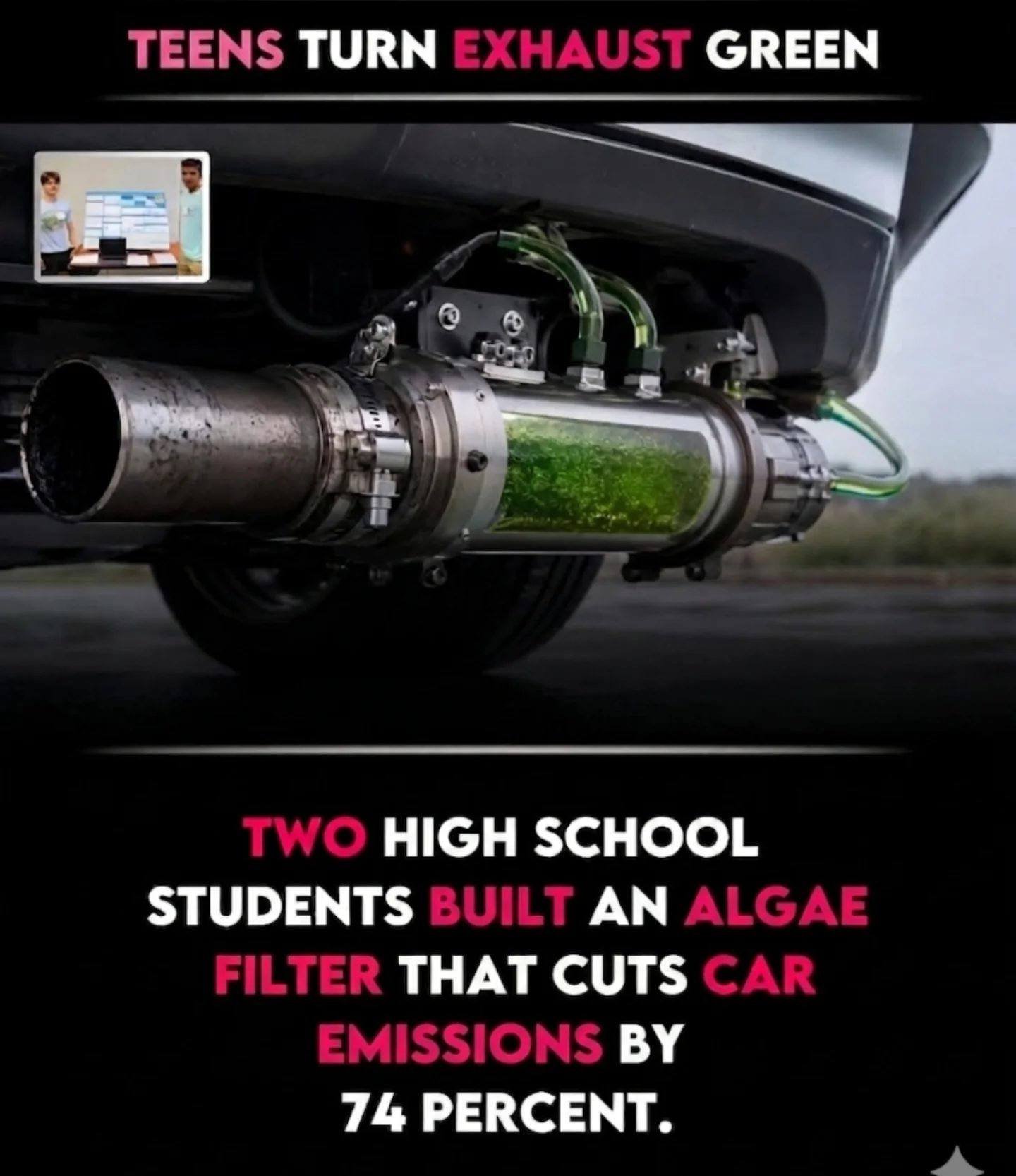
Algae-Based Carbon Capture Technology for Vehicle Emissions
Algae-based carbon capture technology is revolutionizing the way we think about vehicle emissions. High school students Aryan Bhatt and Sumanth Reddy have developed a prototype catalytic filter that attaches to vehicle exhaust pipes. This innovative solution uses live algae to convert carbon dioxide and toxic fumes into breathable oxygen, achieving up to a 74% reduction in CO₂ emissions during controlled testing.
The Technology Behind Algae-Based Carbon Capture
The heart of this technology lies in a specialized housing that effectively maintains live algae. These algae are designed to withstand the harsh conditions of vehicle exhaust systems. The compact bioreactor, when integrated into the exhaust pipe, facilitates a chemical reaction that converts harmful emissions into oxygen. This process not only reduces the carbon footprint of vehicles but also contributes to cleaner air.
Why This Matters
With the increasing focus on sustainability and climate change, finding effective ways to reduce vehicle emissions is crucial. Traditional methods often rely on complex and expensive technologies, making them less accessible. However, the algae-based carbon capture system offers a more affordable and scalable solution. By converting harmful gases into oxygen, this technology directly addresses the issue of air pollution, making it a valuable addition to the current environmental efforts.
How the Algae Filter Works
The algae filter is designed to be a compact bioreactor, which means it can be easily integrated into existing vehicle exhaust systems. The key points of the system include:
- Live Algae Maintenance: The bioreactor ensures that the algae can thrive in the high-temperature, high-impact environment of a vehicle exhaust system. The algae are housed in a specialized container that allows for optimal growth and efficiency.
- Chemical Conversion: The algae absorb carbon dioxide and toxic fumes from the exhaust, converting these harmful substances into breathable oxygen. This process not only reduces emissions but also produces a beneficial byproduct.
- Environmental Impact: By reducing emissions by up to 74%, this technology significantly lowers the carbon footprint of vehicles, contributing to cleaner air and a healthier environment.
Algae Filters in Action
The system's effectiveness has been validated by experts at Arizona State University’s Sustainability Institute. They confirmed that the algae filter aligns with current biofiltration research, highlighting its potential as a sustainable solution. The technology has also received recognition at a regional science fair, where it won top honors and attracted interest from environmental engineers. This validation underscores the potential of youth innovation in tackling climate challenges.
Practical Tips for Implementing Algae Filters
While the technology is still in its prototype phase, the following steps can help in implementing similar systems:
- Research and Development: Collaborate with environmental engineers and sustainability experts to refine the technology. Ongoing research can lead to improvements in efficiency and durability.
- Pilot Projects: Conduct pilot projects in controlled environments to gather data on the system's performance. This will help in identifying any potential challenges and areas for improvement.
- Scalability: Develop strategies to scale the technology for mass production. This includes designing cost-effective bioreactors and streamlining the manufacturing process.
- Regulatory Compliance: Work with regulatory bodies to ensure that the technology meets all necessary standards and regulations. This will facilitate widespread adoption.
Important Takeaways
Algae-based carbon capture technology offers a promising solution for reducing vehicle emissions. The key takeaways include:
- Efficiency: The technology achieves up to a 74% reduction in CO₂ emissions, making it a highly effective solution.
- Sustainability: By using live algae, the system converts harmful emissions into breathable oxygen, promoting a cleaner environment.
- Innovation: Developed by high school students, this technology showcases the potential of youth innovation in addressing climate challenges.
- Validation: Recognized by sustainability experts and environmental engineers, the algae filter is a credible and promising solution.
Conclusion
The algae-based carbon capture technology developed by Aryan Bhatt and Sumanth Reddy represents a significant step forward in the fight against climate change. By converting harmful vehicle emissions into breathable oxygen, this innovative solution offers a sustainable and effective way to reduce the carbon footprint of vehicles. As we continue to develop and refine this technology, we can look forward to a future where standard vehicles contribute to a cleaner and healthier environment, showcasing the transformative power of youth innovation in climate tech.
Watch the Reel
Questions readers ask
How did high school students Aryan Bhatt and Sumanth Reddy develop their innovative algae filter?
Aryan Bhatt and Sumanth Reddy created a prototype catalytic filter that uses live algae to convert carbon dioxide and toxic fumes into oxygen. They designed a specialized housing to maintain the algae in the harsh conditions of vehicle exhaust systems, achieving significant emission reduction.
What is the primary function of the algae filter in reducing vehicle emissions?
The algae filter works by converting carbon dioxide (CO₂) and toxic fumes from vehicle exhausts into oxygen through a process facilitated by live algae, thereby reducing harmful emissions by up to 74%.
How does the algae filter attach to a vehicle and function?
The algae filter is designed to attach directly to the vehicle's exhaust pipe. It houses live algae in a compact bioreactor that can withstand the exhaust system's conditions, effectively converting harmful emissions into oxygen as the vehicle operates.
What are the benefits of using an algae filter for vehicle emissions?
Using an algae filter for vehicle emissions offers several benefits, including a significant reduction in CO₂ and toxic fumes, improved air quality, and a potential combatant against climate change. Additionally, the technology is cost-effective and innovative.
Are there any specific conditions the algae in the filter must endure in a vehicle's exhaust system?
The algae in the filter must be able to withstand high temperatures and harsh environmental conditions typical of a vehicle's exhaust system. The specialized housing is designed to maintain the algae's viability and effectiveness in these conditions.
How effective is the algae filter in reducing Arizona's vehicle emissions?
The algae filter has shown promising results, reducing emissions by up to 74% during controlled testing. This makes it a viable solution for improving air quality in regions like Arizona, where vehicle emissions are a significant contributor to air pollution.
Can this algae filter technology be applied to other types of emissions besides vehicle exhausts?
While the algae filter was specifically designed for vehicle exhausts, the underlying technology could potentially be adapted for other sources of carbon emissions. The key is to ensure the algae can thrive in the specific conditions of the new application.
Related deep dives
Similar reads based on topic and creator.




Recent articles
Fresh deep dives from the latest Reels we unpacked.




Comments
Be the first to comment.