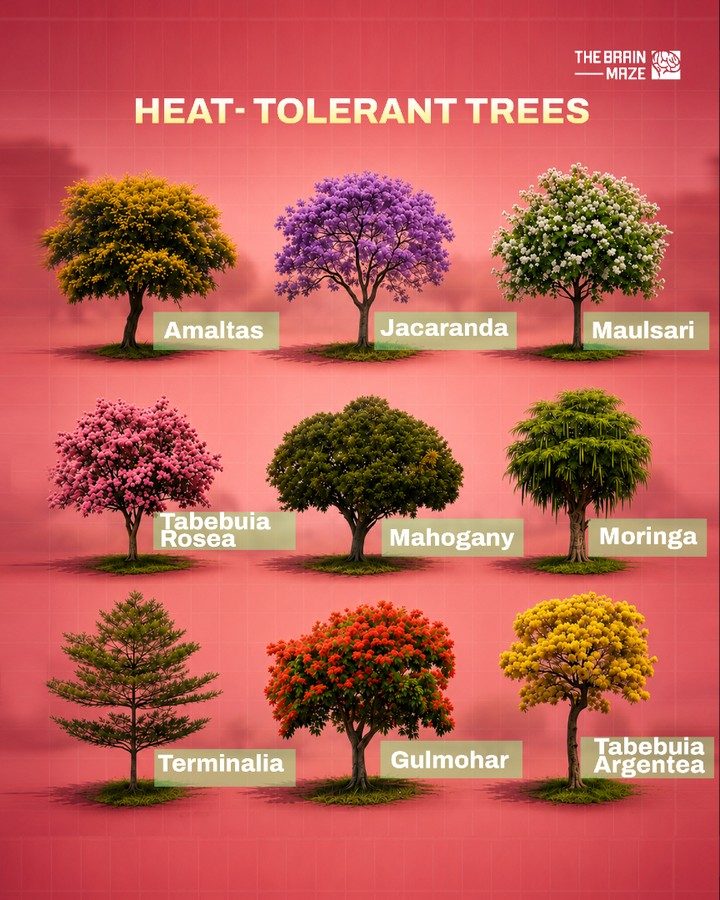
Heat-Tolerant Trees
Planting trees offers numerous benefits, but not all trees can withstand high temperatures. As cities and neighborhoods face rising temperatures, prioritizing heat-tolerant tree species is essential for creating sustainable urban environments. These trees don't just enhance the aesthetics of surroundings; they contribute to cooler neighborhoods, improved air quality, and increased biodiversity.
Why This Matters
Selecting heat-tolerant trees is crucial for building climate-resilient communities. As temperatures rise, these trees can help mitigate the urban heat island effect, where built-up areas are significantly warmer than their rural surroundings. By providing shade and cooling the environment, these trees improve living conditions for both people and wildlife. Moreover, they support local biodiversity by creating habitats for various species and improving overall air quality. Species like Jacaranda, Gulmohar, Mahogany, Moringa, and Tabebuia are excellent choices for warm climates.
Key Species for Warm Climates
Several tree species are particularly well-suited to thrive in high temperatures. These trees offer a range of benefits, from providing ample shade to supporting local ecosystems.
Jacaranda
Jacaranda trees are renowned for their beautiful purple or blue flowers. They thrive in warm climates and provide ample shade, making them an excellent choice for urban areas. Jacaranda trees are also known for their resilience, adapting well to a variety of soil conditions.
Gulmohar
Also known as the Flame of the Forest, the Gulmohar tree is another heat-tolerant species. Its vibrant red or orange flowers add a striking visual element to any landscape. These trees are also drought-resistant, making them well-suited for arid regions.
Mahogany
Mahogany trees are not only heat-tolerant but also provide valuable timber. They are known for their dense, richly colored wood, which is highly prized in furniture and construction. Mahogany trees also offer excellent shade and can grow in a variety of soil types.
Moringa
The Moringa tree, often referred to as the "drumstick tree," is a powerhouse of nutrients. Every part of the tree, from the leaves to the seeds, is edible and packed with vitamins and minerals. Moringa trees are highly resilient and can thrive in harsh conditions, making them ideal for urban environments.
Tabebuia
Tabebuia trees, which include species like Tabebuia Rosea and Tabebuia Argentea, are celebrated for their stunning trumpet-shaped flowers. These trees are highly adaptable and can thrive in a range of climates, including areas with high temperatures. They provide excellent shade and support local wildlife.
Other Heat-Tolerant Species
In addition to the species mentioned, other notable heat-tolerant trees include:
Amaltas: Known for its bright yellow flowers, Amaltas trees are drought-resistant and provide ample shade.
Maulsari: This tree species is known for its fragrant flowers and is well-suited for warm climates.
Tabebuia Argentea: This tree is known for its beautiful white flowers and is highly adaptable to various soil and climate conditions.
Terminalia: These trees are known for their durability and are often used in landscaping due to their heat and drought tolerance.
Benefits of Planting Heat-Tolerant Trees
Planting heat-tolerant trees offers numerous advantages, ranging from environmental benefits to economic gains.
Cooling Effect: These trees help to reduce urban heat by providing shade and evaporative cooling. This not only makes outdoor spaces more comfortable but also reduces the demand for air conditioning, leading to lower energy consumption.
Air Quality: Trees act as natural air filters, absorbing harmful pollutants and releasing oxygen. By improving air quality, these trees contribute to better health outcomes for residents.
Habitat Creation: Heat-tolerant trees support a variety of wildlife, from birds and insects to larger animals. This biodiversity enriches the local ecosystem and contributes to a more balanced environment.
Aesthetic Value: Trees enhance the visual appeal of any landscape. Their presence can make urban areas more attractive, increasing property values and improving overall quality of life.
Practical Tips for Planting and Maintaining Heat-Tolerant Trees
When selecting and planting heat-tolerant trees, consider the following tips.
Choosing the Right Species: Opt for species that are known to thrive in your specific climate. Consult with local nurseries or arborists for recommendations tailored to your area.
Proper Planting: Ensure that the tree is planted at the correct depth and in a location that provides sufficient space for its roots and canopy to grow.
Watering and Mulching: While many heat-tolerant trees are drought-resistant, regular watering, especially during the first few years, is essential. Mulching around the base of the tree helps retain moisture and suppresses weeds.
Pest and Disease Management: Regularly inspect your trees for signs of pests or disease. Early detection and treatment can prevent more significant issues down the line.
Important Takeaways
Planting heat-tolerant trees is a proactive step towards creating sustainable and resilient urban environments. By choosing the right species and providing the necessary care, these trees can provide numerous benefits, from cooling effects and improved air quality to enhanced aesthetics and biodiversity support. As temperatures continue to rise, investing in these trees is a practical and forward-thinking approach to urban planning.
Conclusion
As climate change brings higher temperatures, prioritizing heat-tolerant trees in urban landscapes is essential. Species like Jacaranda, Gulmohar, Mahogany, Moringa, and Tabebuia offer a range of benefits, from cooling the environment to supporting local biodiversity. By planting these trees today, communities can enhance their resilience and build a greener, healthier future.
Watch the Reel
Questions readers ask
What makes a tree species heat-tolerant?
Heat-tolerant tree species can withstand and thrive in high temperatures, making them suitable for urban environments. These trees often have adaptations such as deep root systems, waxy leaves, and efficient water-use mechanisms, which help them endure heat and drought.
Which tree species are best for mitigating the urban heat island effect?
Species like the Jacaranda, Gulmohar, and Mahogany are excellent choices for this purpose. These trees provide ample shade, which can significantly cool the surrounding area, and they are known for their ability to thrive in hot urban climates.
How do trees like the Tabebuia contribute to urban resilience?
Tabebuia trees, also known as trumpet trees, offer multiple benefits for urban resilience. They provide abundant shade, improve air quality by absorbing pollutants, and support local ecosystems by offering habitat and food for various species. Furthermore, their heat tolerance makes them well-suited for urban areas.
What are the benefits of planting Moringa trees in urban areas?
Moringa trees are highly heat-tolerant and offer numerous benefits for urban environments. They improve air quality, provide shade, and even offer nutritional benefits, as their leaves and pods are edible. Additionally, Moringa trees require minimal water, making them a sustainable choice for water-efficient landscaping.
How can planting the right trees improve urban air quality?
Certain tree species, such as the Gulmohar and Mahogany, can significantly improve urban air quality. These trees absorb pollutants like carbon dioxide, sulfur dioxide, and particulate matter, helping to reduce smog and other air pollutants. Additionally, they release oxygen, contributing to a cleaner, healthier urban atmosphere.
What factors should be considered when selecting heat-resistant trees for urban planting?
When choosing heat-resistant trees for urban areas, consider factors such as the tree's mature size, root system, water needs, and tolerance to urban stressors like pollution and compacted soil. It's also important to select trees that offer multiple benefits, such as shade, improved air quality, and support for local wildlife.
Related deep dives
Similar reads based on topic and creator.


Recent articles
Fresh deep dives from the latest Reels we unpacked.




Comments
Be the first to comment.