Record-Breaking Temperatures in U.S. Cities
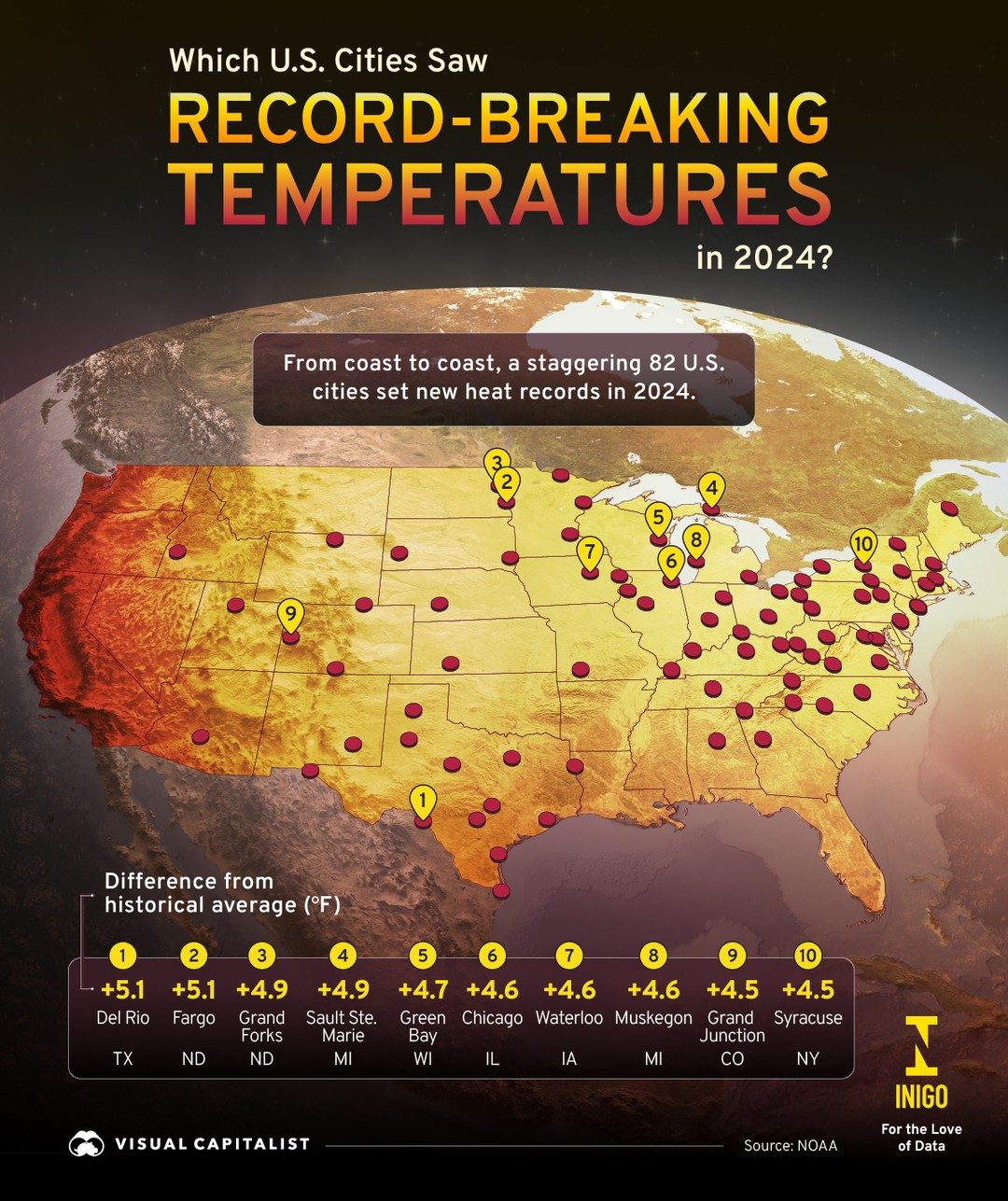
In 2024, the United States witnessed a dramatic shift in climate patterns as a staggering 82 cities set new all-time temperature records. These record-breaking temperatures were not confined to regions typically known for extreme heat but were observed across the country, from coast to coast. This phenomenon underscores the far-reaching impacts of climate change and the increasing frequency of heatwaves.
Why This Matters
The unprecedented rise in temperatures across various cities highlights a critical issue: the intensifying effects of climate change. Understanding the scope and impact of these temperature records is essential for public health, urban planning, and environmental policy. As temperatures continue to rise, cities must adapt to mitigate the risks associated with extreme heat, such as heat-related illnesses and infrastructure failures.
Main Discussion
Geographical Spread
The geographic diversity of the affected cities is striking. From Del Rio, Texas, to Grand Forks, North Dakota, and from Sault Ste. Marie, Michigan, to Chicago, Illinois, the heatwave has left no region unscathed. This widespread impact challenges the traditional understanding of heatwaves as localized events.
Climate Change and Urban Heat Islands
Climate change is driving the increase in average temperatures, but urban heat islands also play a significant role. These urban environments, characterized by dense construction and reduced vegetation, trap heat, leading to higher temperatures than their rural counterparts. Cities like Chicago and Syracuse, which experienced temperature differences of +4.6°F and +4.9°F respectively, exemplify this effect.
Data Insights
The data, sourced from the National Oceanic and Atmospheric Administration (NOAA), reveals that the temperature differences from the historical average ranged from +4.5°F to +5.1°F. This significant deviation underscores the urgency of addressing climate change and its impacts on urban environments.
Practical Tips
If you reside in an area affected by record-breaking temperatures, consider the following practical tips to stay safe and comfortable:
Stay Hydrated
Drink plenty of water to maintain hydration, even if you do not feel thirsty. Dehydration can occur quickly in extreme heat.
Limit Outdoor Activities
Avoid strenuous activities during the hottest parts of the day. Schedule outdoor activities for early morning or late evening when temperatures are cooler.
Use Air Conditioning
If available, use air conditioning to maintain a comfortable indoor temperature. For those without air conditioning, consider visiting public spaces like libraries or shopping malls that offer cool environments.
Protect Your Home
Insulate your home to keep it cool. Use curtains, blinds, or reflective window films to block sunlight and reduce indoor heat. Fans can also help circulate air and create a cooling effect.
Important Takeaways
- Climate Change Impact: The 2024 temperature records are a stark reminder of the ongoing effects of climate change.
- Urban Heat Islands: Cities must address urban heat islands to mitigate the impacts of extreme heat.
- Data-Driven Insights: Accurate data from sources like NOAA is crucial for understanding and responding to climate change.
- Public Health and Safety: Extreme heat poses significant risks to public health, necessitating proactive measures to protect vulnerable populations.
Conclusion
The record-breaking temperatures experienced by 82 U.S. cities in 2024 serve as a wake-up call to the urgent need for climate action. As temperatures continue to rise, cities must adapt and implement strategies to protect their residents. By understanding the data and taking practical steps, we can mitigate the impacts of extreme heat and build more resilient communities.
Watch the Reel
Questions readers ask
Which cities were most affected by the 2024 heat records?
While the article doesn't specify individual cities, it mentions that 82 cities across the United States broke heat records. This includes areas not typically known for extreme heat, indicating a widespread phenomenon.
How does the National Oceanic and Atmospheric Administration (NOAA) temperature data support these findings?
NOAA's temperature data likely provides the historical context and official records that confirm the unprecedented temperatures experienced in 2024. This data helps validate the extent and significance of the heat records broken across the country.
What are the main impacts of these heat records on urban areas?
The extreme heat experienced in 2024 can lead to increased health risks, particularly for vulnerable populations. It also impacts urban infrastructure, energy demand, and overall quality of life, making adaptation strategies crucial for urban planning and management.
What are the average temperatures in 2024 for these cities?
The article does not provide specific average temperatures for 2024. However, it highlights that these temperatures were unprecedented, surpassing historic records in 82 cities across the country.
How can cities adapt to the increasing frequency of heatwaves?
Cities can adapt through various strategies such as increasing green spaces, improving infrastructure to handle extreme heat, and implementing public health measures. These adaptations are essential as the frequency and intensity of heatwaves are expected to continue rising.
What role do these temperature records play in understanding climate change?
The record-breaking temperatures in 2024 offer tangible evidence of climate change, showing how it affects everyday life in urban areas. This data can inform policy decisions and public awareness efforts aimed at mitigating the impacts of climate change.
How do these unprecedented temperatures of 2024 compare to previous heat records?
The temperatures in 2024 were unprecedented, meaning they surpassed all previous heat records in the affected cities. This indicates a significant shift in climate patterns, highlighting the intensifying effects of climate change over time.
Related deep dives
Similar reads based on topic and creator.


Recent articles
Fresh deep dives from the latest Reels we unpacked.




Comments
Be the first to comment.