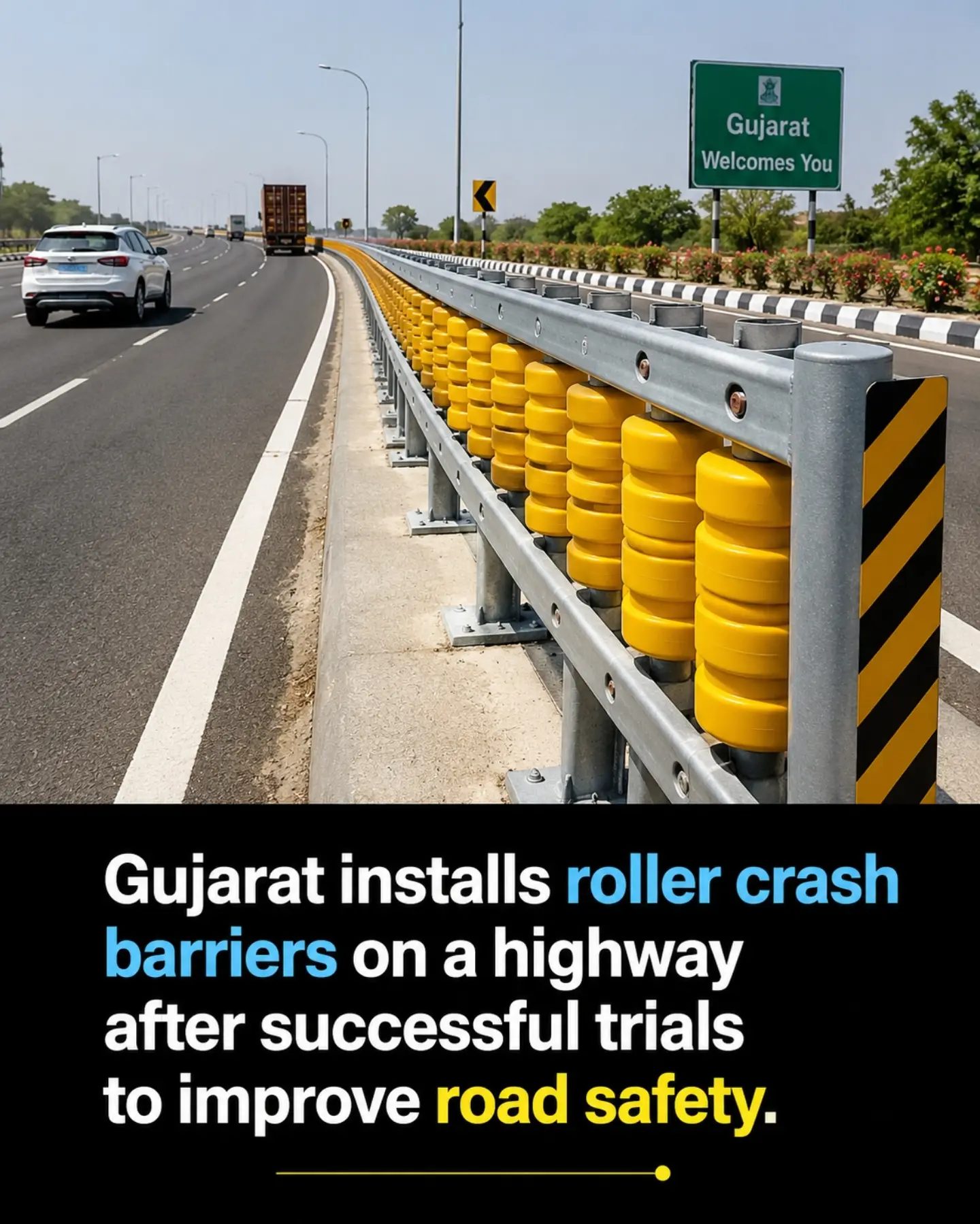
Road Safety Innovation with Roller Crash Barriers
Roller crash barriers (RCBs) are a new and innovative addition to highway infrastructure designed to significantly improve road safety. These barriers, recently installed on a highway in the state of Gujarat, are a testament to the evolving strategies in road safety. The yellow and grey barriers are engineered to absorb impact, thereby reducing the severity of collisions and enhancing overall road safety.
Context / Why this matters
Road safety is a critical concern for both authorities and commuters alike. Every year, thousands of lives are lost or disrupted due to road accidents. Innovations like roller crash barriers are crucial in mitigating the risks associated with highway travel. The installation of these barriers in Gujarat is a significant step towards creating safer roads and reducing the impact of vehicular collisions. The state has taken a proactive approach to road safety, following successful trials and setting a new standard in infrastructure design.
Main discussion
What are roller crash barriers?
Roller crash barriers are a type of road safety infrastructure designed to absorb and dissipate the impact of vehicular collisions. Unlike traditional barriers, which may cause vehicles to rebound and potentially lead to secondary collisions, RCBs are engineered to roll upon impact. This rolling mechanism helps to reduce the force of the collision, thereby minimizing the risk of severe injuries and fatalities.
How do roller crash barriers improve road safety?
Roller crash barriers improve road safety in several ways:
- Impact absorption: The primary function of RCBs is to absorb the impact of a collision. The rolling mechanism helps to dissipate the force, reducing the kinetic energy transferred to the vehicle and its occupants.
- Reduced rebound: Traditional barriers often cause vehicles to rebound, leading to secondary collisions or rollovers. RCBs mitigate this risk by allowing the vehicle to roll along the barrier, preventing a sudden stop or rebound.
- Enhanced stability: The design of RCBs provides better stability, especially in high-speed zones. This stability helps to keep vehicles from crossing into oncoming traffic or leaving the roadway altogether.
- Versatility: RCBs can be installed in various settings, including highways, bridges, and tunnels. Their versatility makes them an effective solution for enhancing road safety in a wide range of environments.
The installation process and successful trials
The installation of roller crash barriers in Gujarat was preceded by thorough trials and testing. These trials were conducted to ensure that the barriers meet the required safety standards and perform effectively under various conditions. The successful completion of these trials paved the way for the widespread installation of RCBs on highways in the state.
The installation process itself involves careful planning and execution. The barriers are typically set along the roadway at strategic points where the risk of collisions is high. The yellow and grey color scheme makes them highly visible, enhancing their effectiveness during both daylight and nighttime conditions. The design and placement of these barriers are critical to their performance, and authorities have ensured that every aspect of the installation meets the highest safety standards.
Practical tips
For highway authorities
If you are responsible for highway infrastructure, consider the following tips for implementing roller crash barriers:
- Conduct thorough trials: Before widespread installation, ensure that the barriers undergo rigorous testing to verify their effectiveness and safety.
- Strategic placement: Identify high-risk areas on highways where collisions are more likely to occur. Prioritize these areas for RCB installation.
- Visibility: Ensure that the barriers are highly visible, using contrasting colors that stand out against the roadway.
- Maintenance: Regularly inspect and maintain the barriers to ensure they remain in optimal condition and provide the intended level of safety.
- Public awareness: Educate the public about the benefits and proper use of roller crash barriers. This can help in promoting acceptance and compliance with safety measures.
For drivers
As a driver, your awareness and behavior play a crucial role in road safety. Here are some tips to keep in mind:
- Stay alert: Always be aware of your surroundings and drive within the speed limits.
- Avoid distractions: Keep your focus on the road and avoid distractions like mobile phones or other in-car activities.
- Maintain a safe distance: Keep a safe distance from the vehicle in front of you to allow for adequate reaction time in case of sudden stops or obstacles.
- Understand the barriers: Familiarize yourself with the purpose and function of roller crash barriers. Know that they are designed to absorb impact and reduce the severity of collisions.
Important takeaways
- Roller crash barriers are an innovative solution for enhancing road safety on highways.
- Successful trials have paved the way for the widespread installation of RCBs in Gujarat.
- The yellow and grey barriers are designed to absorb impact and improve overall road safety.
- Authorities and drivers both play crucial roles in ensuring the effectiveness of these safety measures.
- The installation process involves strategic planning, thorough testing, and regular maintenance to ensure optimal performance and safety.
Conclusion
The installation of roller crash barriers on Gujarat's highways is a significant step towards improving road safety. These innovative barriers, with their impact-absorbing design, offer a reliable solution for mitigating the risks associated with vehicular collisions. By understanding their purpose and function, authorities and drivers alike can contribute to creating safer roads. As we continue to prioritize road safety, innovations like roller crash barriers will play a crucial role in reducing accidents and saving lives.
Watch the Reel
Questions readers ask
What are roller crash barriers and how do they work?
Roller crash barriers, or RCBs, are a type of roadside safety barrier designed to absorb and dissipate the impact of vehicle collisions. Installed in Gujarat, these barriers work by reducing the severity of crashes, which enhances the safety and security of road users during accidents. They are engineered to roll upon impact, absorbing the force of the collision and minimizing potential damage.
Why is the installation of roller crash barriers significant for Gujarat's roads?
The installation of roller crash barriers in Gujarat marks a significant advancement in the state's road safety measures. By absorbing and dissipating collision impact, these barriers help to reduce the severity of accidents, thereby enhancing overall highway safety for travelers. This innovation sets a new standard in road safety design, emphasizing the proactive approach of Gujarat authorities towards improving road conditions.
How do roller crash barriers enhance overall road safety?
Roller crash barriers enhance road safety by acting as a physical barrier that absorbs the force of a collision, preventing vehicles from crossing into oncoming traffic or leaving the roadway. By dissipating the impact, they reduce the risk of injury and damage during accidents. This makes highways safer for all travelers and gives drivers extra peace of mind.
Are roller crash barriers a common sight on highways worldwide?
While roller crash barriers are a relatively new addition to highway infrastructure, they are increasingly gaining recognition for their effectiveness in mitigating the risks associated with vehicular collisions. The installation of these barriers on highways in Gujarat is one of the first of its kind, setting an example for other regions to follow.
What are the benefits of reel barriers in highway safety?
Reel barriers, similar to roller crash barriers, offer several benefits for highway safety. They help to contain and redirect vehicles in the event of a collision, preventing them from crossing into oncoming traffic or leaving the roadway. These barriers are designed to absorb and dissipate the impact of a collision, reducing the severity of accidents and enhancing overall road safety.
How do roller crash barriers compare to traditional guardrails?
Unlike traditional guardrails that can cause secondary impacts, roller crash barriers absorb and dissipate the impact of a collision, spreading the force over a longer period and distance. This results in a lower risk of injury and damage, making roller crash barriers a more effective option for improving road safety.
Related deep dives
Similar reads based on topic and creator.




Recent articles
Fresh deep dives from the latest Reels we unpacked.




Comments
Be the first to comment.