The Rapid Growth of Electric Vehicle Sales
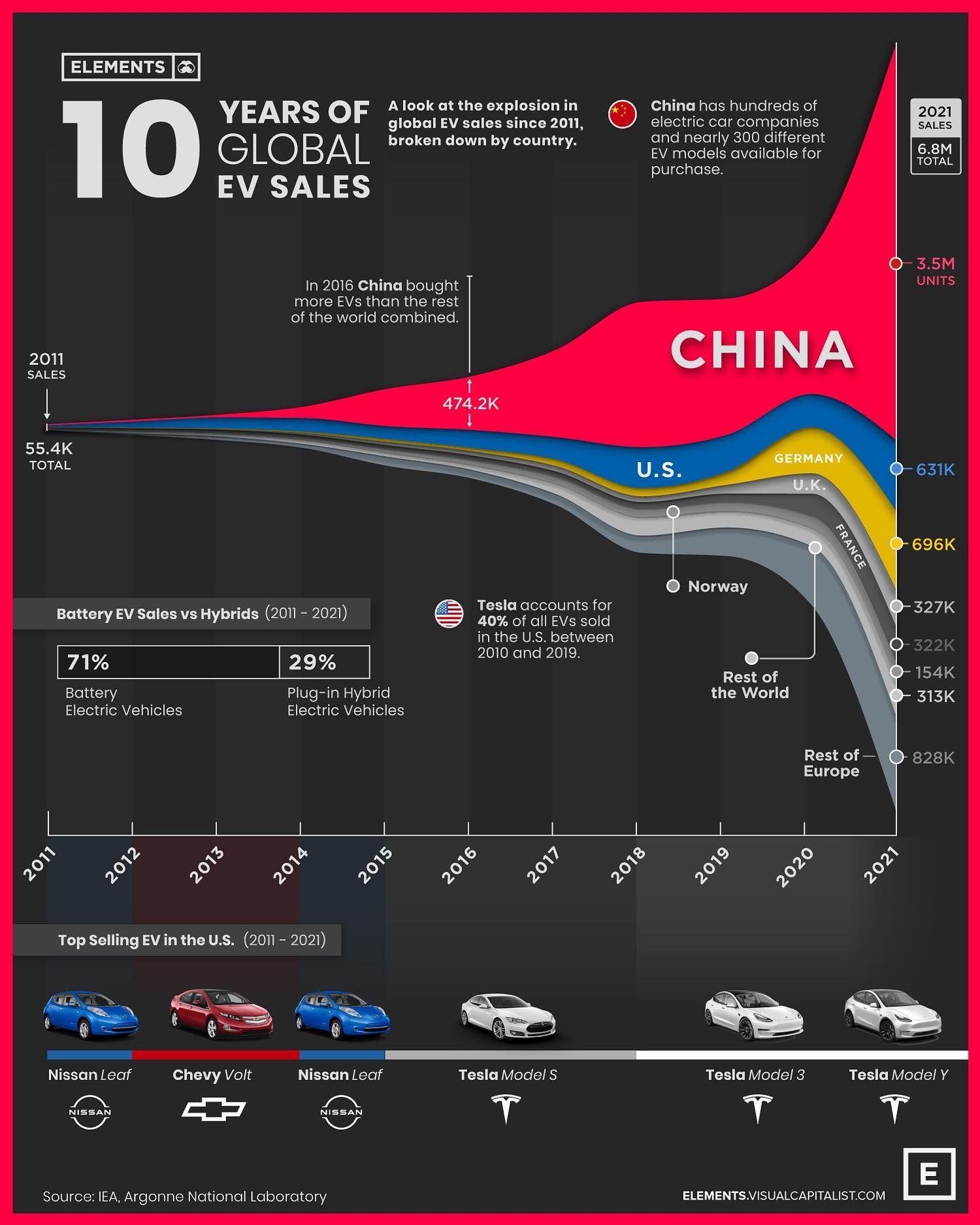
Electric vehicles (EVs) have experienced a remarkable surge in popularity over the past decade. In 2011, global EV sales were around 55,000 units. Fast forward to 2021, and that number skyrocketed to nearly 7 million vehicles. This exponential growth reflects a global shift towards electrification, driven by advancements in technology, increasing environmental awareness, and supportive governmental policies.
Why This Matters
The rapid growth of EV sales is a testament to the global commitment to reducing carbon emissions and transitioning to sustainable transportation. Understanding the trends and key players in this market can provide valuable insights for businesses, investors, and policymakers alike.
Market Dynamics
Global Trends
The global EV market has seen significant growth, with various regions contributing to this expansion. China, in particular, has emerged as a dominant player. The country offers a vast array of EV models, with nearly 300 different options available for purchase. This diversity has been a significant driving force behind China's leadership in the EV market.
Regional Comparisons
While China leads the charge, other countries have also made substantial strides. The United States, Germany, the United Kingdom, and France are among the top contributors to global EV sales. In 2021, the U.S. sold approximately 696,000 EVs, while Germany followed with 631,000 units. The U.K. and France sold 327,000 and 154,000 EVs, respectively. These figures underscore the growing acceptance of EVs across different regions.
EV Types and Popular Models
The EV market is diverse, comprising both battery electric vehicles (BEVs) and plug-in hybrid electric vehicles (PHEVs). In 2021, BEVs accounted for 71% of global EV sales, highlighting their dominance in the market. PHEVs, while still significant, made up 29% of the total sales.
In the U.S., some of the top-selling EV models include the Nissan Leaf, Tesla Model 3, and Tesla Model Y. These models have gained popularity due to their performance, range, and technological features. The Chevy Volt also remains a strong competitor, offering a reliable hybrid option for consumers.
Practical Tips for EV Buyers
Evaluating EV Options
When considering an EV purchase, it's essential to evaluate different models based on your specific needs. Factors such as range, charging infrastructure, and cost are crucial considerations. Researching the latest models and understanding their unique features can help you make an informed decision.
Charging Infrastructure
One of the most significant concerns for potential EV buyers is the availability of charging infrastructure. Before making a purchase, ensure that your area has adequate charging stations or consider installing one at your residence. Many EV manufacturers and third-party providers offer home charging solutions that can make EV ownership more convenient.
Financial Incentives
Governments worldwide are offering various financial incentives to promote EV adoption. These can include tax credits, rebates, and reduced registration fees. Researching local incentives can help offset the upfront costs of purchasing an EV.
Maintenance and Cost Savings
EVs typically require less maintenance than traditional internal combustion engine (ICE) vehicles. Fewer moving parts mean lower maintenance costs over time. Additionally, EVs can offer significant savings on fuel costs, making them a more economical choice in the long run.
Important Takeaways
Market Potential
The global EV market continues to grow rapidly, driven by technological advancements, environmental concerns, and supportive policies. Understanding the market dynamics and regional trends can provide valuable insights for various stakeholders.
Consumer Considerations
When considering an EV purchase, evaluate different models, assess the availability of charging infrastructure, and explore financial incentives. EVs offer significant cost savings and environmental benefits, making them a compelling choice for many consumers.
Future Prospects
The future of EVs looks promising, with continued advancements in technology and increasing consumer demand. As more countries and regions invest in EV infrastructure and incentives, the market is poised for further growth and innovation.
Conclusion
The electric vehicle market has seen unprecedented growth over the past decade, with countries like China leading the way. Understanding the market dynamics, regional trends, and consumer considerations can help navigate the EV landscape effectively. As we move forward, the continued expansion of the EV market promises a more sustainable and efficient future for transportation.
Watch the Reel
Questions readers ask
What were the electric vehicle sales figures for 2011 and 2021?
In 2011, global electric vehicle (EV) sales were approximately 55,000 units. By 2021, this number had increased dramatically to nearly 7 million units, highlighting the rapid growth of the EV market.
Which country leads the global electric vehicle market?
China is the leader in the global electric vehicle market, driven by significant domestic demand and supportive government policies.
What are the primary drivers of electric vehicle growth?
The primary drivers of electric vehicle growth include technological advancements that improve battery life and vehicle performance, increasing environmental concerns, and supportive policies that promote EV adoption through incentives and infrastructure development.
How does the trend of electric vehicle sales benefit the environment?
The rapid growth in electric vehicle sales contributes to a reduction in carbon emissions, as EVs produce zero tailpipe emissions compared to traditional internal combustion engine vehicles. This shift supports global efforts to mitigate climate change and improve air quality.
What insights can businesses and investors gain from the rapid growth of electric vehicle sales?
The rapid growth of EV sales indicates a significant market opportunity for businesses involved in EV manufacturing, charging infrastructure, and related technologies. Investors can also benefit from understanding this trend to make informed decisions about where to allocate capital for sustainable returns.
What role do governmental policies play in the growth of electric vehicle sales?
Governmental policies, such as tax incentives, rebates, and investments in charging infrastructure, play a crucial role in accelerating electric vehicle adoption. These policies make EVs more affordable and accessible, encouraging consumers to switch from conventional vehicles.
How can understanding the trends in electric vehicle sales help policymakers?
Understanding the trends in electric vehicle sales can help policymakers develop effective strategies to promote sustainable transportation. By identifying key factors driving EV adoption, policymakers can create targeted initiatives that support market growth and environmental goals.
Related deep dives
Similar reads based on topic and creator.


Recent articles
Fresh deep dives from the latest Reels we unpacked.




Comments
Be the first to comment.