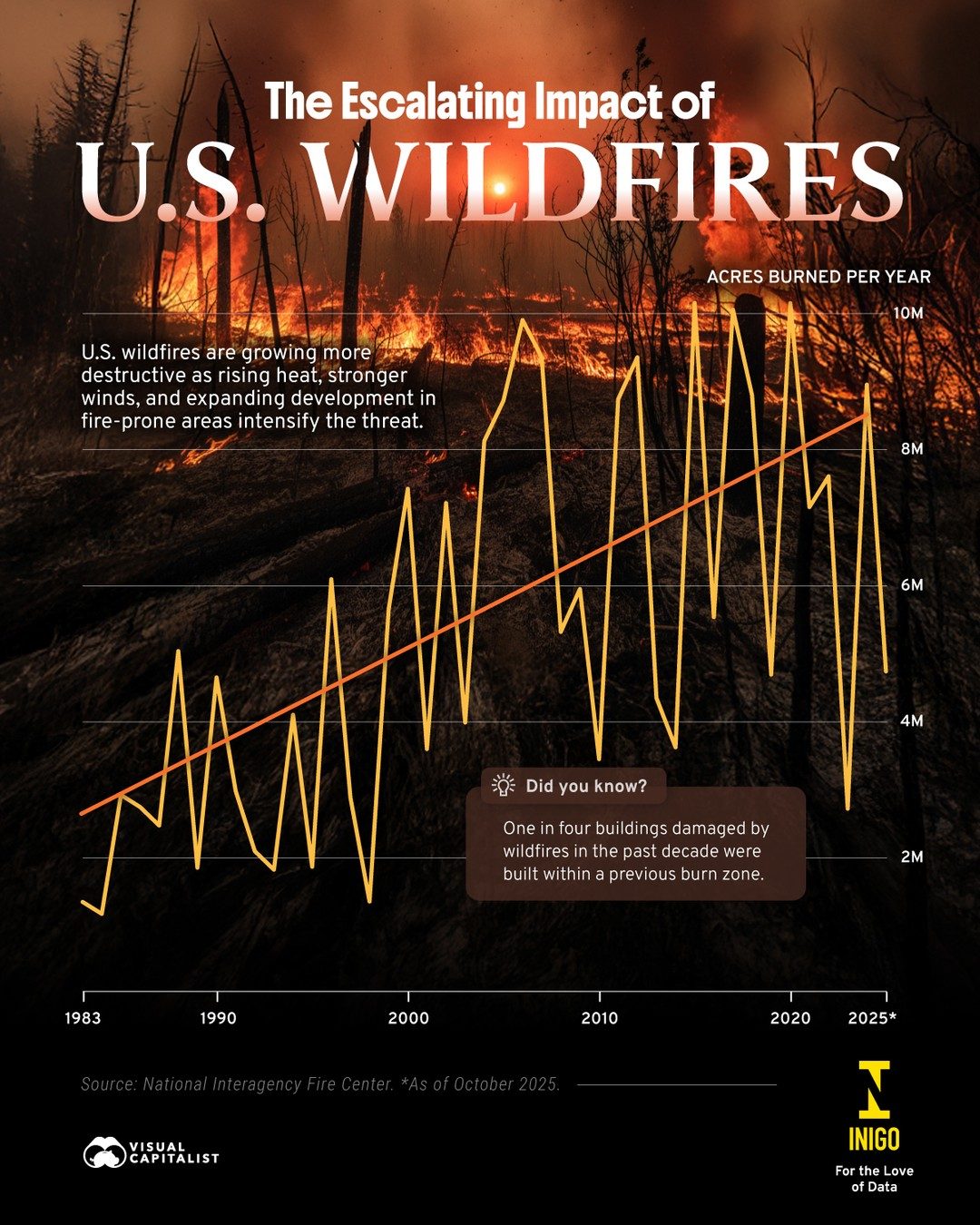
U.S. wildfires are growing more destructive, and the trend shows no sign of slowing. Rising heat, stronger winds, and expanding development in fire-prone areas are intensifying the threat, making it crucial to understand the escalating impact of these events.
Why this matters
Wildfires are not just a natural phenomenon; they are a growing risk to property, lives, and the environment. The past decade has seen some of the most severe wildfire seasons in the U.S., with a significant increase in acres burned and property damaged. Understanding the patterns and impacts of these fires is essential for homeowners, insurers, and policymakers alike.
The escalating impact of U.S. wildfires
Historical trends
Since 1983, the number of acres burned by wildfires in the U.S. has shown a troubling upward trajectory. This increase is not uniform; it is marked by periods of extreme activity interspersed with relatively quieter years. However, the overall trend is clear: wildfires are growing more frequent and more destructive.
Factors driving the increase
Several factors contribute to the intensification of U.S. wildfires:
- Rising heat: Higher temperatures dry out vegetation, creating more fuel for fires.
- Stronger winds: Wind patterns are changing, spreading fires more rapidly and unpredictably.
- Expanding development: As more people build homes in fire-prone areas, the risk of property damage increases.
The role of previous burn zones
One alarming statistic highlights the severity of the situation: one in four buildings damaged by wildfires in the past decade were built within previous burn zones. This underscores the importance of land-use planning and the need for stringent building codes in high-risk areas.
Why building in burn zones is risky
Previous burn zones are areas that have already experienced wildfires. While these zones may seem safe for development due to the absence of vegetation, the risk of future fires remains high. Factors such as regrowth, soil erosion, and hydrophobic soils can make these areas prone to renewed combustion. Moreover, the infrastructure in place—such as roads and power lines—can act as conduits for fires to spread.
The impact on housing and communities
The escalating wildfire threat has significant implications for housing and communities. Property values in high-risk areas can plummet, and insurance premiums can skyrocket. For residents, the risk of losing their homes and the potential for displacement are constant concerns. The psychological toll on communities, as well as the long-term environmental damage, adds to the overall impact.
Practical tips for property owners
1. Assess your risk
Understand the wildfire risk in your area. Tools like the Wildfire Risk to Communities assessment from the U.S. Forest Service can help you determine your risk level.
2. Prepare your home
- Defensible space: Create a defensible space around your home by removing dead vegetation, trimming trees, and keeping your roof and gutters clear of debris.
- Fire-resistant materials: Use fire-resistant materials for your home’s exterior, roof, and landscaping.
- Emergency planning: Develop an emergency plan, including evacuation routes and a communication strategy.
3. Stay informed
Sign up for local alerts and notifications to stay informed about wildfire conditions and evacuation orders. Knowledge is power, and being prepared can make a significant difference.
4. Review your insurance
Ensure your homeowners or renters insurance policy covers wildfire damage. Some policies may have specific exclusions or limitations, so it’s important to review your coverage with an insurance provider.
Inigo Insurance offers specialized coverage options tailored for wildfire-prone areas.
Important takeaways
The need for proactive measures
Addressing the escalating impact of U.S. wildfires requires a multi-faceted approach. Proactive measures, including better land-use planning, improved building codes, and enhanced fire suppression capabilities, are essential.
The role of data and visualization
Data visualization, as provided by sources like Visual Capitalist, plays a crucial role in understanding the scale and impact of wildfires. By presenting complex data in an accessible format, these visualizations can inform policy decisions and public awareness.
The importance of community engagement
Community engagement is vital for mitigating wildfire risk. Residents, local governments, and emergency services must work together to develop and implement effective wildfire management strategies.
Collaboration and innovation
Partnerships between organizations like Visual Capitalist and insurance providers like Inigo Insurance can drive innovation. By combining data insights with risk management solutions, these collaborations can help mitigate the destructive impact of wildfires.
Conclusion
U.S. wildfires are becoming more destructive, and understanding their escalating impact is crucial for property owners, insurers, and policymakers. By assessing risk, preparing homes, staying informed, and reviewing insurance coverage, individuals can better protect themselves and their communities. Through data visualization, community engagement, and collaborative efforts, we can work together to mitigate the risks posed by these increasingly dangerous events.
Watch the Reel
Questions readers ask
How does climate change contribute to the increasing destructiveness of U.S. wildfires?
Climate change exacerbates wildfires through higher temperatures, which dry out vegetation, creating more fuel for fires. Additionally, changing weather patterns can lead to stronger winds that spread fires more rapidly, making them harder to control. These factors, combined with prolonged droughts, create conditions that intensify the impact of wildfires.
What are some key areas in the U.S. most at risk for wildfires?
Wildfire zones in the U.S. are typically areas with dry climates, dense vegetation, and strong winds. These include the western states like California, where the Mediterranean climate and abundant forests contribute to the high risk. Other regions, such as the Southeast, also experience frequent wildfires due to abundant undergrowth and dry conditions during certain parts of the year.
How can homeowners in wildfire-prone areas protect their properties?
Homeowners can take several steps to mitigate wildfire risks, including creating defensible space around their homes by clearing away dead vegetation and trees, using fire-resistant building materials, and maintaining clean gutters and roofs. Regularly updating wildfire insurance coverage is also crucial, as standard policies may not cover all wildfire-related damages.
What are the environmental impacts of wildfires?
Wildfires have severe consequences for the environment, including habitat destruction, soil erosion, and water pollution. They release large amounts of carbon dioxide and other pollutants into the atmosphere, contributing to climate change. Additionally, wildfires can lead to long-term changes in plant and animal communities, affecting the overall ecosystem.
What trends are expected in U.S. wildfires by 2025?
By 2025, experts predict that the frequency and intensity of U.S. wildfires will continue to rise due to ongoing climate change and increased development in high-risk areas. This trend suggests that more resources will be needed for wildfire suppression, prevention, and rebuilding efforts. Furthermore, homeowners and insurers should anticipate higher risks and potential changes in insurance policies to cover wildfire damages.
Related deep dives
Similar reads based on topic and creator.


Recent articles
Fresh deep dives from the latest Reels we unpacked.




Comments
Be the first to comment.