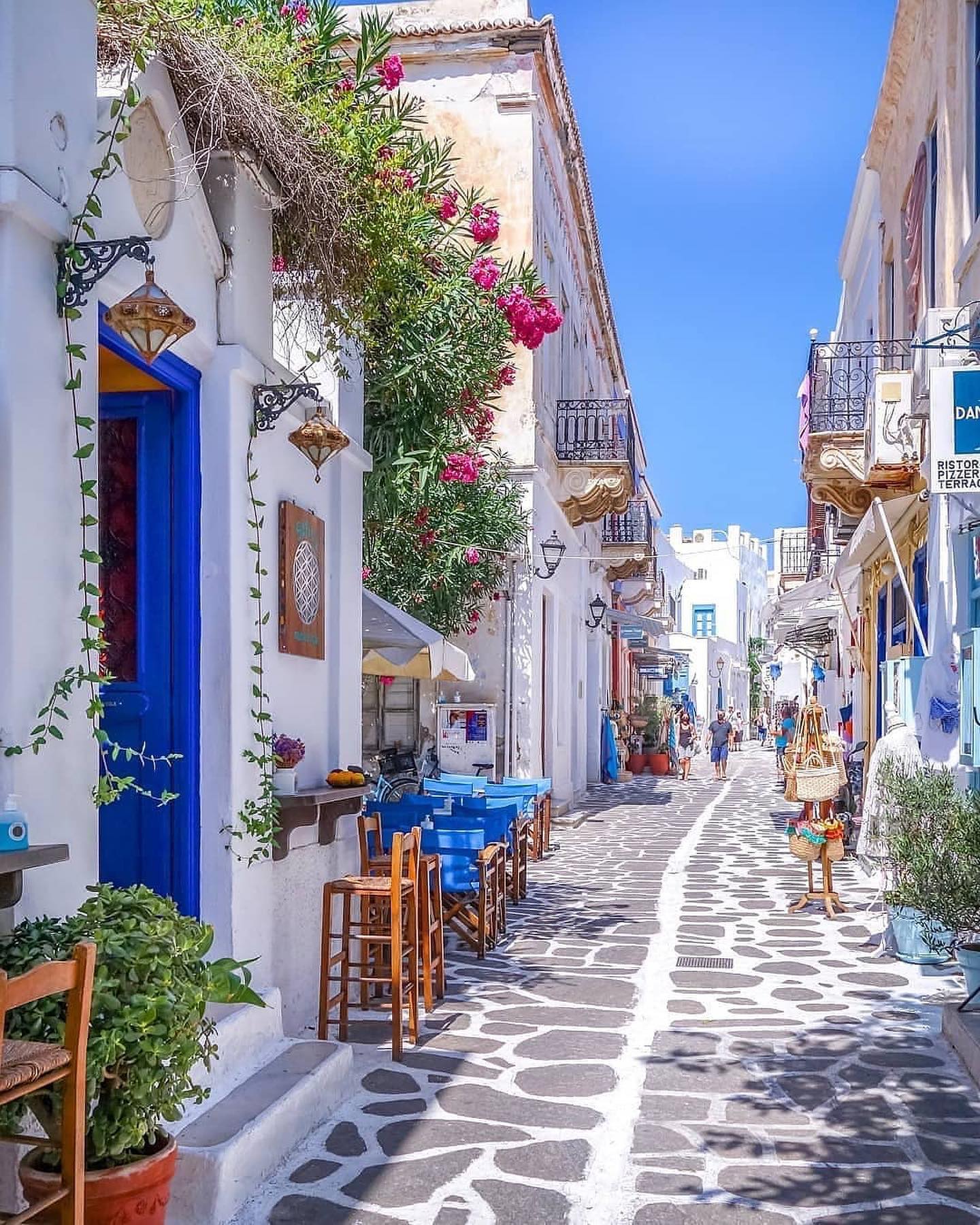
A picturesque Greek village street, its whitewashed buildings with blue accents, vibrant bougainvillea flowers, and inviting outdoor cafes. This is no movie set — it's real, and it makes you wonder: where are these charming places, and how can you visit?
The Allure of Greek Village Streets
"These picturesque streets are a reflection of Greek culture and heritage. Planning them is something which goes back to centuries" says a Greek town planner who prefers to stay anonymous. Such a vibe is produced by their distinct identity: the whitewashed buildings contrast sharply with the vibrant bougainvillea and blue accents. Greek village streets are distinctive for several reasons. For hundreds of years, the whitewashed buildings with blue accents have been a hallmark of Greek design. These buildings are built with each other in mind and thus are close to each other. The streets of Greek villages are often narrow. They can be made of dirt, concrete, or cobblestones, and they frequently feature uneven surfaces and sharp turns. This creates a labyrinth-like feel to them. Furthermore, these narrow streets are lined with wooden doors and windows that are beautifully decorated. Cafes and restaurants are frequently found in outdoor locations in Greek towns, which adds to their appeal. Throughout the summer, locals and visitors congregate outdoors to enjoy a coffee or a meal in a convivial atmosphere. The awareness that uninvited guests may appear at any time is important for making a Greek café successful, as the experience of a Greek El Dorado is magnified when the sun sets and the breeze takes effect. To further enhance the sense of community, the streets of Greek villages are frequently designed with pedestrian-only access. This not only makes the streets safer, but also encourages people to linger and socialize. As a result, these streets are often bustling with locals, shopkeepers, and other vendors who create a lively atmosphere.
An Architectural Feat of Community
Greek village streets, have been featured in a variety of travel documentaries and have become a popular tourist destination. The architecture of Greek villages has been influenced by many cultures over the centuries, including the Byzantines, Venetians, and Ottomans. This has resulted in a unique blend of architectural styles that can be seen in the streets of Greek villages today. The use of whitewash on buildings is a common feature of Greek village architecture. This is because whitewash reflects the sun's heat, keeping the interiors of buildings cooler during the hot summer months. The blue accents, on the other hand, are a nod to the sea that surrounds Greece, and are often used to depict the Greek flag. The narrow streets and outdoor cafes of Greek villages are a reflection of the country's Mediterranean climate. The narrow streets provide shade and shelter from the hot sun, while the outdoor cafes allow people to socialize and enjoy the cooler evening temperatures. The cobblestone pathways are also a nod to the country's rich history, as they were often found in ancient Greek cities.
The Pathways to Charm
The Power of White
Whilst a major part of the whole experience is the color of the bougainvillea flowers, the buildings are another special part of the whole experience. Historically, the white walls of Greek village houses served a practical purpose: they reflected the intense Mediterranean sun, helping to keep interiors cool. But over time, this practical solution evolved into an aesthetic tradition. Today, the white walls are a signature feature of Greek village architecture and the blue doors and shutters that adorn the houses are a testament to their connection to the ocean and skies.
The Impact of the Bougainvillea
The vibrant bougainvillea flowers adorning the whitewashed buildings are the final step of beauty in a Greek village. Some of the most popular varieties are deep red, fuchsia, or magenta, Although bougainvillea is native to South America, it is now cultivated in Greece as an ornamental plant. These flowers can live for many years and are very helpful for decorating. They provide shade and can keep insects out of homes. When the bright colors become visible in May, rooftops and walls are covered with flowers. They can also serve as a natural barrier that gives the village privacy.
The Lifeblood of the Cafes
Some outdoor cafes exist in Greek villages to provide food for people to share and talk. The cafes provide many different types. Some beverages include alcohol and others don’t. The most popular beverage is coffee. drinking coffee at a Greek cafe is a communal ritual, an invitation to sit, relax, talk, laugh, and see what comes your way. It is not the coffee alone that matters, but the atmosphere and the energy of the people around you. Cafes are a crucial component of the Greek culture and are more than just a place to eat.
Your Guide to Finding Hidden Greek Gems
To maximize your experience, as an individual, planning a trip to Greece requires a different mindset. For lovers of theatrics, this is a way to visit the village to make a plan to go outreach the villages.
- Draw your map: In Greece, maps come in both digital and physical formats. However, a digital map won't guide you to the hidden alleyways and cobblestone streets that connect the neighborhoods, so it's usual to get lost.
- Tread lightly: You must bleed to get that sweet taste of discovery. The villages are not only designed for the tourist, but also for the local people. It is your job to blend in and feel the true spirit and culture that you walked into.
- Make friends: Greeks are very friendly and you can easily meet locals who will want to tell you the story of their village. These relationships can lead to hidden treasures. When you walk the streets, make sure you walk slowly, so you can take in all the beauty. See the buildings, look at the flowers, and enjoy the feeling of being connected to something bigger. The streets invite discovery and contemplation, and their beauty is not only found in the buildings, but also in the daily life of the villagers who live there.
Watch the Reel
Questions readers ask
What makes the architecture of Greek village streets so distinctive?
The architecture of Greek village streets is distinctive due to its centuries-old design traditions. Whitewashed buildings with blue accents, narrow streets, and outdoor cafes are hallmarks of this style. The buildings are often close together, and the streets can be made of dirt, concrete, or cobblestones, creating a labyrinth-like feel.
Why are the buildings in Greek villages whitewashed?
Whitewash is commonly used on buildings in Greek villages because it reflects the sun's heat, keeping the interiors cooler during the hot summer months. This practical feature is both functional and aesthetically pleasing, contributing to the overall charm of the streets.
How do Greek village streets contribute to a sense of community?
Greek village streets are often designed with pedestrian-only access, which makes them safer and encourages people to linger and socialize. This design, along with the presence of outdoor cafes and local vendors, creates a lively atmosphere that fosters a strong sense of community.
What role do cafes play in Greek village life?
Cafes in Greek villages are central to social life, especially in the summer. They provide a place for locals and visitors to gather outdoors, enjoy a meal or coffee, and socialize in a convivial atmosphere. The success of a Greek café often depends on its ability to welcome uninvited guests, enhancing the community experience.
Can you find these charming streets in other parts of the world?
While the specific charm of Greek village streets is unique to Greece, similar architectural styles and community-centric designs can be found in other Mediterranean regions. However, the blend of influences from Byzantine, Venetian, and Ottoman cultures makes Greek village streets particularly distinctive.
Related deep dives
Similar reads based on topic and creator.




Recent articles
Fresh deep dives from the latest Reels we unpacked.



Comments
Be the first to comment.