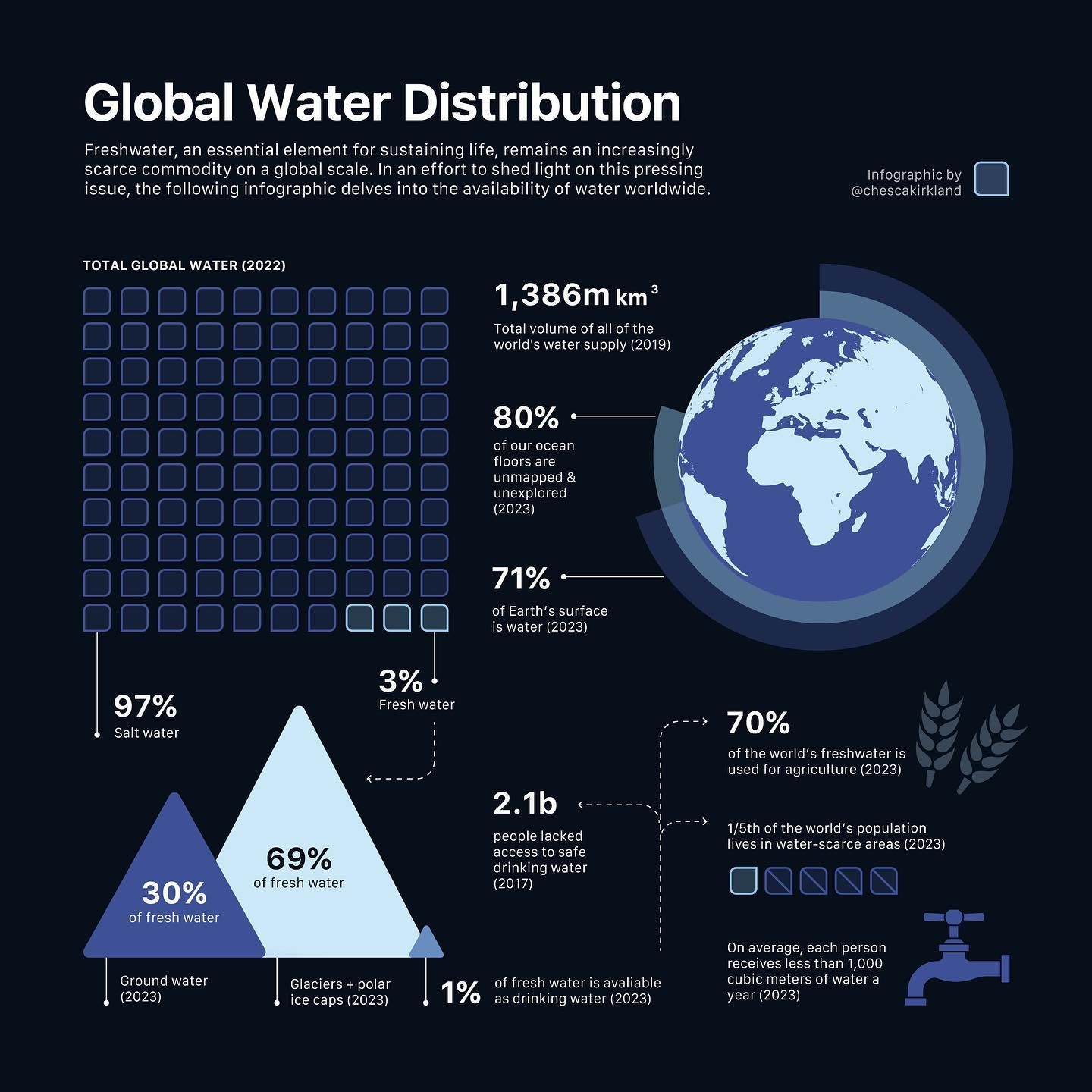
Global Water Distribution and Withdrawals
Water is essential for life, but its availability is not evenly distributed across the globe. Understanding global water distribution and withdrawals is crucial for appreciating the challenges in maintaining freshwater resources. Let's dive into the data to grasp the current state and implications of global water usage.
Context / Why This Matters
As the world's population and agricultural needs have grown, so has the demand for water. A century ago, freshwater consumption was six times lower than it is today. This surge in demand has placed immense stress on freshwater resources, leading to further depletion of reservoirs. Water scarcity affects every aspect of life, from agriculture to human health, making it a critical issue to understand and address.
Understanding Global Water Distribution
Total Global Water Supply
The total global water supply is estimated to be 1,386 cubic kilometers. This substantial volume might lead one to believe that water is abundant, but the reality is different. The majority of the Earth's water is saltwater, which is not suitable for human consumption or agriculture. Saltwater constitutes 97% of the total global water, while freshwater makes up only 3%. This stark contrast underscores the importance of conserving and efficiently managing our limited freshwater resources.
Freshwater Distribution
Within the 3% of freshwater, a significant portion is locked in glaciers and polar ice caps, making it inaccessible for immediate use. Only a fraction of the freshwater is readily available as drinking water. Approximately 69% of freshwater is available for use, but this includes water in various forms such as groundwater, lakes, and rivers. The availability of potable water is critical for sustaining life and supporting agricultural activities.
Water Usage in Agriculture
Agriculture is the largest consumer of freshwater, accounting for about 70% of global water use. This heavy reliance on water for farming is driven by the need to support a growing population and meet food demands. However, this high consumption exacerbates water scarcity in many regions, particularly in areas where water resources are already limited.
Global Water Withdrawals Per Capita
Water withdrawals per capita provide a clearer picture of how water resources are being utilized on a population level. On average, each person receives less than 1,000 cubic meters of water per year. This figure can vary widely across different regions and countries, depending on factors such as population density, agricultural practices, and industrial activities.
Water-Scarce Areas
Globally, 1/5th of the world's population lives in water-scarce areas. These regions face significant challenges in accessing clean water for drinking, sanitation, and agriculture. Water scarcity can lead to severe consequences, including conflicts over water resources, food insecurity, and health crises. Understanding the distribution of water scarcity helps in identifying areas that need immediate intervention and sustainable water management practices.
Safe Drinking Water
Access to safe drinking water is a fundamental human right, but it remains a challenge in many parts of the world. In 2017, approximately 2.1 billion people lacked access to safe drinking water. This statistic highlights the urgent need for infrastructure development and policies that ensure equitable access to clean water for all.
Practical Tips
Water scarcity is a complex issue that requires collective efforts to address. Here are some practical tips for individuals, communities, and policymakers to manage water resources more efficiently:
Individual Actions
- Conserve Water: Implement water-saving practices in daily life, such as fixing leaks, using water-efficient appliances, and practicing mindful water use.
- Support Local Initiatives: Participate in local water conservation programs and support organizations that work towards sustainable water management.
Community Efforts
- Community Gardens: Promote community gardening and urban agriculture, which can help in local food production while conserving water.
- Water Harvesting: Encourage rainwater harvesting and groundwater recharge practices to ensure sustainable water supply.
Policy Recommendations
- Incentives for Conservation: Implement policies that provide incentives for water conservation and penalize excessive water usage.
- Investment in Infrastructure: Invest in water infrastructure, including treatment plants, distribution networks, and recycling systems, to improve water availability and quality.
Important Takeaways
Water scarcity is a pressing global issue that affects countless lives. The data on global water distribution and withdrawals reveal the challenges we face in managing this vital resource. Key takeaways include:
- Limited Freshwater: With only 3% of the Earth's water being freshwater, efficient management and conservation are crucial.
- Water Usage in Agriculture: Agriculture's high water consumption underscores the need for sustainable farming practices.
- Water Scarcity: Approximately 1/5th of the world's population lives in water-scarce areas, highlighting the need for targeted interventions.
- Access to Safe Water: Ensuring access to safe drinking water for all is a global priority.
Conclusion
Understanding global water distribution and withdrawals is essential for addressing the challenges of water scarcity. By recognizing the limited availability of freshwater and the high demand for it, especially in agriculture, we can take steps towards more sustainable water management. Through individual actions, community efforts, and policy changes, we can work towards a future where everyone has access to clean and safe water.
Watch the Reel
Questions readers ask
How is global water distributed?
Global water is distributed unevenly, with 97% being saline and 3% freshwater. The majority of freshwater is locked away in glaciers and polar ice caps, making it inaccessible for most uses.
What is the primary use of freshwater globally?
Agriculture is the leading consumer of freshwater, accounting for approximately 70% of all freshwater withdrawals. This includes irrigation for crops and livestock farming.
Why is water scarcity a growing concern?
Water scarcity is a growing concern due to increased population and agricultural demands. Freshwater consumption has risen significantly over the past century, straining resources and leading to depletion of reservoirs.
How does water stress impact different sectors?
Water stress affects various sectors, including agriculture, industry, and human health. It can lead to reduced crop yields, economic losses, and health issues related to inadequate water supply.
What are some key areas facing water supply challenges?
Regions with high water demand and limited freshwater resources, such as the Middle East, North Africa, and parts of Asia, face significant water supply challenges. These areas often rely on desalination and other water management strategies to meet their needs.
How have global water withdrawals changed over time?
Global water withdrawals have increased dramatically over the past century. Today, freshwater consumption is six times higher than it was a century ago, driven by population growth and increased agricultural needs.
What are some implications of the current state of global water usage?
The current state of global water usage has serious implications, including potential conflicts over water resources, environmental degradation, and threats to food security. Addressing these challenges requires sustainable water management practices and international cooperation.
Related deep dives
Similar reads based on topic and creator.


Recent articles
Fresh deep dives from the latest Reels we unpacked.




Comments
Be the first to comment.