Fossil Fuel Production
Fossil fuels—coal, oil, and gas—have dominated the global energy landscape for over a century. Despite ongoing shifts towards renewable sources, the world continues to extract and consume vast amounts of these resources annually. Understanding the scale of fossil fuel production provides valuable context for energy discussions.
Context / Why This Matters
Fossil fuels remain pivotal in global energy consumption. In 2021, these resources accounted for more than 80% of the world's primary energy use. This dominance underscores the need to grasp the sheer volume of fossil fuels being produced and consumed. Whether it’s powering industries, homes, or transportation, fossil fuels are deeply embedded in our energy infrastructure.
Main Discussion
Global Production Volumes
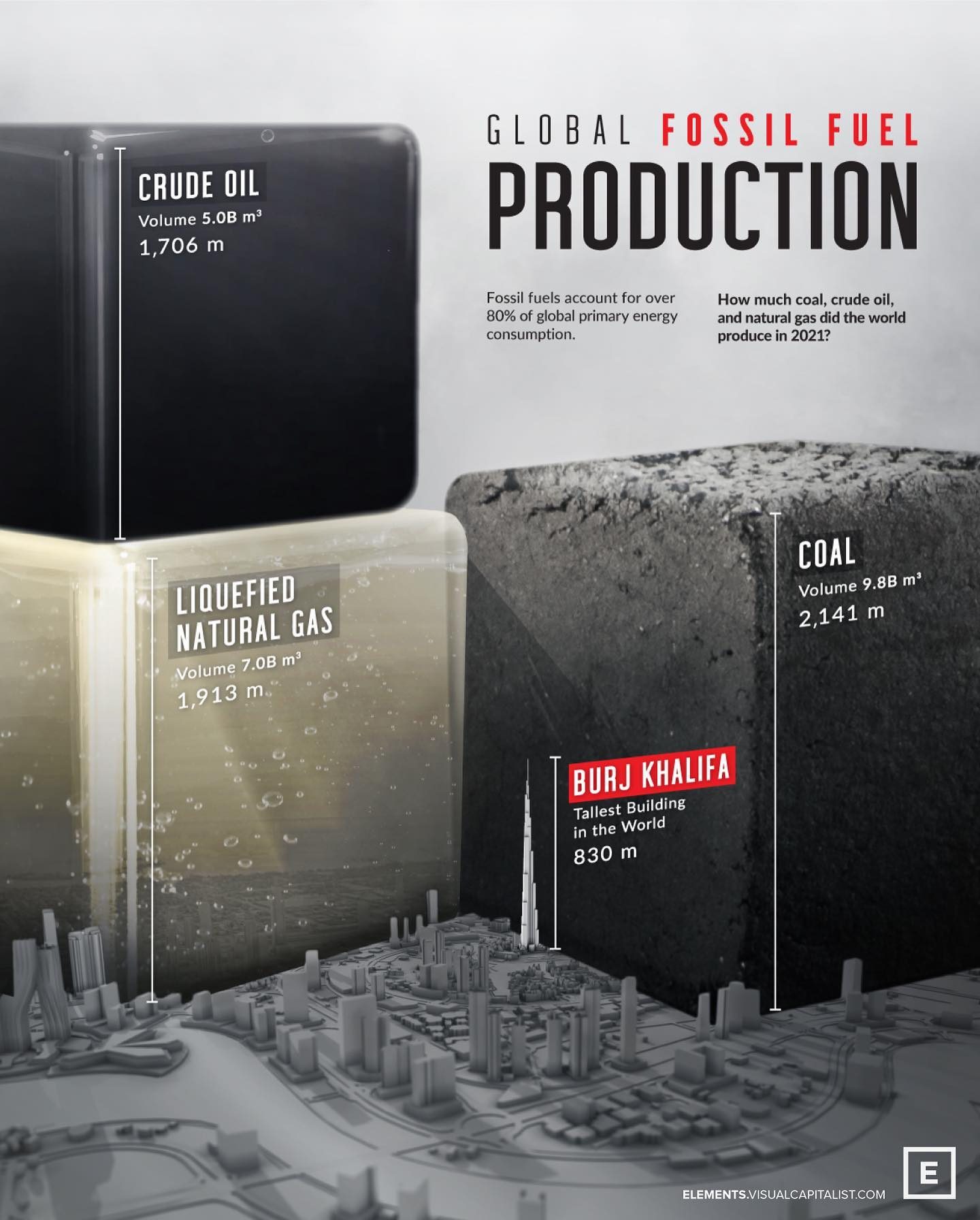
In 2021, the world produced approximately 5.0 billion cubic meters (m³) of crude oil, 7.0 billion m³ of liquefied natural gas (LNG), and 9.8 billion m³ of coal. To put these volumes into perspective, imagine stacks of these fuels compared to the Burj Khalifa, the world's tallest building at 830 meters. The heights would reach 1,706 meters for crude oil, 1,913 meters for LNG, and 2,141 meters for coal.
Crude Oil
Crude oil is a cornerstone of the global energy mix, primarily used for transportation and industrial applications. The 5.0 billion m³ produced in 2021 is a testament to its continued importance. This volume highlights the extensive infrastructure and logistics involved in oil extraction, refining, and distribution.
Liquefied Natural Gas (LNG)
LNG, with a production volume of 7.0 billion m³, is increasingly popular for its cleaner-burning properties compared to coal and oil. The growth in LNG production reflects a trend toward cleaner fossil fuels, particularly in regions transitioning away from dirtier energy sources.
Coal
Coal, at 9.8 billion m³, remains a significant player in the energy sector. Despite efforts to reduce its use, coal continues to be a primary source of electricity in many countries, particularly in developing nations. Its high production volume underscores the challenges in phasing out this resource.
Practical Tips
Assessing Energy Dependence
Understanding the magnitude of fossil fuel production can help individuals, communities, and policymakers assess their energy dependence. This awareness is crucial for planning sustainable transitions and ensuring energy security.
Energy Conservation
Knowing the volume of fossil fuels produced can motivate conservation efforts. Simple actions like reducing energy use, improving efficiency, and supporting renewable energy initiatives can collectively make a significant impact.
Investment in Renewables
For investors, recognizing the dominance of fossil fuels can guide decisions. While fossil fuels are still necessary, investments in renewable energy sources and technologies that improve energy storage and distribution can be strategic.
Important Takeaways
Fossil fuel production remains a colossal endeavor, with significant volumes of coal, oil, and gas extracted annually. Crude oil, LNG, and coal each play unique roles in meeting global energy demands. The sheer scale of production highlights the complexities involved in transitioning to more sustainable energy sources.
Conclusion
Fossil fuels continue to be the backbone of the global energy system. The 2021 production figures—a staggering 5.0 billion m³ of crude oil, 7.0 billion m³ of LNG, and 9.8 billion m³ of coal—illustrate the monumental task of transitioning away from these resources. Understanding these volumes can inform better energy policies, encourage conservation, and guide investment in renewable technologies.
Watch the Reel
Questions readers ask
How much coal was produced globally in 2021?
In 2021, global coal production reached approximately 9.8 billion cubic meters. This figure underscores coal's significant role in the global energy mix, despite the increasing adoption of renewable energy sources.
What were the global production volumes for crude oil and liquefied natural gas in 2021?
Global production for crude oil and liquefied natural gas in 2021 was approximately 5 billion and 7 billion cubic meters, respectively. These volumes illustrate the substantial reliance on these fossil fuels for meeting global energy demands.
Why is it important to track global fossil fuel production?
Tracking global fossil fuel production is crucial for understanding the world's energy dynamics. It helps in assessing the transition to renewable sources, evaluating energy security, and measuring progress towards climate goals.
What percentage of global energy use came from fossil fuels in 2021?
In 2021, fossil fuels accounted for over 80% of the world's primary energy use. This highlights the continuing dominance of fossil fuels in the global energy landscape, despite advancements in renewable energy technologies.
How do the 2021 fossil fuel production volumes compare to previous years?
The 2021 production volumes for coal, oil, and gas were significant, mirroring the ongoing global dependence on these resources. While exact comparisons to previous years require specific data, the trends generally show a steady, if slowly declining, reliance on fossil fuels.
What are the main uses of fossil fuels in the global energy landscape?
Fossil fuels are primarily used to power industries, homes, and transportation. They are integral to electricity generation, heating, and as a key component in various industrial processes, from manufacturing to agriculture.
Related deep dives
Similar reads based on topic and creator.


Recent articles
Fresh deep dives from the latest Reels we unpacked.




Comments
Be the first to comment.