Global Food Shortage
Global food shortages are a pressing issue, driven by a combination of factors including harsh weather conditions, the ongoing war in Ukraine, and a significant shortage of fertilizer. Understanding the contours of this crisis is essential for grasping its impacts and potential solutions. The situation is complex, involving multiple interconnected factors that span geography and economic systems. Let's break down the key factors contributing to the global food shortage and explore what it means for different regions and the world at large.
Context / Why this matters
The global food shortage affects every region in various ways. Different crops are impacted by different factors, and understanding these differences can help in developing targeted solutions. The issue is not just about food scarcity but also about the economic and social impacts on regions that depend heavily on agricultural exports. The recent food shortages are a clear indication of the interconnectedness of global agricultural markets and the vulnerability of these systems to external shocks.
Main discussion
Key Factors Behind the Global Food Shortage
Weather and Climate Change
One of the primary factors contributing to the global food shortage is adverse weather conditions. Several regions have experienced severe weather events that have disrupted agricultural production. For instance, regions like Chile and India have faced significant shortages in staples like chili peppers and mustard. These shortages are due to extreme weather conditions, including droughts and heavy frost. In Chile, severe weather and drought have led to chili pepper shortages, while extreme weather in India has affected mustard production. Heavy frost in other regions has impacted apple production, leading to a shortage of this staple crop.
Conflict and Geopolitics
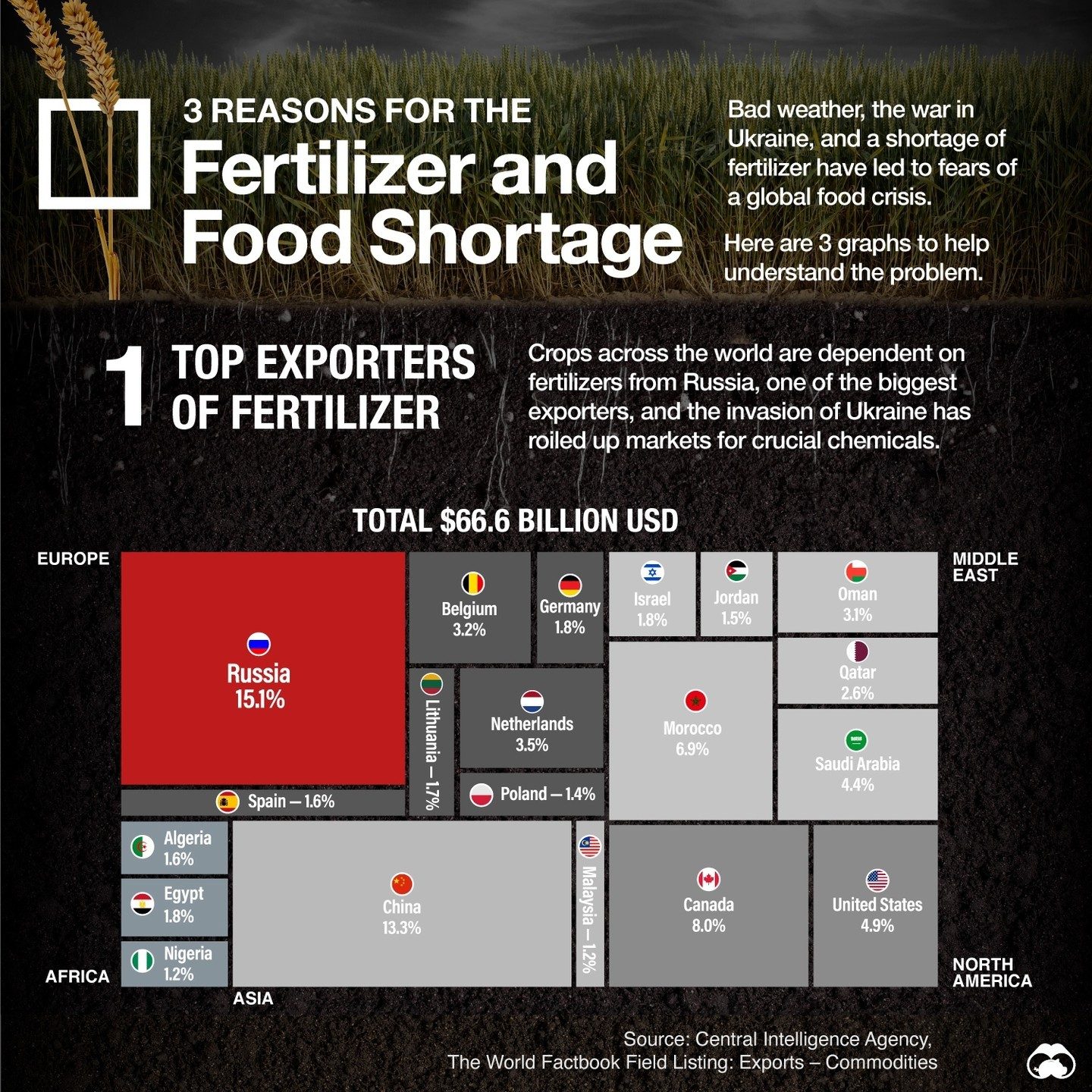
The Russian invasion of Ukraine has exacerbated the global food shortage. Russia and Ukraine together account for nearly a third of the global wheat supply. The conflict has disrupted agricultural exports from these countries, causing significant ripples in the global food market. The war in Ukraine has not only affected the supply of wheat but also fertilizer, which is crucial for agricultural production. This is because Russia is a major exporter of fertilizer, and the conflict has disrupted the supply chains.
Fertilizer Shortage
Fertilizer is a critical input for agricultural production, and a shortage of fertilizer can significantly impact crop yields. The current shortage of fertilizer is driven by several factors, including the war in Ukraine and adverse weather conditions. Russia and several other countries, including China, the Netherlands, and the United States, are major exporters of fertilizer. The disruption in supply from these countries has led to a global shortage, affecting agricultural production in various regions. The shortage of fertilizer is particularly concerning because it can lead to reduced crop yields, which in turn can exacerbate food shortages.
The Impact on Different Regions
Europe
Europe is one of the top exporters of fertilizer, with countries like Russia, the Netherlands, Germany, and Poland playing significant roles. The conflict in Ukraine has disrupted the supply of fertilizer from Russia, which is a major exporter. This has led to a shortage of fertilizer in Europe, impacting agricultural production in the region. The shortage of fertilizer is particularly concerning because it can lead to reduced crop yields, which in turn can exacerbate food shortages.
Asia
Asia is another major player in the global fertilizer market, with countries like China, Malaysia, and the United States being significant exporters. The shortage of fertilizer in Asia is driven by adverse weather conditions and the disruption of supply chains due to the conflict in Ukraine. The shortage of fertilizer is particularly concerning because it can lead to reduced crop yields, which in turn can exacerbate food shortages in the region.
Africa
Africa is also affected by the global fertilizer shortage, with countries like Nigeria, Oman, Qatar, and Saudi Arabia being significant exporters. The shortage of fertilizer in Africa is driven by adverse weather conditions and the disruption of supply chains due to the conflict in Ukraine. The shortage of fertilizer is particularly concerning because it can lead to reduced crop yields, which in turn can exacerbate food shortages in the region.
Practical tips
For Consumers
Consumers can take several steps to mitigate the impact of the global food shortage. One of the most effective steps is to diversify their diets. By incorporating a variety of foods into their diets, consumers can reduce their dependence on a single crop and thereby reduce the impact of shortages. Additionally, consumers can support local farmers by purchasing locally grown produce. This not only helps to support the local economy but also ensures a more stable supply of fresh produce.
For Producers
Producers can take several steps to mitigate the impact of the global food shortage. One of the most effective steps is to adopt sustainable agricultural practices. By using sustainable practices, producers can improve soil health, reduce water usage, and increase crop yields. Additionally, producers can invest in technology to improve their operations. For example, using drones and sensors to monitor crops can help producers to identify and address issues before they become major problems. Producers can also diversify their crops to reduce their dependence on a single crop and thereby reduce the impact of shortages.
Important takeaways
- The global food shortage is a complex issue driven by multiple factors, including adverse weather conditions, the Russian invasion of Ukraine, and a significant shortage of fertilizer.
- The crisis affects different regions in various ways, with different crops being impacted by different factors.
- Consumers can mitigate the impact of the global food shortage by diversifying their diets and supporting local farmers.
- Producers can mitigate the impact of the global food shortage by adopting sustainable agricultural practices, investing in technology, and diversifying their crops.
Conclusion
The global food shortage is a pressing issue that affects every region in various ways. Understanding the factors contributing to the crisis and the impacts on different regions is essential for developing targeted solutions. By taking practical steps, both consumers and producers can mitigate the impact of the global food shortage and contribute to a more stable and resilient food system.
Watch the Reel
Questions readers ask
How has the conflict in Ukraine contributed to the global food crisis?
The war in Ukraine has disrupted grain exports, which significantly impacts global food supply. Ukraine is a top global food exporter, and the conflict has led to reduced agricultural production and hindered the transport of crops to international markets. This has resulted in increased prices and shortages in regions dependent on these exports.
What role does climate change play in the current food crisis?
Climate change exacerbates food shortages by causing extreme weather events. These events, such as droughts, floods, and heatwaves, damage crops and reduce yields, making it challenging for farmers to meet global food demands. Additionally, changing weather patterns can alter growing seasons and agricultural practices, further straining food production systems.
Which countries are most affected by the global grain shortage?
Countries heavily reliant on grain imports, particularly those in the Middle East, Africa, and parts of Asia, are most affected. The reduction in exports from major grain-producing countries like Ukraine and Russia has led to increased prices and scarcity, posing significant challenges to food security in these regions.
How does the world fertilizer crisis impact global food availability?
The fertilizer shortage, driven by factors such as supply chain disruptions and geopolitical tensions, has reduced crop yields worldwide. Fertilizers are crucial for enhancing soil fertility and increasing agricultural productivity, and their scarcity can lead to lower harvests and contribute to overall food shortages.
What are the geopolitical factors influencing the current food crisis?
Geopolitical conflicts, such as the war in Ukraine, and trade restrictions imposed by various countries have disrupted global food supply chains. These factors affect the production, transportation, and distribution of food, leading to shortages and price fluctuations. The instability in key agricultural regions can also deter investment and innovation in the food sector.
Which regions are the top global food exporters, and how are they affected by the crisis?
Key global food exporters include the United States, Brazil, Argentina, and countries in the European Union, including Ukraine. These regions are affected by supply chain disruptions, climate change, and geopolitical tensions, which can limit their ability to meet global food demands and maintain stable exports. The crisis can also impact their economies, particularly those heavily dependent on agricultural revenues.
What can be done to mitigate the impacts of the global food crisis?
Addressing the global food crisis requires a multi-faceted approach. This includes investing in climate-resilient agriculture, diversifying food supply sources, and promoting international cooperation to stabilize food markets. Additionally, supporting local food production, improving food storage and distribution infrastructure, and implementing policies that address the root causes of food shortages can help alleviate the crisis.
Related deep dives
Similar reads based on topic and creator.


Recent articles
Fresh deep dives from the latest Reels we unpacked.




Comments
Be the first to comment.