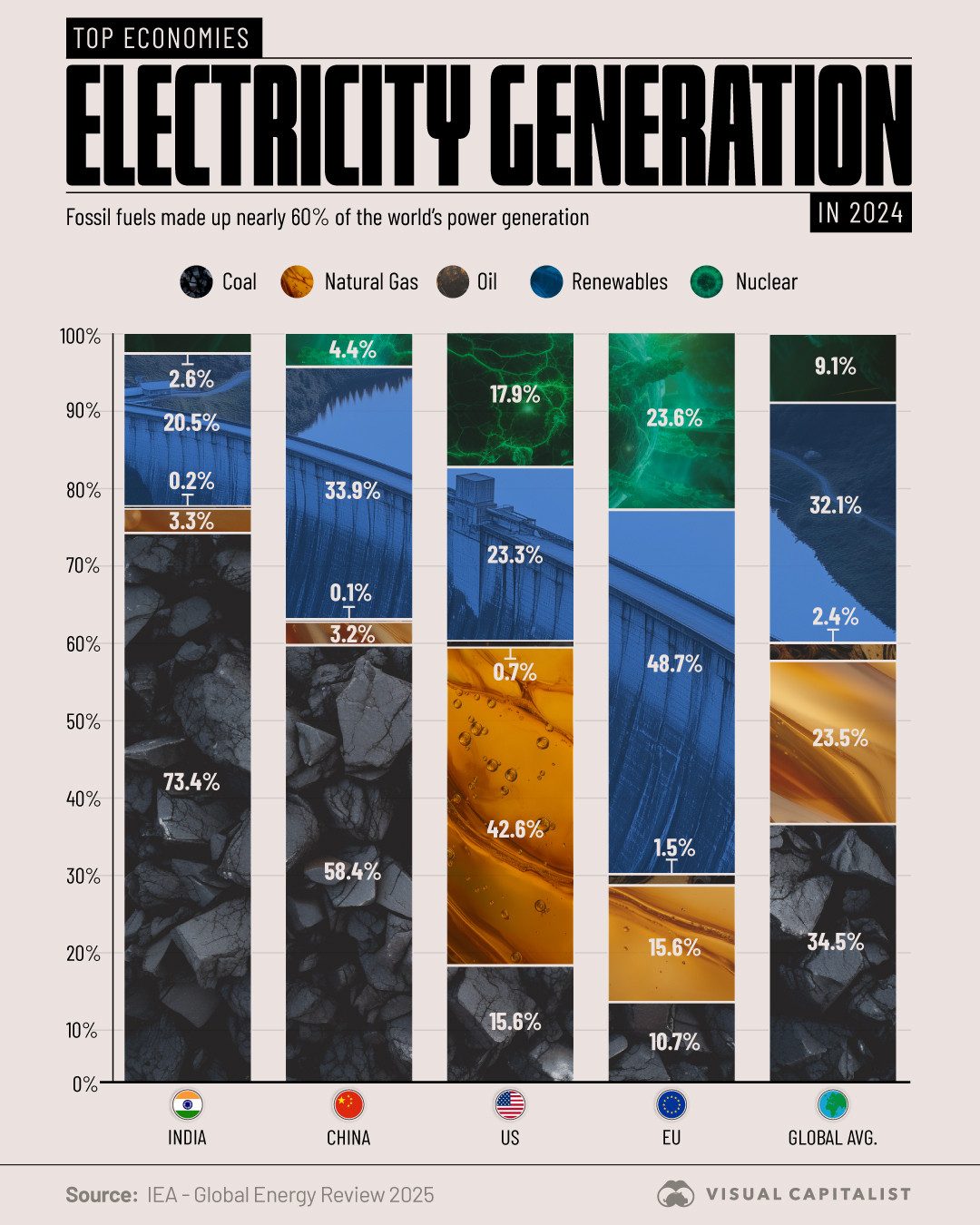
Electricity Generation in 2024: Fossil Fuels Dominate
Examining the global electricity generation mix in 2024 reveals a landscape where fossil fuels remain the primary source of power. According to the International Energy Agency (IEA), fossil fuels accounted for nearly 60% of global electricity generation, with coal alone contributing 26.6% and natural gas accounting for 43.8%. The remainder is divided among renewables (23.6%), nuclear energy (9.1%), and other sources.
Context / Why This Matters
Understanding the global electricity generation mix is crucial for policymakers, energy experts, and consumers alike. The energy mix informs decisions related to energy security, environmental sustainability, and economic development. Fossil fuels, particularly coal and natural gas, provide a reliable and abundant source of power. However, their environmental impact raises concerns about air pollution and climate change. This context makes the transition to cleaner energy sources a critical focus for many countries.
Main Discussion
The Role of Fossil Fuels
Fossil fuels—coal, natural gas, and oil—have been the backbone of electricity generation for decades. In 2024, fossil fuels continue to dominate, supplying nearly 60% of the world's electricity. Coal, with its 26.6% share, remains a dominant force, especially in regions like India and China. Natural gas contributes an additional 43.8% to the global electricity mix, driven by its flexibility and lower emissions compared to coal.
Coal: The Dominant Player
Coal's role in global electricity generation cannot be overstated. Despite the growing awareness of its environmental impact, coal remains a significant source of power, particularly in developing economies. In regions like India and China, coal accounts for a substantial portion of electricity generation. These countries rely heavily on coal due to its affordability and abundance. However, the environmental cost is high, with coal combustion contributing to air pollution and greenhouse gas emissions.
Natural Gas: A Bridging Fuel
Natural gas is often seen as a transition fuel as the world moves towards cleaner energy sources. It produces fewer emissions than coal and is more versatile, making it a preferred choice for many countries. Natural gas accounts for 43.8% of global electricity generation, highlighting its importance in the current energy landscape. This trend is likely to continue as more countries adopt natural gas for power generation while awaiting advancements in renewable energy technologies.
Renewable Energy: Growing but Not Yet Dominant
Renewable energy sources, including solar, wind, hydro, and geothermal, contribute 23.6% to global electricity generation. While this represents significant growth over the past decade, renewables still lag behind fossil fuels. The adoption of renewable energy varies widely across regions, with some countries leading the way in the energy transition. For instance, the European Union (EU) has been at the forefront of renewable energy adoption, integrating solar and wind power into its energy grid extensively.
Solar and Wind Energy
Solar and wind energy are among the fastest-growing renewable sources. Advances in technology have made these sources more efficient and cost-effective. Solar energy, in particular, has seen a rapid expansion, driven by falling costs and increasing efficiencies of solar panels. Wind energy, on the other hand, has benefited from advancements in turbine technology and the construction of offshore wind farms, which offer higher and more consistent wind speeds.
Hydro and Geothermal Energy
Hydro and geothermal energy sources also play a significant role in the renewable energy mix. Hydroelectric power, which relies on the gravitational force of falling or flowing water, provides a reliable source of electricity. Geothermal energy, harnessed from the Earth's heat, offers a continuous and stable energy supply, albeit limited to specific geographic locations.
Nuclear Energy: A Steady Contributor
Nuclear energy accounts for 9.1% of global electricity generation. Nuclear power plants provide a stable and low-emission source of electricity, which is particularly valuable in regions with limited renewable energy resources. However, concerns about safety, waste management, and high upfront costs have limited its expansion. The future of nuclear energy will depend on technological advancements and public acceptance.
Practical Tips
For individuals and businesses looking to support the energy transition, several practical steps can be taken:
-
Energy Efficiency: Implement energy-efficient practices in homes and offices to reduce overall electricity consumption. This includes using energy-efficient appliances, LED lighting, and insulating buildings.
-
Transition to Renewables: Where possible, transition to renewable energy sources such as solar or wind power. Many regions offer incentives and subsidies for installing renewable energy systems.
-
Electric Vehicles: Adopt electric vehicles (EVs) to reduce reliance on fossil fuels for transportation. This not only reduces emissions but also decreasing the demand for conventional fuel sources.
-
Support Policy Changes: Advocate for policies that promote renewable energy and energy efficiency. This can include supporting local initiatives, signing petitions, and voting for representatives who prioritize sustainable energy.
-
Invest in Renewables: Consider investing in renewable energy projects or funds. This can help accelerate the transition to clean energy while also providing potential financial returns.
Important Takeaways
The global electricity generation mix in 2024 highlights the continued dominance of fossil fuels, particularly coal and natural gas. While renewable energy sources are growing rapidly, they still make up a smaller share of the overall electricity generation. Nuclear energy remains a steady contributor, offering a reliable and low-emission source of power.
The transition to cleaner energy sources is a complex and multifaceted process that requires coordinated efforts from governments, industries, and individuals. By adopting energy-efficient practices, investing in renewable energy, and supporting policy changes, we can accelerate the energy transition and work towards a more sustainable future.
Conclusion
The electricity generation landscape in 2024 presents a mixed picture of progress and challenges. Fossil fuels, particularly coal and natural gas, continue to dominate global electricity generation, while renewable energy sources are growing but not yet dominant. Nuclear energy provides a steady and reliable contribution to the energy mix. As we move forward, the focus should be on accelerating the transition to cleaner energy sources, promoting energy efficiency, and supporting policies that foster sustainable development. This balanced approach will help ensure a secure and sustainable energy future for all.
Watch the Reel
Questions readers ask
What percentage of global electricity is generated by fossil fuels in 2024?
Fossil fuels account for nearly 60% of global electricity generation in 2024. This includes coal, which contributes 26.6%, and natural gas, which provides 43.8%.
Which countries significantly contribute to the consumption of coal in 2024?
The use of coal is particularly significant in India and China, where it remains a primary source of electricity, even as global efforts to reduce carbon emissions gain momentum.
Why is the continued reliance on fossil fuels a concern?
The high reliance on fossil fuels raises significant concerns about environmental sustainability and climate change. These fuels release substantial amounts of greenhouse gases, contributing to global warming and environmental degradation.
What are the other major sources of electricity besides fossil fuels in 2024?
Besides fossil fuels, the other major sources of electricity in 2024 include renewable energy, which provides 23.6% of global electricity, and nuclear energy, which contributes 9.1%. Other sources make up the remaining percentage.
What is the significance of understanding the global electricity generation mix?
Understanding the global electricity generation mix is crucial for policymakers, energy experts, and consumers. It helps inform decisions related to energy security, environmental sustainability, and economic development.
Why did the International Energy Agency (IEA) provide data on the global electricity generation mix in 2024?
The IEA provides data on the global electricity generation mix to offer insights into the current energy trends and to guide future energy policies, promoting sustainability and efficiency in energy production.
What are the benefits of transitioning from fossil fuels to renewable energy?
Transitioning from fossil fuels to renewable energy can significantly reduce the environmental impact, lower greenhouse gas emissions, and promote long-term sustainability. It also enhances energy independence and supports economic growth in the renewable energy sector.
Related deep dives
Similar reads based on topic and creator.


Recent articles
Fresh deep dives from the latest Reels we unpacked.




Comments
Be the first to comment.