The Global Energy Landscape: A Deep Dive into 2022's Electricity Sources
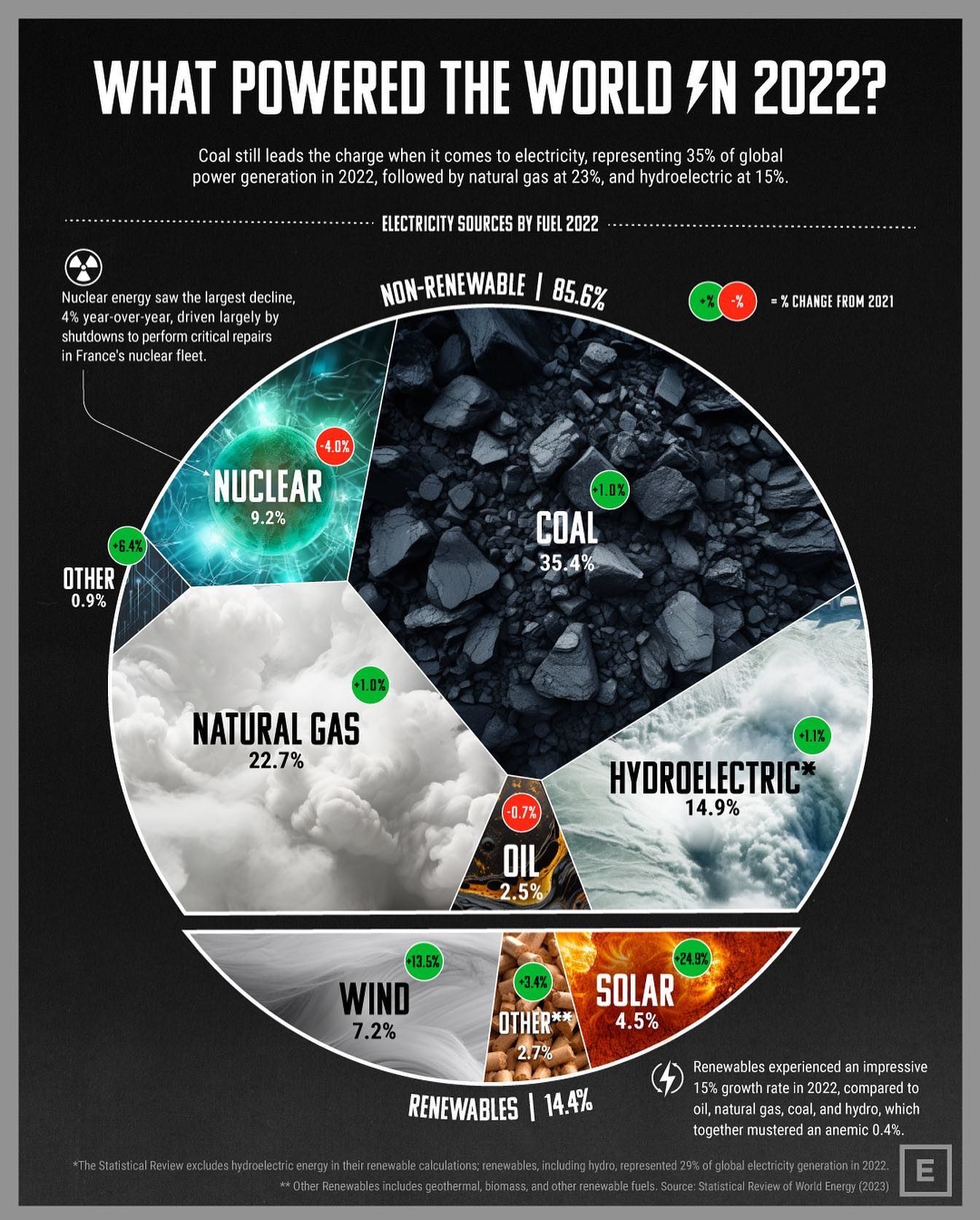
The world generated 29,165.2 terawatt hours (TWh) of electricity in 2022, marking a 2.3% increase from the previous year.
Context: Why this Matters
Understanding the global electricity generation landscape is crucial for assessing energy trends and making informed decisions about energy policies and investments. The data from 2022 provides valuable insights into the shift towards renewable energy sources and the continued reliance on traditional fossil fuels.
The Breakdown of Global Electricity Sources
Coal: The Dominant Player
Coal remains the single largest source of electricity, accounting for 35.4% of global power generation in 2022. This dominance highlights coal's enduring role in the global energy mix, despite growing environmental concerns. The growth in coal's contribution was modest, at 1% from 2021.
Natural Gas: The Second Largest Contributor
Natural gas is the second-largest source of electricity, contributing 22.7% of the global total. It saw a 1% increase from the previous year, underscoring its importance as a flexible and relatively cleaner alternative to coal. Natural gas is valued for its reliability and ability to balance the variability of renewable energy sources.
Hydroelectric: A Stable Force
Hydroelectric power made up 14.9% of global electricity generation in 2022, experiencing a 1.1% increase from 2021. Hydroelectric power remains a significant renewable energy source, providing a stable and predictable supply of electricity, particularly in regions with abundant water resources.
Nuclear: The Declining Giant
Nuclear energy, categorized under non-renewable sources, saw a notable decline. Despite its contribution to 9.2% of global electricity generation, nuclear energy is facing challenges due to high operating costs, safety concerns, and the growing global trend towards renewable energy.
Oil: The Minor Player
Oil contributed a relatively small 2.5% to global electricity generation in 2022, marking a -0.7% decline from the previous year. This decrease reflects the ongoing shift away from oil as a primary source of electricity, in favor of cleaner and more sustainable energy options.
Wind: The Rising Star
Wind energy is emerging as a significant player in the renewable energy sector, contributing 7.2% to global electricity generation in 2022. This represents a substantial 3.4% increase from 2021, highlighting the growing investment and adoption of wind power technologies worldwide.
Solar: The Rapidly Growing Contributor
Solar energy is rapidly expanding, accounting for 4.5% of global electricity generation in 2022. This marks a remarkable 4.9% increase from 2021, showcasing the accelerating pace of solar technology deployment and its potential to provide a significant portion of future energy needs.
Renewable Energy: The Future of Electricity
Overall, renewable energy sources collectively accounted for 14.4% of global electricity generation in 2022, with a notable 15% growth rate compared to the previous year. This growth reflects a global push towards sustainable and environmentally friendly energy solutions.
Practical Tips for Navigating the Energy Landscape
Understanding the global energy landscape can help individuals, businesses, and policymakers make informed decisions.
Invest in Renewable Energy
For businesses and individuals looking to reduce their carbon footprint, investing in renewable energy sources like solar and wind is a practical step. Solar panels and wind turbines can be installed on residential and commercial properties, providing a sustainable and cost-effective source of electricity.
Support Energy-Efficient Technologies
Emphasizing energy-efficient technologies in homes, offices, and industrial settings can significantly reduce electricity consumption. This not only helps in conserving resources but also lowers energy bills and supports the adoption of renewable energy sources.
Advocate for Policy Changes
Public advocacy for policies that promote renewable energy and sustainable practices is crucial. Engaging with local governments and regulatory bodies to push for incentives and regulations that support renewable energy can drive significant change.
Diversify Energy Sources
For regions heavily dependent on coal or natural gas, diversifying energy sources can enhance energy security and reduce environmental impact. Investing in a mix of renewable energy sources ensures a stable and sustainable energy supply, even as traditional sources face challenges.
Important Takeaways
- Coal remains the largest contributor to global electricity generation, despite growing environmental concerns. The reliance on coal remains significant, accounting for 35.4% of electricity generation in 2022.
- Natural gas and hydroelectric power are essential in maintaining the stability and flexibility of the global energy grid. Together, they contribute 37.6% of global electricity generation, showcasing their importance in balancing supply and demand.
- Nuclear energy faces a challenging future, with a decline in its contribution to global electricity. Safety concerns, high operating costs, and the push for renewable energy sources are driving this trend.
- Wind and solar energy are rapidly growing, indicating a global shift towards cleaner and more sustainable energy solutions. These sources are increasingly competing with traditional fossil fuels, driving a more environmentally friendly energy landscape.
- The overall growth in renewable energy highlights a promising future for sustainable electricity generation. The 15% growth rate in 2022 underscores the growing investment and adoption of renewable energy sources.
Conclusion
The global energy landscape in 2022 is characterized by a mix of traditional fossil fuels and a rapidly growing share of renewable energy sources. Coal and natural gas continue to dominate, while hydroelectric power provides a reliable and stable supply. Nuclear energy is facing challenges, while oil's contribution is declining. Wind and solar energy are experiencing significant growth, reflecting a global push towards cleaner and more sustainable energy solutions. By understanding the current energy landscape and embracing practical steps, we can navigate towards a more energy-efficient and sustainable future.
Watch the Reel
Related deep dives
Similar reads based on topic and creator.


Recent articles
Fresh deep dives from the latest Reels we unpacked.




Comments
Be the first to comment.