The Timeless Trapped Air of Glaciers
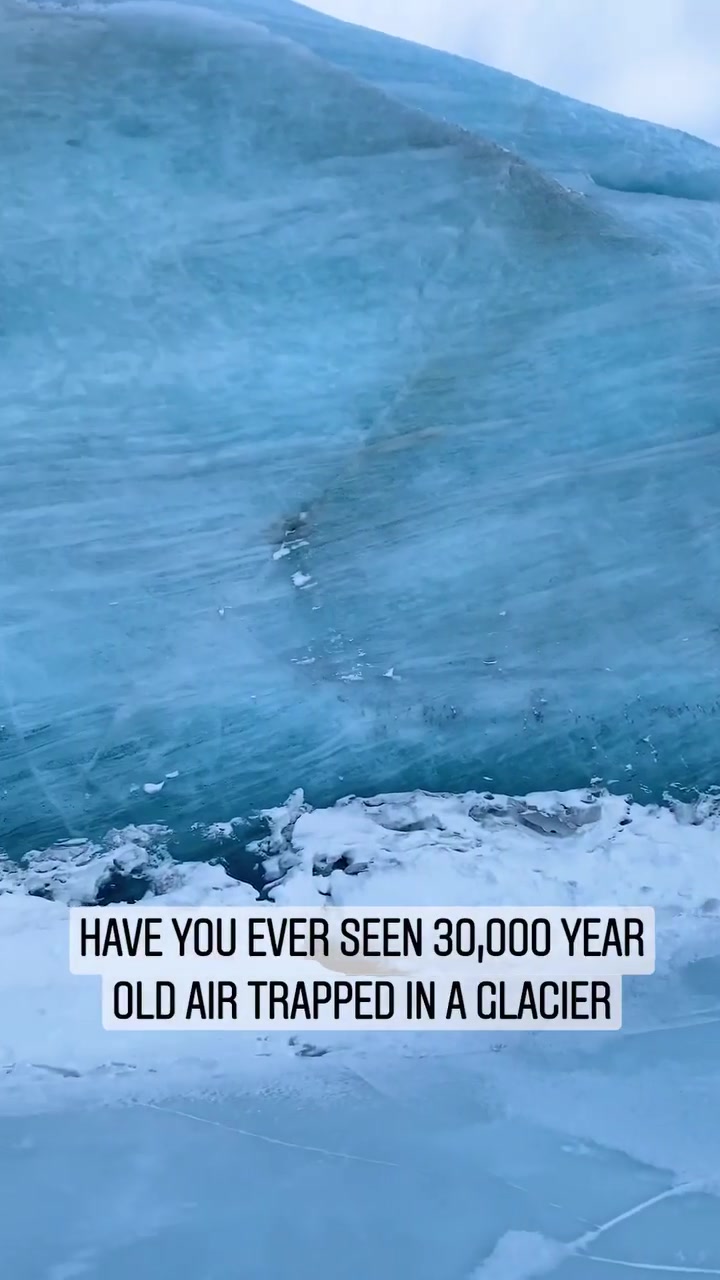
Glaciers are not merely frozen water; they are natural time capsules. They can trap air bubbles from millennia past. Watching a glacier with visible air bubbles trapped within the ice reveals a slice of Earth's ancient atmosphere. The snow falling thousands of years ago forms layers; as each layer compresses and turns into ice, bubbles of air from the atmosphere are trapped. The age of the air inside the glaciers can be thousands of years — even as old as 30,000 years.
The Science of glaciers and air pockets
Understanding glaciers requires delving into the science of air pockets. Air bubbles trapped in the ice are essentially ancient samples of Earth’s atmosphere. They provide a unique window into Earth's climate history. The air in these bubbles can reveal historical levels of greenhouse gases, temperature, and precipitation. Trapped within the ice, these bubbles are protected from contamination, making them a highly accurate source of data. Glacial Layers. Layers form in a glacier through the accumulation of snow and ice over thousands of years. Snowflakes trap air and dust as they fall to the ground, which later becomes compressed by subsequent layers into dense ice. As the ice compresses, the air bubbles are sealed tightly and remain for a long time.
The Significance of Trapping Air
Glaciers are an invaluable resource for understanding past climates. The air trapped within these ice bubbles provides a detailed record of Earth's atmospheric composition over millennia. This data is crucial for reconstructing ancient climates and understanding the impacts of greenhouse gases, such as carbon dioxide and methane, on our environment. And there are many ways to study past climates, but glacier ice is one of the most complete and detailed records. Comparative Studies. Scientists use ice cores to conduct comparative studies across different periods. By sampling ice cores from various depths and locations, researchers can better understand how global temperatures and climate patterns have changed over time. More importantly, these studies help identify long-term climate trends and cycles, contributing to our understanding of the natural climate variability as well as the impact of human activities.
The Impact of Ice Age: Physical and Environmental Changes
The trapped air in glaciers is a direct link to the past, and this air impacts our understanding of our climate. Glaciers are always moving, and sometimes they release trapped air from millennia ago. For instance, the surface ice is prone to melting from warmer temperatures, which releases some of the trapped gases andicles. It's why preserving glaciers is not just about conserving ice but also protecting our climatic history and even our future. The trapped air can reveal how climate impacts physical features such as temperature, precipitation, and even atmospheric pressure. Glaciers can tell us about the environmental impacts of past climate changes. They can tell us about floods, droughts, and other events that have shaped the landscape, and even how animals and humans had to adapt to those changes throughout the eons. Comparing Glaciers. Glacier ice differs from season to season. The air trapped in older glacier ice, dating back tens of thousands of years, will be starkly different from the air trapped in younger layers. The deeper you dig into the ice, the further back in time you go. Climate scientists have found that the icy air bubbles within glaciers allow them to track how Earth's atmosphere has changed over time, and find patterns over time that can help us understand the different climate changes.
Exploring Glaciers: Personalized Adventure
Although glaciers serve as crucial climate records, they also offer an unearthly beauty making them a sight for adventure seekers. Exploring a glacier offers a unique experience of nature. It is also a place to see the Earth in a different way, and to understand humanity's role in impacting it.
- Preparation: Plan your expedition. There's gear like crampons, ropes, hardshell jackets, and snowshoes. Are you are a beginner? Consider a guided tour to avoid the risks of exploring deep glaciers.
- Responsible Trekking: Be mindful of the environment. Stick to marked trails and avoid damaging the glacial surface. Remember, every step leaves behind a trace, and that includes preserving the air bubbles trapped in the ice.
- Stepping into Nature: Approach the glacier with a sense of curiosity. Be respectful of the location and the history it holds. The glacier air bubbles aren’t just a visual marvel. They’re a natural time capsule, allowing you to step into the past.
- Understand the geology: Before you go, read about glaciers. Take a short course to understand the geological forces at play. The impactful deep dive into the science of glaciers can enrich your experience.
In Summary
The timing of trapped glaciers' air bubbles is both a testament to our history and a sign of our future. They are an invaluable resource for understanding past climates, offering unique insights into Earth’s atmospheric composition. They also offer a blueprint of how we must act to preserve the planet for future generations. Everything preserved in the air bubbles offers an unparallel natural archive of the planet, and these air bubbles could even be the key to our future.
Watch the Reel
Questions readers ask
How exactly do air bubbles get trapped in glaciers?
Air bubbles get trapped in glaciers through a process that starts with snowfall. When snowflakes fall, they trap tiny pockets of air and dust. Over time, these layers of snow compress under the weight of new snow, turning into ice and sealing the air bubbles within. This process can take thousands of years, which is why the air inside the glaciers can be incredibly old, dating back as far as 30,000 years.
What kind of information can scientists gather from these ancient air bubbles?
Scientists can gather a wealth of information from the air trapped in glaciers. These bubbles provide samples of Earth’s ancient atmosphere, revealing historical levels of greenhouse gases like carbon dioxide and methane. This data is crucial for understanding past climate conditions, including temperature and precipitation patterns, and for studying how these factors have changed over time.
How do scientists extract and study these ancient air bubbles?
Scientists extract ancient air bubbles by drilling ice cores from glaciers. These cores are cylindrical samples of ice that contain layers of trapped air. By analyzing the air in these bubbles, researchers can measure the concentrations of various gases and particles, providing insights into the Earth’s climate history. This process involves careful handling to ensure the samples remain uncontaminated.
Can the release of trapped gases from melting glaciers affect our current climate?
The release of trapped gases from melting glaciers can have an impact on our current climate, although its extent is still a subject of research. As glaciers melt due to rising temperatures, they can release stored greenhouse gases, which could potentially accelerate global warming. However, the primary concern with melting glaciers is the loss of freshwater reserves and the rise in sea levels, which have more immediate and dramatic effects on ecosystems and human populations.
What makes glacier ice a better record of past climates compared to other methods?
Glacier ice provides a uniquely detailed and continuous record of past climates. The air bubbles trapped within the ice offer a direct sample of the ancient atmosphere, preserving information about greenhouse gas levels, temperature, and precipitation. This data is often more accurate and less contaminated than other methods, such as sediment cores or tree rings, making glaciers an invaluable resource for climate research.
How do glaciers contribute to our understanding of natural climate variability versus human-induced changes?
By studying the air trapped in glaciers, scientists can distinguish between natural climate variability and human-induced changes. The long-term records provided by glacier ice cores allow researchers to identify patterns and cycles that occur naturally, such as ice ages and warm periods. This helps in understanding how human activities, like industrialization and deforestation, have altered the climate beyond these natural variations.
What happens to the air bubbles when a glacier melts?
When a glacier melts, the trapped air bubbles are released into the atmosphere. This process can occur gradually as the surface ice melts or more rapidly during periods of significant warming. The release of these ancient gases can provide additional insights into past climates, but it also raises concerns about the potential impact on current greenhouse gas levels, though the overall effect is still under investigation.
Related deep dives
Similar reads based on topic and creator.

Recent articles
Fresh deep dives from the latest Reels we unpacked.


Comments
Be the first to comment.