Geothermal Energy
Geothermal energy, derived from the Earth's internal heat, is a renewable energy source with unique advantages over solar and wind energy. It harnesses the heat from the Earth's molten core to produce electricity. However, geothermal energy also faces challenges, including high costs and geothermal limitations. Because of these factors, only a few countries have been able to generate geothermal energy at scale.
Why This Matters
Geothermal energy is a critical component of the global renewable energy landscape. As the world seeks to reduce reliance on fossil fuels and mitigate climate change, understanding the benefits and challenges of geothermal energy is essential. It provides a consistent and reliable source of power, unaffected by weather conditions or time of day, making it a valuable addition to the energy mix.
The Basics of Geothermal Energy
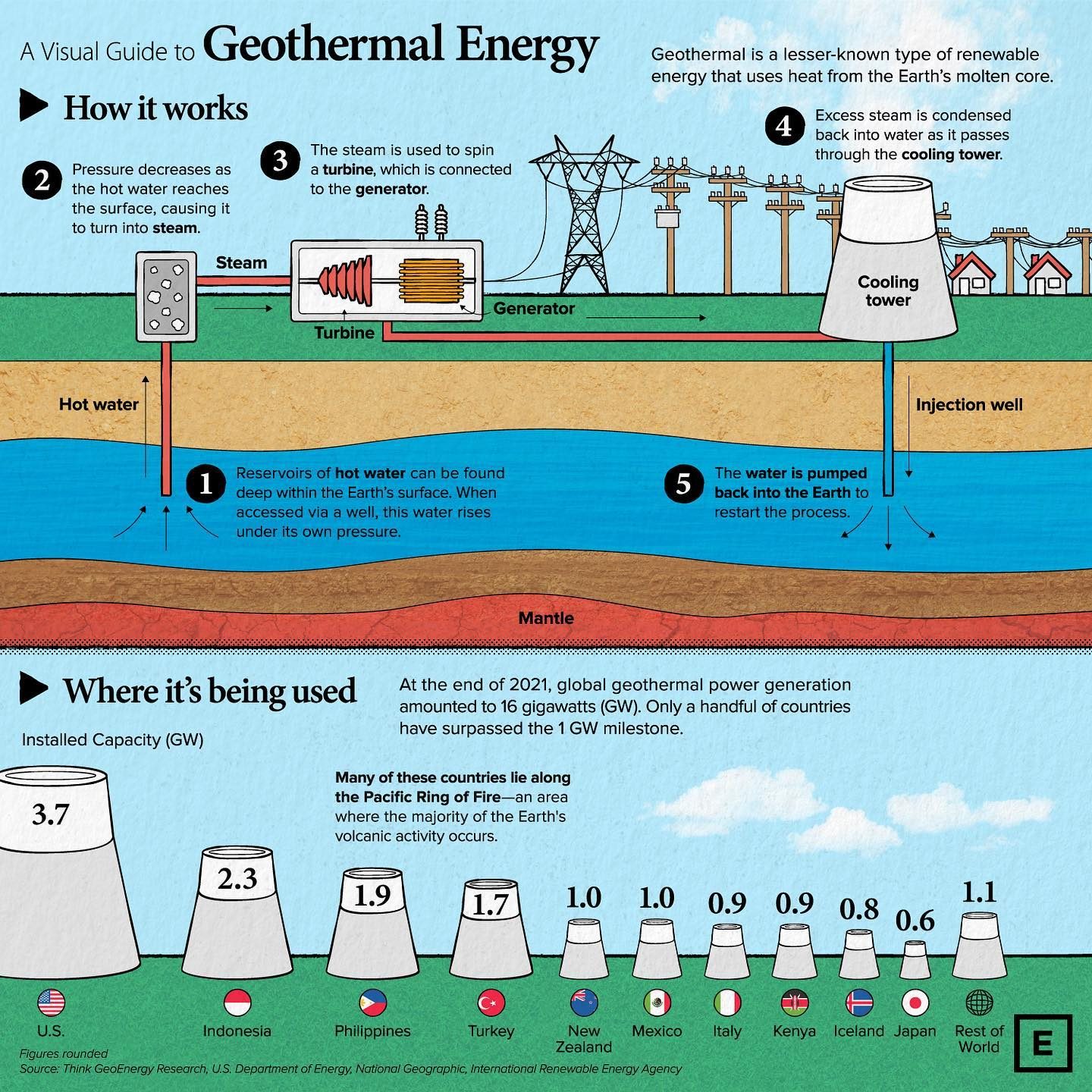
How Geothermal Energy Works
The process of generating geothermal energy involves several key steps:
- Extracting Hot Water: Reservoirs of hot water are found deep within the Earth's surface. When accessed via a well, this water rises under its own pressure.
- Converting to Steam: As the hot water reaches the surface, the pressure decreases, causing it to turn into steam.
- Generating Electricity: The steam is then used to spin a turbine connected to a generator, producing electricity.
- Condensing Steam: Excess steam is condensed back into water as it passes through a cooling tower.
- Reinjection: The water is pumped back into the Earth to restart the process.
Global Geothermal Energy Capacity
At the end of 2021, global geothermal power generation amounted to 16 gigawatts (GW). Only a handful of countries have surpassed the 1 GW milestone. These countries include:
- United States: 3.7 GW
- Indonesia: 2.3 GW
- Philippines: 1.9 GW
- Turkey: 1.7 GW
- New Zealand: 1.0 GW
- Mexico: 1.0 GW
- Italy: 0.9 GW
- Kenya: 0.8 GW
- Iceland: 0.6 GW
- Japan: 1.1 GW
Comparison to Other Renewable Energy Sources
Geothermal energy accounts for just 0.5% of the world's total renewable energy capacity, which stands at 3,064 GW. Here's how it compares to other renewable energy sources:
- Hydro: 40%
- Wind: 27%
- Solar: 28%
- Others: 5%
- Geothermal: 0.5%
Benefits and Disadvantages
Benefits
- Reliability: Unlike solar and wind, geothermal energy is not impacted by daylight cycles, weather conditions, or seasons. It provides a consistent and reliable source of power.
- Smaller Footprint: A geothermal plant uses 88% less space than a solar farm to produce 1 GWh of electricity. This makes geothermal energy a more land-efficient option.
Disadvantages
- High Upfront Costs: Geothermal energy is a relatively small market, so building plants is very costly. The high upfront costs can be a barrier to entry for many countries.
- Geographic Restrictions: Geothermal plants can only be built on reservoirs with temperatures above 100°C (212°F). This limits the locations where geothermal energy can be harnessed.
Practical Tips
For Countries Considering Geothermal Energy
- Conduct Thorough Geological Surveys: Before investing in geothermal energy, countries should conduct comprehensive geological surveys to identify suitable sites with high-temperature reservoirs.
- Explore Partnerships and Financing Options: Given the high upfront costs, exploring partnerships with international organizations and seeking financing options can help mitigate some of the financial burdens.
For Investors and Companies
- Research and Development: Invest in research and development to find more cost-effective methods of harnessing geothermal energy. This could involve improving drilling technologies or finding new ways to convert heat into electricity.
- Diversify Energy Portfolios: Incorporating geothermal energy into a diverse energy portfolio can provide a stable and reliable source of power, reducing dependency on variable renewable sources like solar and wind.
Important Takeaways
- Reliability and Consistency: Geothermal energy provides a consistent and reliable source of power, unaffected by weather conditions or time of day.
- High Upfront Costs and Geographic Limitations: Building geothermal plants is costly, and their locations are limited to areas with high-temperature reservoirs.
- Land Efficiency: Geothermal plants use significantly less land compared to other renewable energy sources like solar farms.
- Small Global Market: Only a handful of countries have surpassed the 1 GW milestone in geothermal power generation.
Conclusion
Geothermal energy is a unique and reliable source of clean energy. While it faces challenges such as high costs and geographic restrictions, its benefits in terms of reliability and land efficiency make it a valuable addition to the global energy mix. As technology advances and more cost-effective methods are developed, geothermal energy has the potential to play a more significant role in the world's renewable energy landscape.
Watch the Reel
Questions readers ask
What makes geothermal energy a reliable source of power?
Geothermal energy is reliable because it is not dependent on weather conditions or time of day. Unlike solar or wind power, geothermal energy can provide a constant power supply, making it a stable source for electricity.
How does geothermal energy compare to solar and wind power?
Geothermal energy differs from solar and wind power as it relies on the Earth's internal heat, making it less variable. Solar and wind power depend on weather and daylight, making geothermal more consistent. However, geothermal power plants require specific geological conditions, while solar and wind can be harnessed in a broader range of locations, despite intermittent availability.
Why is geothermal energy production limited to a few countries?
Geothermal energy production is limited due to high upfront costs and the requirement of specific geological conditions, such as access to underground reservoirs. Only a few countries with suitable geothermal resources and the financial resources have been able to develop large-scale geothermal power plants.
How is geothermal energy used to produce electricity?
Geothermal energy is converted into electricity by harnessing the heat from the Earth's core. This is achieved by pumping hot water from the ground and using it to create steam. The steam then spins turbines, which generate electricity. The process is consistent and efficient, providing a stable power supply.
What are the primary advantages of geothermal energy?
The primary advantages of geothermal energy are its consistency and reliability. It offers a steady power supply, making it an attractive option for base load power. Additionally, it has a smaller land footprint compared to solar or wind farms and produces lower greenhouse gas emissions.
What are the main challenges in expanding geothermal energy capacity?
Expanding geothermal energy capacity faces several challenges, including high initial investment costs, limited suitable sites, and geological risks. The need for specific geological conditions restricts where geothermal power plants can be built, and the upfront costs can be prohibitive for many regions.
How can geothermal energy contribute to a sustainable future?
Geothermal energy can contribute to a sustainable future by providing a stable, renewable source of electricity. It reduces dependence on fossil fuels, lowering greenhouse gas emissions and mitigating climate change. By integrating geothermal energy into the power grid, countries can enhance energy security and promote a more sustainable energy mix.
Related deep dives
Similar reads based on topic and creator.


Recent articles
Fresh deep dives from the latest Reels we unpacked.




Comments
Be the first to comment.