Nuclear Power Capacity by Country
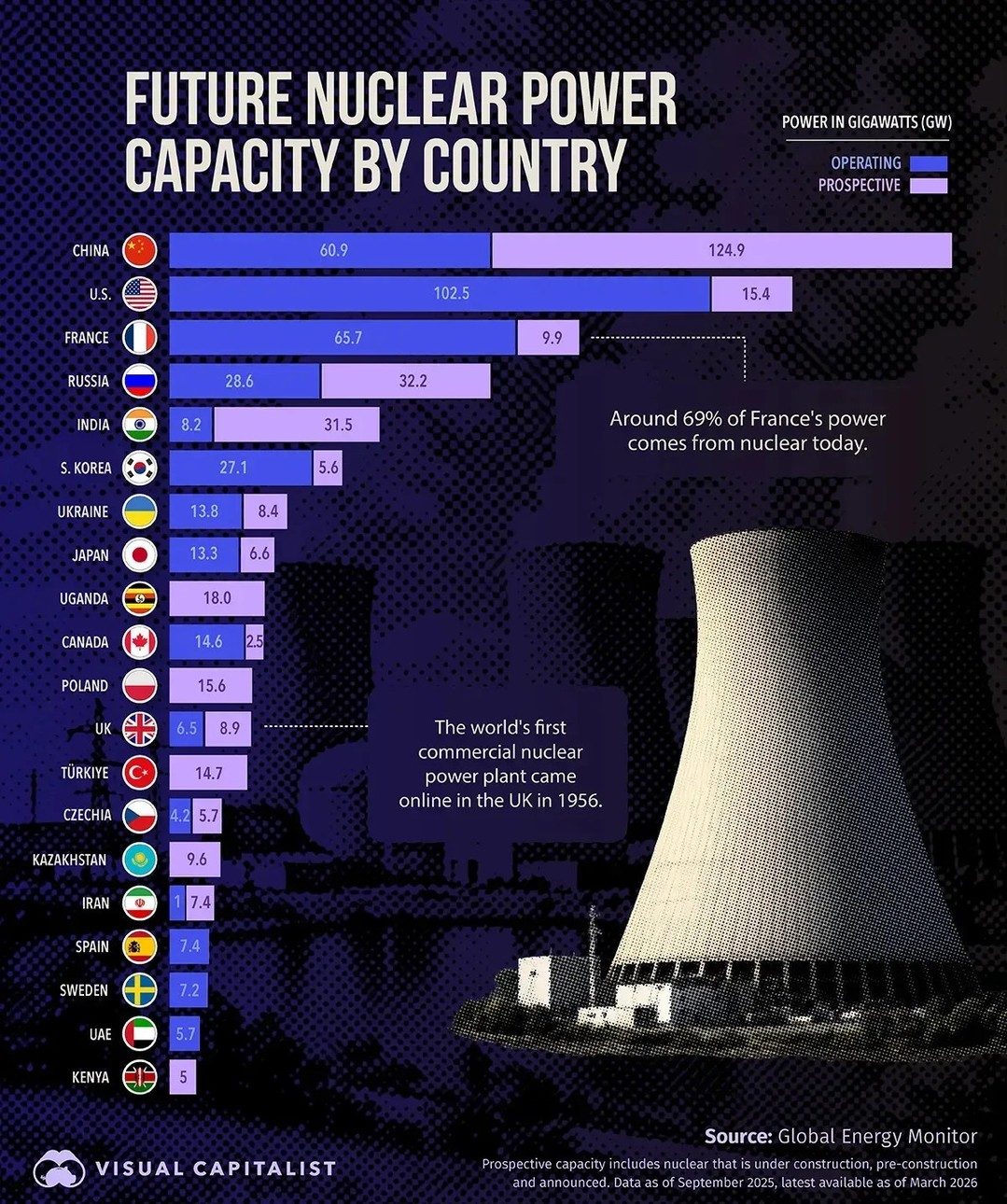
Nuclear power is a significant source of energy for many countries, and the global landscape of nuclear capacity is continually evolving. As of the latest data from Global Energy Monitor, China is on track to reach nearly 186 GW of nuclear capacity, which will likely make it the world’s top nuclear power producer. Currently, the United States leads in nuclear power production, but when planned projects are included, it falls to the second position.
Why This Matters
The shift in nuclear power capacity is driven by the increasing demand for energy and the need for sustainable and reliable power sources. Understanding the current and future nuclear power capacities of different countries provides insights into global energy trends and the strategic importance of nuclear power in various regions. This information is crucial for policymakers, energy providers, and consumers who rely on nuclear energy to power their homes, industries, and economies.
Future Nuclear Power Capacity and Country Rankings
Current Nuclear Power Leaders
China is set to become the world’s top nuclear power producer with a projected capacity of nearly 186 GW. This significant increase is part of China’s broader strategy to reduce its reliance on fossil fuels and meet its growing energy demands through cleaner, more sustainable sources.
The United States currently holds the top spot in nuclear power production and is home to the largest fleet of nuclear reactors globally. However, with planned projects in other countries, the U.S. is expected to rank second in the future.
France is another major player in the nuclear energy sector, with an impressive 69% of its current power generation coming from nuclear sources. France’s high reliance on nuclear energy underscores its commitment to this power source and highlights the potential for increased nuclear capacity in the future, though it is unlikely to surpass China and the U.S.
Countries with Rapid Capacity Expansion
India and Uganda are among the countries rapidly scaling up their nuclear power capacity from near zero. These countries are strategic in their approach to meeting rising energy demands and diversifying their energy portfolios.
Europe
The United Kingdom has a rich history of nuclear power, with the world’s first commercial nuclear power plant, Calder Hall, coming online in 1956. Though it is currently less reliant on nuclear power compared to its peak, the UK is planning to expand its nuclear capacity as part of its efforts to achieve net-zero emissions.
Emerging Nuclear Power Countries
Several countries are entering the nuclear energy arena with ambitious plans to increase their capacities. Poland, Türkiye, and Czechia are notable examples, driven by their desire to reduce carbon emissions and ensure energy security.
Other Notable Countries
Russia, South Korea, Ukraine, Japan, Canada, Kazakhstan, Iran, Spain, Sweden, the UAE, and Kenya are also making strides in nuclear power. Each of these countries has unique factors driving their investments in nuclear energy, including energy independence, environmental concerns, and economic growth.
Practical Tips for Understanding Nuclear Power Capacity
To better understand and appreciate the significance of nuclear power capacity, consider the following practical tips:
-
Follow Energy Trends: Keep up-to-date with the latest energy trends and the progress of nuclear power projects. Following key sources, like the Global Energy Monitor, can provide valuable insights.
-
Explore Energy Policies: Look into the energy policies of different countries to understand their motivations and strategies for nuclear power. Publicly available documents and reports can be a treasure trove of information.
-
Learn About Technology: Understand the technology behind nuclear power generation. Knowing the different types of reactors and their efficiencies can deepen your appreciation of the industry.
Important Takeaways
Understanding global nuclear power capacity involves recognizing the key players and newcomers. Here are some critical points to remember:
China is expected to dwarf the competition, reaching nearly 186 GW of nuclear capacity, making it the world's top nuclear power producer. The United States is currently the leader, but it will be overtaken by China when planned projects are taken into account.
France’s reliance on nuclear power is a testament to its reliability and efficiency, with approximately 69% of its energy derived from nuclear. The UK's long-standing relationship with nuclear power is a historical precedent that is influencing modern-day developments.
The UK's nuclear history and current initiatives are indicative of the broader efforts across Europe to develop nuclear power. As Poland, Türkiye, and Czechia invest in nuclear power, Europe remains a critical player in global nuclear energy trends.
India and Uganda, though starting from near zero, are rapidly scaling their capacity, driven by rising energy demands and strategic planning. This rapid expansion underscores the global trend of countries looking to nuclear power as a reliable and sustainable energy source.
Conclusion
The landscape of global nuclear power is dynamic, with China poised to become the leading producer. Other countries, including the United States, France, the UK, and emerging players like India and Uganda, are also making significant strides. This information is crucial for understanding the broader context of energy production and consumption, offering valuable insights into global trends and strategic decisions.
Watch the Reel
Questions readers ask
Which countries currently lead in nuclear power capacity, and how is this expected to change?
The United States currently leads in nuclear power production. However, China is rapidly expanding its nuclear capacity and is projected to surpass the U.S. with nearly 186 GW of capacity. France is also a key player in the global nuclear energy landscape.
What factors are driving the increase in nuclear power capacity globally?
The global increase in nuclear power capacity is driven by the rising demand for energy and the need for sustainable and reliable power sources. Governments and industries are increasingly turning to nuclear power as a stable energy solution.
What is the significance of China's growing nuclear energy capacity?
China's growing nuclear energy capacity is significant because it reflects a global shift towards sustainable energy sources. As China expands its nuclear power, it is likely to become the world's top nuclear power producer, influencing global energy trends and policies.
How does the U.S. compare to other countries in terms of future nuclear power capacity?
The United States currently leads in nuclear power production, but when planned projects are included, it is expected to fall to the second position behind China. The U.S. remains a key player, but its leadership in nuclear power is being challenged by China's rapid expansion.
What role does France play in the global nuclear power landscape?
France is a significant contributor to global nuclear power. It is one of the top producers of nuclear energy and plays a crucial role in the global pursuit of sustainable, reliable energy sources. Its influence in this sector is notable alongside China and the U.S.
What are some of the emerging trends in global nuclear power as of the latest data?
Emerging trends in global nuclear power include the rapid expansion of nuclear capacity in countries like China and Uganda, and the strategic importance of nuclear energy as a reliable and sustainable power source. Global monitoring of nuclear power data shows a shift towards increased nuclear capacity in various countries.
How can I stay informed about the latest developments and data on nuclear power capacity?
To stay informed, you can follow reports from organizations like the Global Energy Monitor, which provide up-to-date data and analyses on nuclear power capacities worldwide. Keeping track of announcements from top nuclear power countries such as China, the U.S., and France can also offer valuable insights into global nuclear power trends.
Related deep dives
Similar reads based on topic and creator.


Recent articles
Fresh deep dives from the latest Reels we unpacked.




Comments
Be the first to comment.