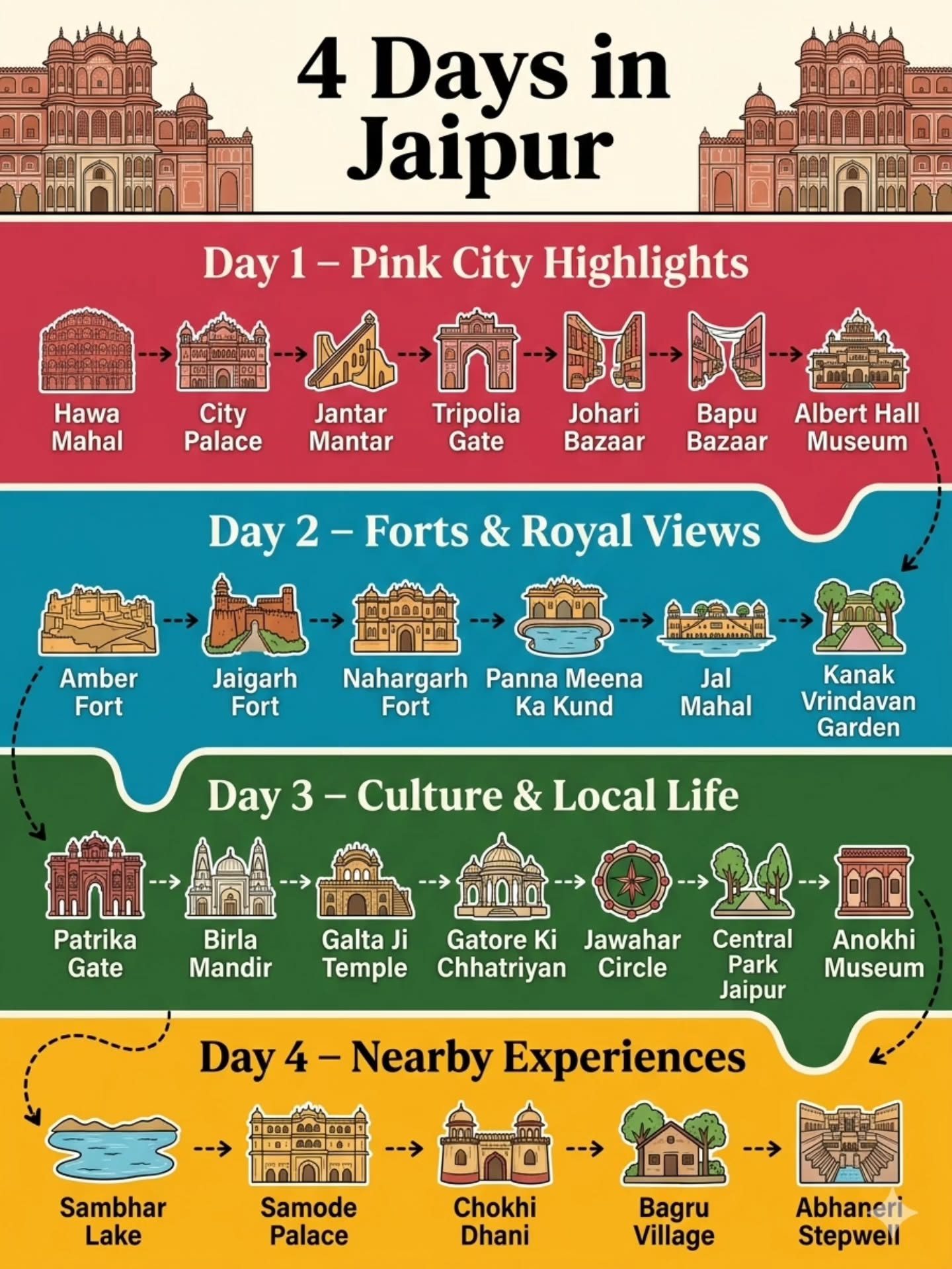
Jaipur is a city rich in history and culture, offering a wealth of experiences for travelers. A well-planned itinerary can help make the most of your visit. Here’s a comprehensive guide to a four-day trip to Jaipur, designed to cover iconic landmarks, historical sites, cultural experiences, and nearby attractions.
Context / Why this matters
Jaipur, also known as the "Pink City," is the capital of Rajasthan and a major tourist hub. Its unique blend of history, architecture, and local culture makes it a must-visit destination. Understanding the best way to explore Jaipur can enhance your travel experience, ensuring you don’t miss out on any of its highlights. This itinerary is structured to provide a balanced mix of sightseeing, cultural immersion, and relaxation.
Main discussion
Day 1: Pink City Highlights
The first day is dedicated to exploring the iconic landmarks that give Jaipur its distinctive charm. Start your day at Hawa Mahal, the Palace of Winds, known for its intricate latticework and unique architecture. It offers a glimpse into the royal lifestyle of Rajasthan.
Next, head to City Palace, a complex of courtyards, gardens, and buildings that showcase the opulence of the Rajput rulers. Don't miss the Mubarak Mahal and the Chandi Palace within the complex.
Continuing your exploration, visit Jantar Mantar, an astronomical observatory built in the 18th century. Its massive instruments are a testament to ancient Indian astronomy.
For a taste of local markets, head to Tripolia Bazaar and Johari Bazaar, known for their vibrant atmosphere and traditional handicrafts, textiles, and jewelry.
In the evening, visit the Albert Hall Museum, a stunning example of Indo-Saracenic architecture, housing a rich collection of artifacts and artworks.
Day 2: Forts & Royal Views
Day two is all about the majestic forts and royal architecture that surround Jaipur. Begin with a visit to Amber Fort, perched on a hilltop and offering panoramic views of the city. The fort’s Sheesh Mahal, with its mirror work, is a highlight.
Next, explore Jaigarh Fort, known for the world's largest cannon on wheels, the Jaivana. The fort also provides stunning views of the surrounding landscape and Amber Fort.
Move on to Nahargarh Fort, located on the Aravalli Hills. It offers a serene environment and stunning sunset views.
In the evening, visit Panna Meena Ka Kund, a historic stepwell with intricate carvings and architectural marvels. End the day with a leisurely stroll around Jal Mahal, a palace situated in the middle of Man Sagar Lake.
Day 3: Culture & Local Life
The third day immerses you in Jaipur’s vibrant culture and local life. Start with a visit to Patrika Gate, a modern landmark with a unique design.
Next, head to Birla Mandir, a tranquil Hindu temple dedicated to Lord Vishnu and Goddess Lakshmi. It offers beautiful views of the city and is a popular spot for locals and tourists alike.
Continue to Galtaji Temple, a historic Hindu temple complex known for its holy water tanks and natural springs. The Galtaji Temple is also home to various wildlife.
Spend the afternoon at Jawahar Circle, a bustling garden and park in Jaipur with walking trails and recreational activities.
Visit Central Park to experience the local lifestyle, and stop by the Anokhi Museum to learn about traditional block printing and textile crafts.
Day 4: Nearby Experiences
The final day takes you beyond Jaipur to explore nearby attractions. Start with a trip to Sambhar Lake, the largest inland salt lake in India. It is home to a variety of bird species and offers stunning sunrise views.
Next, visit Samode Palace, a heritage hotel known for its opulent architecture and luxurious amenities. The palace features beautiful gardens and a serene atmosphere.
In the afternoon, head to Chokhi Dhani, a traditional Rajasthani village resort that offers a glimpse into rural life. Enjoy folk performances, local cuisine, and camel rides.
End your trip with a visit to Bagru Village, known for its traditional block printing techniques. Wrap up your day in Abhaneri, a lesser-known village with a historic stepwell and a serene atmosphere.
Practical tips
Best Time to Visit
The best time to visit Jaipur is during the winter months, from November to March, when the weather is pleasant and ideal for sightseeing. Summers can be extremely hot, while monsoons can bring heavy rainfall.
Getting Around
Jaipur is well-connected by road, rail, and air. Taxis and auto-rickshaws are readily available for local travel. For a more comfortable experience, consider hiring a private car or using ride-sharing services.
Accommodation
Jaipur offers a range of accommodation options to suit different budgets, from luxury hotels and heritage properties to budget-friendly guesthouses and hostels. Staying in areas like Bapu Bazaar, Johari Bazaar, or the Hawa Mahal area can provide easy access to major attractions.
Important Takeaways
- Jaipur’s blend of historical sites, cultural experiences, and local life makes it a unique travel destination.
- A well-planned itinerary allows you to explore the city’s highlights without missing out on key attractions.
- Jaipur’s vibrant markets, palaces, and temples offer a rich cultural experience.
- Day trips to nearby attractions like Sambhar Lake and Samode Palace add depth to your itinerary.
- Understanding local customs and practical travel tips can enhance your visit.
Conclusion
Jaipur is a city that seamlessly combines its rich history with a vibrant present, offering a diverse range of experiences for visitors. From the grandeur of its forts and palaces to the bustling markets and serene temples, Jaipur is a treasure trove of cultural and historical attractions. This four-day itinerary ensures that you get a comprehensive experience of the Pink City, covering its iconic landmarks, cultural highlights, and nearby attractions. Whether you're a history enthusiast, a culture vulture, or simply looking for a unique travel experience, Jaipur has something special to offer.
Watch the Reel
Questions readers ask
What are the must-visit landmarks in Jaipur for a four-day trip?
For a four-day trip, be sure to include the City Palace, Hawa Mahal, and Amber Fort in your itinerary. These sites offer a mix of historical significance, architectural beauty, and cultural insight. Additionally, consider visiting Jantar Mantar, an astronomical observatory, and Nahargarh Fort for panoramic city views.
How can I experience local culture in Jaipur?
To immerse yourself in Jaipur's local culture, explore the vibrant bazaars such as Bapu Bazaar and Johari Bazaar. These markets offer a variety of local crafts, textiles, and jewelry. You can also visit art galleries and museums like the Albert Hall Museum to appreciate traditional Rajasthani art and artifacts.
What are some of the best day trips from Jaipur?
Consider day trips to nearby forts and palaces such as Nahargarh Fort, Amer Fort and Jaigarh Fort. These excursions offer a deeper dive into the region's royal history and provide stunning views. Additionally, visiting the abandoned city of Fatehpur Sikri is a unique experience, showcasing Mughal architecture and history.
What is the significance of the Pink City moniker for Jaipur?
Jaipur is known as the 'Pink City' due to the distinctive pink-colored buildings in its old city. This color scheme was mandated by the city's founder, Maharaja Ram Singh II, in 1876 to welcome the Prince of Wales. Today, it remains a prominent feature of Jaipur's architecture, adding to its charm and historical allure.
What are some unique experiences to have in Jaipur?
For a unique experience, consider a traditional Rajasthani cooking class or a Bollywood dance workshop. These activities offer hands-on engagement with local traditions. Visiting the Anokhi Museum of Hand Printing or the Bagru Print Workshop can also provide insight into Jaipur's rich textile heritage. Additionally, an evening at a local theater or a puppet show can be a memorable cultural experience.
What are the best times to visit Jaipur?
The best times to visit Jaipur are during the winter months, from October to March, when the weather is pleasant and ideal for sightseeing. Summers can be extremely hot, and monsoon season may affect travel plans, so these periods are generally less recommended.
Related deep dives
Similar reads based on topic and creator.




Recent articles
Fresh deep dives from the latest Reels we unpacked.



Comments
Be the first to comment.