Global Coal Consumption
Despite ongoing efforts to reduce carbon emissions, fossil fuels still dominate global primary energy use, accounting for over 80% of total consumption. Among these, coal stands out as the most affordable energy source, while also being the primary contributor to energy-related CO2 emissions. Let's explore the current landscape of global coal consumption, focusing on key countries and the broader implications of this energy source.
Why This Matters
Understanding the global consumption of coal is crucial for several reasons. It provides insight into the energy policies and economic dependencies of various nations. It also highlights the challenges and opportunities in transitioning to cleaner energy sources. As the world grapples with climate change, knowing where and how much coal is used can inform global strategies for reducing carbon emissions and promoting sustainable development.
The Role of Coal in Global Energy Mix
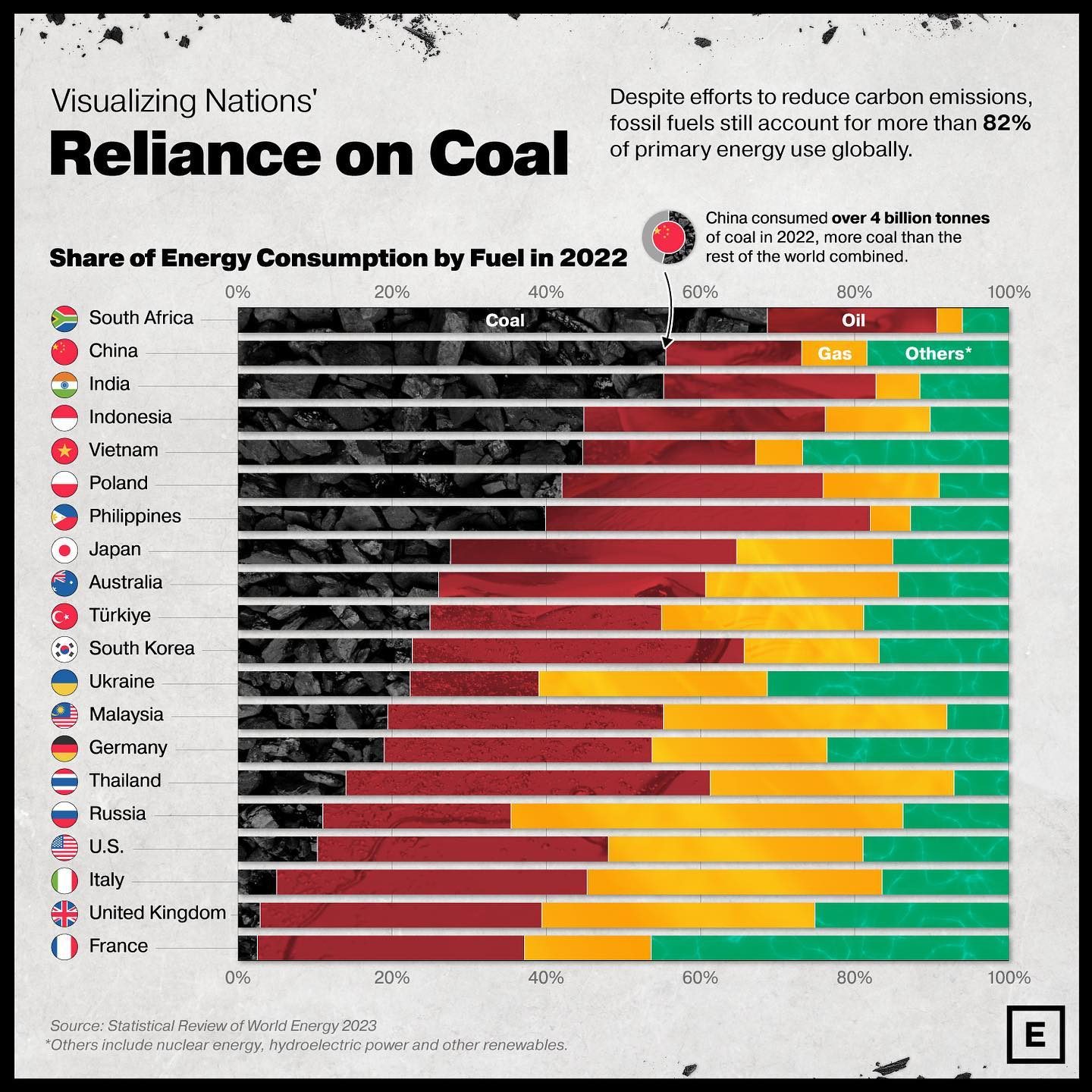
The infographic displays the share of energy consumption by fuel type in 2022, highlighting the significant role of coal in many countries. Fossil fuels, including coal, oil, and gas, collectively account for more than 80% of global primary energy use, with coal being a major component. This dependence on coal underscores its affordability and accessibility, particularly for developing economies.
China: A Global Leader in Coal Consumption
China is the world's largest consumer of coal, with consumption far exceeding that of any other nation. The country consumed over 4 billion tonnes of coal in 2022, which is more than the rest of the world combined. This massive consumption is driven by China's rapid industrialization and urbanization, which demand large amounts of energy to power factories, heat homes, and fuel transportation.
Other Major Coal Consumers
While China leads the way in coal consumption, other countries also rely heavily on this fuel. India, for instance, is another significant coal consumer, driven by its growing energy needs and limited alternative energy sources. The United States, despite efforts to diversify its energy mix, still consumes substantial amounts of coal, particularly for electricity generation.
The Environmental Impact of Coal
Coal is not only a dominant energy source but also a major contributor to carbon emissions. Burning coal releases significant amounts of CO2 into the atmosphere, making it the largest source of energy-related greenhouse gas emissions. This has severe implications for climate change, air pollution, and public health.
Carbon Emissions and Climate Change
The high carbon content of coal makes it a significant contributor to global warming. As the world seeks to limit temperature rise to well below 2°C above pre-industrial levels, reducing coal use is a critical step. Transitioning to cleaner energy sources, such as renewable energy, is essential for achieving this goal and mitigating the impacts of climate change.
Air Pollution and Health
Beyond carbon emissions, coal combustion also releases pollutants such as sulfur dioxide, nitrogen oxides, and particulate matter. These pollutants contribute to smog, acid rain, and respiratory diseases, posing significant health risks to populations living near coal-fired power plants and industrial facilities.
Practical Tips for Reducing Coal Dependence
Transitioning away from coal is a complex task, but there are practical steps that countries can take to reduce their dependence on this fossil fuel. These steps can help mitigate the environmental and health impacts associated with coal while promoting sustainable development.
Investing in Renewable Energy
One of the most effective ways to reduce coal dependence is by investing in renewable energy sources such as solar, wind, and hydroelectric power. These sources are cleaner, more sustainable, and increasingly cost-competitive with traditional fossil fuels.
Improving Energy Efficiency
Improving energy efficiency can also help reduce coal consumption. By adopting energy-efficient technologies and practices, countries can decrease their overall energy demand, reducing the need for coal and other fossil fuels.
Diversifying the Energy Mix
Diversifying the energy mix by incorporating a variety of energy sources, including nuclear, natural gas, and renewable energy, can help reduce reliance on coal. This approach ensures a more stable and resilient energy supply while minimizing environmental impacts.
Promoting International Cooperation
International cooperation is essential for addressing the global challenge of coal dependence. Countries can share best practices, collaborate on research and development, and support each other in transitioning to cleaner energy sources. Joint efforts can accelerate the development and deployment of innovative technologies and policies that reduce coal use and promote sustainable development.
Important Takeaways
The global consumption of coal is a complex issue with significant implications for energy security, economic development, and environmental sustainability. Understanding the role of coal in the global energy mix and the challenges associated with its use is crucial for developing effective strategies to reduce dependence on this fossil fuel.
The Need for Balanced Energy Policies
Balanced energy policies that prioritize both economic growth and environmental sustainability are essential. These policies should promote the development and deployment of cleaner energy sources while addressing the social and economic impacts of transitioning away from coal.
The Importance of Data and Research
Accurate data and comprehensive research are vital for understanding the dynamics of global coal consumption and its impacts. Policymakers, researchers, and stakeholders need reliable information to develop and implement effective strategies for reducing coal dependence and promoting sustainable development.
The Role of International Cooperation
International cooperation is key to addressing the global challenge of coal dependence. Countries must work together to share knowledge, technologies, and best practices, and to support each other in transitioning to cleaner energy sources.
Conclusion
The global consumption of coal highlights the complex interplay between energy needs, economic development, and environmental sustainability. While coal remains a critical energy source for many countries, its significant environmental and health impacts necessitate a transition to cleaner and more sustainable energy sources.
By investing in renewable energy, improving energy efficiency, diversifying the energy mix, and promoting international cooperation, countries can reduce their dependence on coal and mitigate its adverse effects. Understanding the current landscape of global coal consumption is the first step toward developing effective strategies for a sustainable energy future.
Watch the Reel
Questions readers ask
Which countries are the largest consumers of coal in the world?
The top coal-consuming countries typically include China, India, and the United States. These countries rely heavily on coal for electricity generation and industrial processes due to its affordability and abundance.
How does coal consumption impact CO2 emissions globally?
Coal is the most carbon-intensive fossil fuel, emitting more CO2 per unit of energy than oil or natural gas. Therefore, high coal consumption significantly contributes to global CO2 emissions, exacerbating climate change effects.
What are the economic implications of coal consumption for countries that rely on it?
Countries dependent on coal often face a complex economic landscape. While coal provides affordable energy and supports jobs in mining and power sectors, it also poses health risks and environmental costs. Additionally, the transition to cleaner energy sources presents both challenges and opportunities for economic growth and stability.
What strategies can countries employ to reduce their reliance on coal?
Countries can implement several strategies to reduce coal dependence, such as investing in renewable energy sources like wind and solar, improving energy efficiency, and promoting public transportation. Additionally, policies that incentivize the use of cleaner energy sources and penalize high carbon emissions can facilitate this transition.
How does the affordability of coal compare to other energy sources?
Coal is often the most affordable energy source per unit of energy produced, making it an attractive option for many countries, especially those with limited access to other energy resources. However, the low upfront cost of coal does not account for the long-term environmental and health costs associated with its use.
What role do international policies play in reducing global coal consumption?
International policies, such as the Paris Agreement, play a crucial role in encouraging countries to reduce their coal consumption. These policies establish global targets for reducing carbon emissions, promote the sharing of best practices and technologies, and help mobilize financial resources to support the transition to cleaner energy sources.
How does the consumption of coal vary by region?
Coal consumption varies significantly by region. Asia, particularly China and India, accounts for a large portion of global coal use due to rapid industrialization and urbanization. In contrast, regions like Europe and North America have seen a decline in coal consumption as they transition towards cleaner energy sources.
Related deep dives
Similar reads based on topic and creator.


Recent articles
Fresh deep dives from the latest Reels we unpacked.




Comments
Be the first to comment.