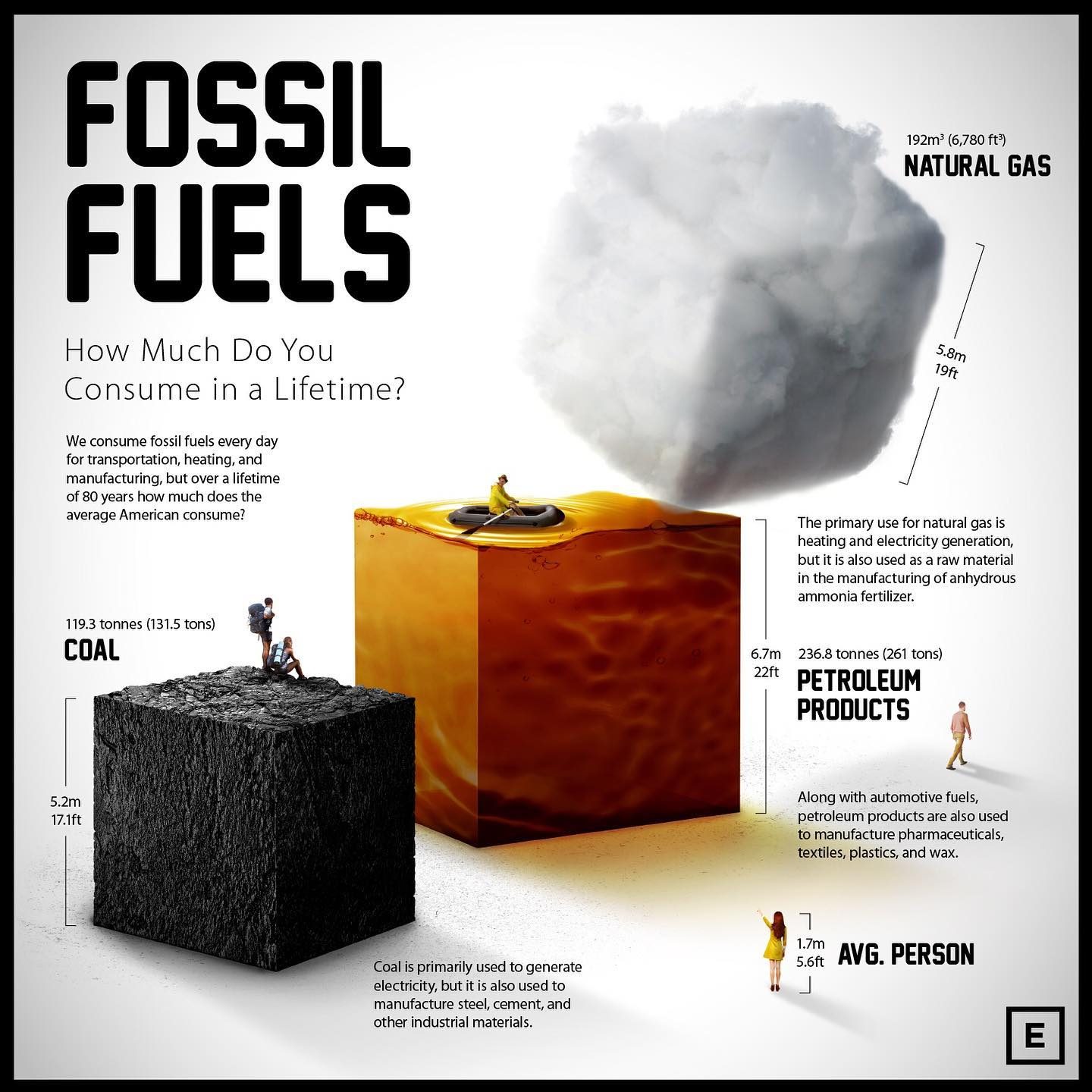
Fossil fuels are foundational to modern life, powering everything from transportation to manufacturing. In 2021, the world consumed nearly 490 exajoules of fossil fuels. To grasp the magnitude of this consumption, it helps to break it down on an individual level. This is why understanding the average person's fossil fuel use over a lifetime is so important.
Context / Why this Matters
Fossil fuels—coal, natural gas, and petroleum products—are essential to our daily lives. They heat our homes, fuel our cars, and are integral to the production of countless everyday items. However, the sheer scale of our consumption is often overlooked. By examining the lifetime consumption of fossil fuels, we can better appreciate the resources we use and the impact of our daily habits.
Main Discussion
The Average American's Lifelong Consumption
The average American consumes a staggering amount of fossil fuels over an 80-year lifetime. This includes:
- Coal: 119.3 tonnes (131.5 tons)
- Petroleum Products: 236.8 tonnes (261 tons)
- Natural Gas: 5.8 cubic meters (199 cubic feet)
These figures provide a clear picture of the extensive use of fossil fuels in various aspects of life. Coal is primarily used for electricity generation and heating, while petroleum products power transportation and are a key component in manufacturing a wide range of materials.
Breakdown of Fuel Use
Coal
Coal consumption is primarily linked to electricity generation. Over an 80-year lifespan, the average person uses 119.3 tonnes of coal. This massive quantity is converted into electricity that powers homes and industries.
Petroleum Products
Petroleum products are incredibly versatile. The average lifetime consumption of 236.8 tonnes includes fuels for transportation, such as gasoline and diesel, as well as raw materials for manufacturing a wide array of products, including pharmaceuticals, textiles, plastics, and wax.
Natural Gas
Natural gas is used extensively for heating and as a raw material in manufacturing processes. Over a lifetime, the average person uses 5.8 cubic meters of natural gas, contributing to both residential and industrial energy needs.
How Fossil Fuels are Used
The uses of fossil fuels are diverse and essential to modern living. They are integral to:
- Transportation: Petroleum products fuel cars, trucks, and airplanes, making personal and commercial travel possible.
- Heating: Natural gas and coal are primary sources of heat for homes and buildings.
- Manufacturing: Fossil fuels are used to produce a vast array of materials, including plastics, pharmaceuticals, and textiles. For example, natural gas is a raw material in the manufacturing of anhydrous ammonia fertilizer, which is crucial for agriculture.
- Electricity Generation: Coal and natural gas are the backbone of electricity production in many regions, powering homes and industries.
Practical Tips
Understanding your fossil fuel consumption can help you make more informed choices. Here are some practical tips:
Reduce Energy Consumption
- Home Efficiency: Improve your home's insulation and use energy-efficient appliances to reduce the need for heating and electricity.
- Public Transportation: Consider using public transportation or carpooling to decrease your reliance on petroleum-based fuels.
- Electric Vehicles: If possible, switch to electric vehicles, which can significantly reduce your carbon footprint.
Support Renewable Energy
- Renewable Power: Opt for renewable energy sources like solar or wind power if available in your area. Many utility companies offer green energy plans.
- Invest in Renewables: Consider investing in renewable energy projects or companies committed to sustainability.
Consume Less
- Sustainable Products: Choose products that are made from sustainable materials and have a lower environmental impact.
- Waste Reduction: Minimize waste and recycle to reduce the demand for new products, which in turn reduces the need for fossil fuels in manufacturing.
Important Takeaways
The Scale of Consumption
The sheer volume of fossil fuels consumed over a lifetime is astonishing. Coal, petroleum products, and natural gas are used in almost every aspect of modern life, from heating to transportation to manufacturing.
Impact on Daily Life
Fossil fuels are integral to our daily routines. They power our homes, fuel our cars, and are essential in the production of countless everyday items.
The Need for Sustainability
Understanding our reliance on fossil fuels highlights the importance of transitioning to more sustainable energy sources and practices. By making conscious choices, we can reduce our fossil fuel consumption and contribute to a more sustainable future.
Conclusion
Fossil fuel consumption is a critical aspect of modern life. By understanding the quantities and uses of these resources, we can make more informed decisions about our energy habits. Reducing our reliance on fossil fuels and transitioning to renewable energy sources are essential steps towards a more sustainable future. Your choices, no matter how small, can have a significant impact on the overall consumption and sustainability of fossil fuels.
Watch the Reel
Questions readers ask
How much coal does the average person consume in their lifetime?
The average person consumes over 100 tonnes of coal throughout their lifetime. This includes both direct use, such as heating, and indirect use, like the electricity generated from coal-fired power plants.
What is the average natural gas consumption per person per year?
The average person consumes approximately 4.4 tonnes of natural gas each year. This can vary depending on factors like climate and energy efficiency, but it gives a general idea of our reliance on this fossil fuel for heating and power.
Why is understanding lifetime fossil fuel consumption important?
Understanding lifetime fossil fuel consumption helps us appreciate the scale of resources we use and the impact of our daily habits. It also provides context for discussing sustainability and potential shifts in energy consumption.
How much of the world's fossil fuel consumption is attributed to transportation?
Transportation accounts for a significant portion of fossil fuel consumption, with petroleum products being the primary fuel source. In 2021, about 40% of the world's petroleum consumption was used in transportation.
What are the main uses of petroleum products in daily life?
Petroleum products are used extensively in daily life, from fueling vehicles to creating plastics and synthetic materials. Additionally, petroleum is used in the production of a variety of products, including pharmaceuticals, cosmetics, and even certain foods.
How much fossil fuel does an average person use in their lifetime?
The average person consumes over 400 tonnes of fossil fuels, including coal, petroleum, and natural gas, throughout their lifetime. This highlights the integral role that fossil fuels play in our daily lives.
Related deep dives
Similar reads based on topic and creator.


Recent articles
Fresh deep dives from the latest Reels we unpacked.




Comments
Be the first to comment.