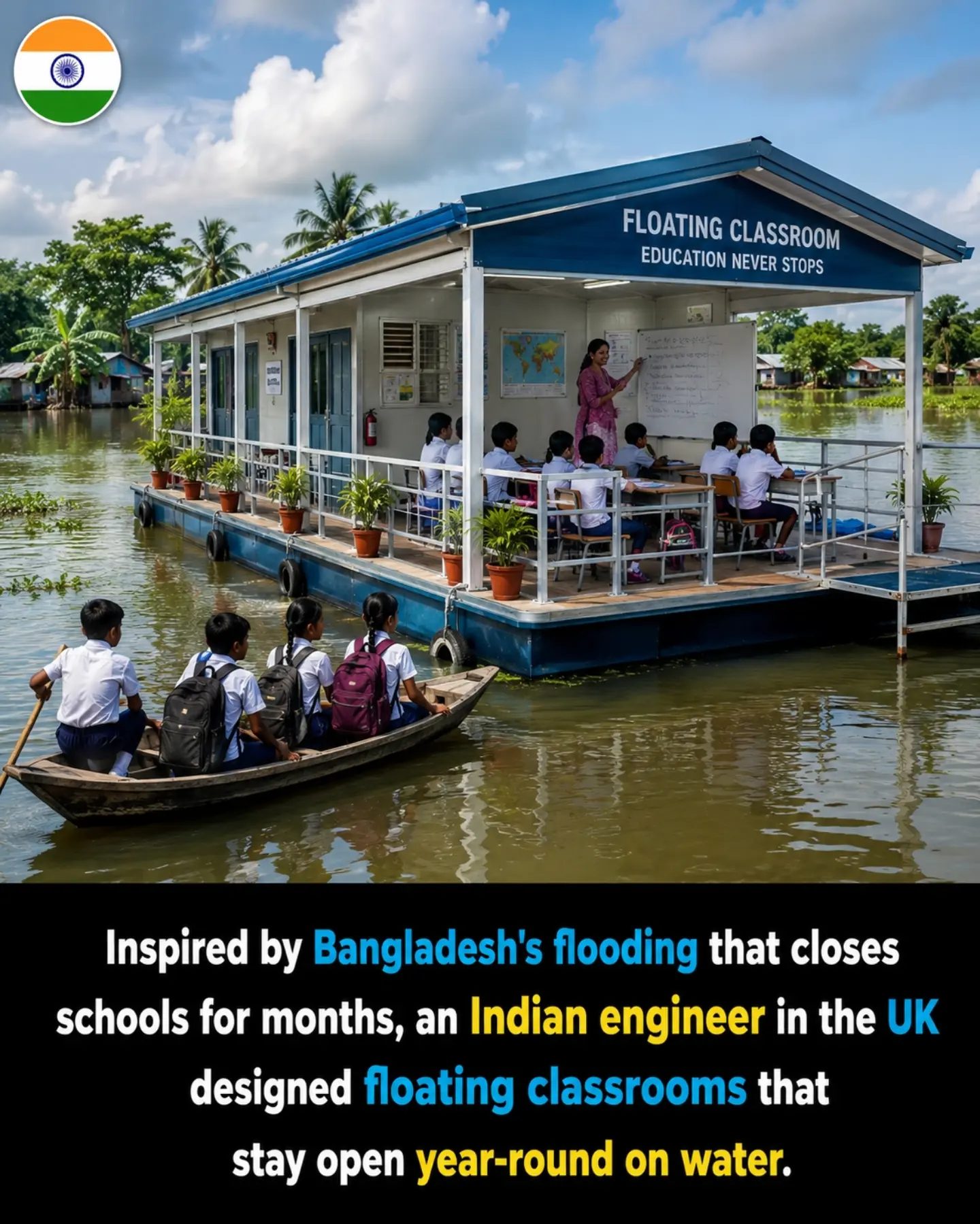
Floating Classrooms: A Solution to Flooding and School Closures
Floating classrooms are an innovative solution to a pressing problem: school closures due to flooding. These unique structures allow students to continue their studies even when traditional classrooms are inaccessible. This concept is particularly relevant in regions like Bangladesh, where seasonal flooding can disrupt education for months at a time.
Context: The Impact of Flooding on Education
Flooding is a significant issue in many parts of the world, particularly in low-lying regions and river deltas. In Bangladesh, for example, monsoon seasons often result in widespread flooding that can close schools for extended periods. This disruption not only affects the academic progress of students but also has broader implications for their overall development and future opportunities.
The inability to attend school during these critical months can lead to a significant loss of learning time, exacerbating existing educational disparities. Floating classrooms offer a practical solution by providing a stable learning environment that remains operational regardless of water levels.
Design and Functionality of Floating Classrooms
Inspired by Necessity
The concept of a floating classroom is both simple and ingenious. Inspired by the need to keep schools open during flooding, an Indian engineer based in the UK designed these innovative structures. The classrooms are engineered to stay afloat on water, ensuring that education can continue uninterrupted even when traditional school buildings are submerged.
Structural Design
Floating classrooms are typically built on sturdy, buoyant platforms that can withstand the rigors of water-based environments. These platforms are designed to be stable and secure, providing a safe space for students to learn. The classrooms themselves are constructed with durable materials that can resist water damage and weathering.
Mobility and Adaptability
One of the key advantages of floating classrooms is their mobility. Unlike traditional school buildings, these classrooms can be easily moved to different locations as needed. This adaptability makes them ideal for regions where flooding patterns are unpredictable or where schools need to be relocated frequently.
Energy and Resource Management
Floating classrooms often come equipped with renewable energy sources such as solar panels. This ensures a reliable power supply even in remote or disaster-prone areas. Additionally, these classrooms are designed to be self-sufficient, with facilities for water storage and waste management, making them sustainable and eco-friendly solutions.
Practical Tips for Implementing Floating Classrooms
Community Involvement
Implementing floating classrooms requires significant community involvement. Local leaders, teachers, and parents should be actively engaged in the planning and execution process. Their input can help ensure that the classrooms meet the specific needs of the community and are accepted by the students and their families.
Logistical Considerations
Several logistical considerations must be addressed when setting up floating classrooms. These include securing a stable and safe location for the classroom, ensuring access to clean water and sanitation, and establishing reliable communication and transportation links. Additionally, teachers and staff must be trained in water safety and emergency protocols specific to a floating environment.
Maintenance and Upkeep
Maintaining floating classrooms requires regular inspections and upkeep to ensure their structural integrity and functionality. This includes routine checks for water damage, repairs to any worn-out components, and regular maintenance of renewable energy sources. Community involvement can also play a crucial role in the upkeep of these classrooms, ensuring they remain in good condition for years to come.
Important Takeaways
Floating classrooms are a practical and innovative solution to the challenge of school closures due to flooding. By providing a stable and safe learning environment, these classrooms ensure that education can continue even in the face of natural disasters. Their adaptability, sustainability, and community-centric design make them a promising approach to addressing educational disruptions in flood-prone regions.
Conclusion
Floating classrooms represent a forward-thinking approach to maintaining educational continuity in areas affected by flooding. By leveraging innovative design and sustainable practices, these classrooms offer a viable solution to a longstanding problem. As we continue to face the challenges posed by climate change and natural disasters, such adaptive and resilient solutions will be crucial in ensuring that education remains accessible to all.
Watch the Reel
Questions readers ask
What are floating classrooms and where are they commonly used?
Floating classrooms are buoyant structures designed to provide learning spaces in water-based environments. They are commonly used in flood-prone areas, such as river deltas and low-lying regions, where traditional schools may be inaccessible during monsoon seasons. Countries like Bangladesh have implemented these innovative solutions to ensure students can continue their studies despite seasonal flooding.
How do floating classrooms address the issue of school closures during floods?
Floating classrooms offer a stable and secure learning environment that adapts to changing water levels. They allow students to continue their studies even when traditional classrooms are underwater, minimizing disruptions to their academic progress. This is particularly useful in regions like Bangladesh, where monsoon seasons can lead to extended school closures.
What are some examples of floating classrooms around the world?
Some notable examples include the Bangladesh floating schools, which operate on boats, providing children with learning spaces during rainy seasons. India also has school boats that travel to deliver learning experiences to children living in remote river areas.
What are the advantages of floating classrooms in flood-prone areas?
Floating classrooms offer several advantages, including stability and adaptability. By providing a constant learning environment, they help students maintain their academic progress and routines, ensuring they do not fall behind. They also support the community by offering a safe space for children during floods, reducing their exposure to potential hazards.
How are floating classrooms designed to withstand water-based environments?
Floating classrooms are designed with buoyancy and stability in mind. They use materials and structures that can withstand water-based environments, such as durable boats or rafts. They are also equipped to adapt to changing water levels, ensuring a secure learning space even as flood conditions vary.
What challenges might be associated with implementing floating classrooms?
Implementing floating classrooms can present challenges, such as ensuring the safety of students in water-based environments, managing the logistics of operating boats as classrooms, and maintaining the infrastructure against harsh weather conditions. Additionally, there may be initial costs and resource requirements involved in setting up these unique learning spaces.
Can teachers teach effectively in a floating classroom setting?
Yes, teachers can teach effectively in a floating classroom setting with proper training and resources. The classroom environment may be different, but teachers can adapt to the new setting and provide students with the necessary instruction and support. Additionally, floating classrooms can be equipped with necessary teaching aids and resources to support learning.
Related deep dives
Similar reads based on topic and creator.


Recent articles
Fresh deep dives from the latest Reels we unpacked.




Comments
Be the first to comment.