The Origins of the World Wide Web
The World Wide Web, perhaps the most transformative technological development of the late 20th century, had humble beginnings. In 1989, Tim Berners-Lee, a British scientist at CERN in Geneva, proposed the idea of a global network that would revolutionize how information is shared.
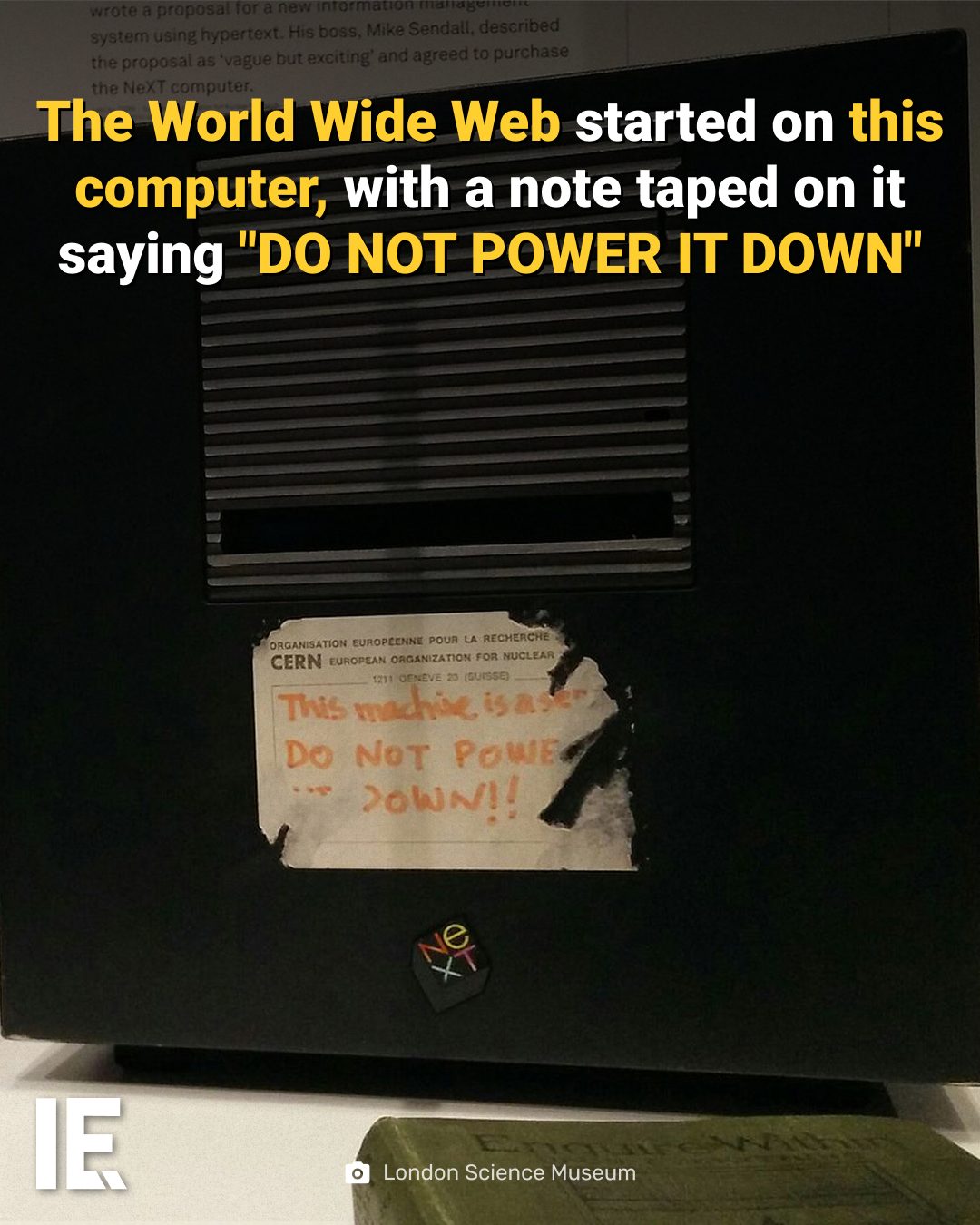
CERN, the Organisation Européenne pour la Recherche Nucléaire, is renowned for its groundbreaking work in particle physics. It was here that Berners-Lee developed the foundational principles of the World Wide Web. His initial work was conducted on a NeXT workstation, a computer manufactured by the NeXT Corporation. This machine, now on display at the London Science Museum, played a pivotal role in the web's development.
Why This Matters
The NeXT computer at CERN wasn't just any machine. It housed the first web server, which hosted the initial web pages and facilitated the early communication that would eventually become the backbone of the internet. The significance of this machine goes beyond its hardware; it symbolizes the birth of a technology that would change the world. The decision to make the World Wide Web free for anyone to use, alongside CERN's unprecedented release of the technology into the public domain, was a pivotal moment in technological democratization.
The Early Days
The NeXT Workstation
The NeXT workstation, with its distinctive magnesium case and built-in optical drive, was chosen by Berners-Lee for its high performance and innovative features. The computer's powerful Motorola 68030 processor made it well-suited for the complex tasks required to develop the World Wide Web. The machine's capabilities allowed Berners-Lee to create the first web browser and web server, both of which were essential components for the web's early growth.
The World's First Web Server
Berners-Lee initially called his project "Mesh." The goal was to create a system where users could easily navigate through interconnected documents using hyperlinks. The first web server was hosted on this NeXT workstation, making it the birthplace of the internet as we know it. The server, simply named "CERN," was the first to host web pages, including the first-ever web page, also known as the "World Wide Web project."
The Critical Note
A handwritten note taped to the NeXT workstation read, "This machine is a server. DO NOT POWER IT DOWN!!" This simple warning was a testament to the machine's importance. The web server had to be online at all times to ensure continuous access, a critical requirement in the nascent stages of the web. This workstation was crucial for maintaining the continuity and reliability of the web's early development.
The London Science Museum
The NeXT workstation is now preserved at the London Science Museum, where visitors can see the physical embodiment of a revolution. The plaque next to the computer reads, "CERN. ORGANISATION EUROPEENNE POUR LA RECHERCHE NUCLEAR." The display serves as a reminder of the pivotal role CERN played in the development of the web and its ongoing significance in technological history. Visitors to the London Science Museum can reflect on the transformative power of the web and its humble origins.
The Decision to Go Public
On April 30, 1993, CERN announced that the World Wide Web would be free for anyone to use. This decision was groundbreaking. By making the web accessible to all, CERN ensured that it could grow organically, driven by the collective contributions of users and developers around the world. Berners-Lee's decision to not patent or license the technology, and to choose not to profit directly from the Web, was a profound act of altruism.
Berners-Lee's Vision
Tim Berners-Lee's vision was one of universal accessibility. He believed that information should be free and available to all, regardless of borders or boundaries. His decision to release the World Wide Web into the public domain was a move that aligned with this vision, fostering a global network of shared knowledge and collaboration. By not seeking any direct financial gain, Berners-Lee ensured that the web would serve the greater good.
The Technology That Changed the World
The World Wide Web's impact is immeasurable. It has reshaped human civilization, transforming how we communicate, access information, and conduct business. From social media platforms to e-commerce websites, from online education to streaming services, the web touches every aspect of modern life. The technology that began on a single desktop computer in Geneva has evolved into a global network that supports billions of users.
Practical Tips
While the World Wide Web has evolved significantly, the core principles established by Berners-Lee remain relevant. Here are a few practical tips for navigating and contributing to the web:
Understand the Basics
Familiarize yourself with the fundamental elements of the web, such as URLs, hyperlinks, and HTML. These concepts form the backbone of the web and are essential for understanding how it works.
Explore Web Development
Learning the basics of web development, including HTML, CSS, and JavaScript, can be incredibly rewarding. It allows you to create your own web pages and contribute to the web's ever-growing landscape.
Enjoy the Journey
The web is a vast and ever-changing landscape. Exploring new websites, experimenting with web technologies, and staying informed about the latest developments can be both entertaining and educational.
Important Takeaways
The story of the World Wide Web underscores the power of vision and innovation. From a single computer in Geneva to a global network, the web has transformed the world. By making the technology freely available, Berners-Lee ensured that it could flourish and serve as a platform for global collaboration and communication.
Conclusion
The World Wide Web, born out of a simple idea and a humble computer, has grown into an indispensable part of modern life. Its origins at CERN, preserved at the London Science Museum, serve as a reminder of the profound impact that technological innovation can have. As we continue to explore and expand the web, it's essential to remember the principles that guided its early development: openness, accessibility, and collaboration. By honoring these values, we can ensure that the web remains a platform for progress and collective growth.
Watch the Reel
Questions readers ask
What is the significance of the NeXT workstation at the London Science Museum?
The NeXT workstation on display at the London Science Museum is significant because it was the first web server, hosting the initial web pages and facilitating early internet communication. It was chosen for its powerful processor and innovative design, making it a critical component in the launch of the World Wide Web from CERN in 1989.
Who developed the foundational principles of the World Wide Web?
Tim Berners-Lee, a British scientist at CERN, developed the foundational principles of the World Wide Web. He proposed the idea of a global network that would revolutionize information sharing.
What role did CERN play in the development of the World Wide Web?
CERN, the Organisation Européenne pour la Recherche Nucléaire, was where Tim Berners-Lee conducted his initial work on the World Wide Web. The organization's NeXT workstation was instrumental in hosting the first web pages and enabling early communication.
Why was the NeXT computer chosen for the development of the World Wide Web?
The NeXT computer was chosen for its powerful processor and innovative design, which made it well-suited for the tasks involved in developing the World Wide Web. Its capabilities were essential for hosting the first web pages and facilitating early internet communication.
What was the first web server and where is it now?
The first web server was a NeXT workstation used by Tim Berners-Lee at CERN. It is now on display at the London Science Museum, serving as a historic artifact that marks the beginning of the World Wide Web.
How did the World Wide Web evolve from its early beginnings?
The World Wide Web evolved from early communications hosted on a NeXT workstation at CERN. Over time, this network grew to become the backbone of the internet as we know it today, transforming how information is shared globally.
Related deep dives
Similar reads based on topic and creator.


Recent articles
Fresh deep dives from the latest Reels we unpacked.




Comments
Be the first to comment.