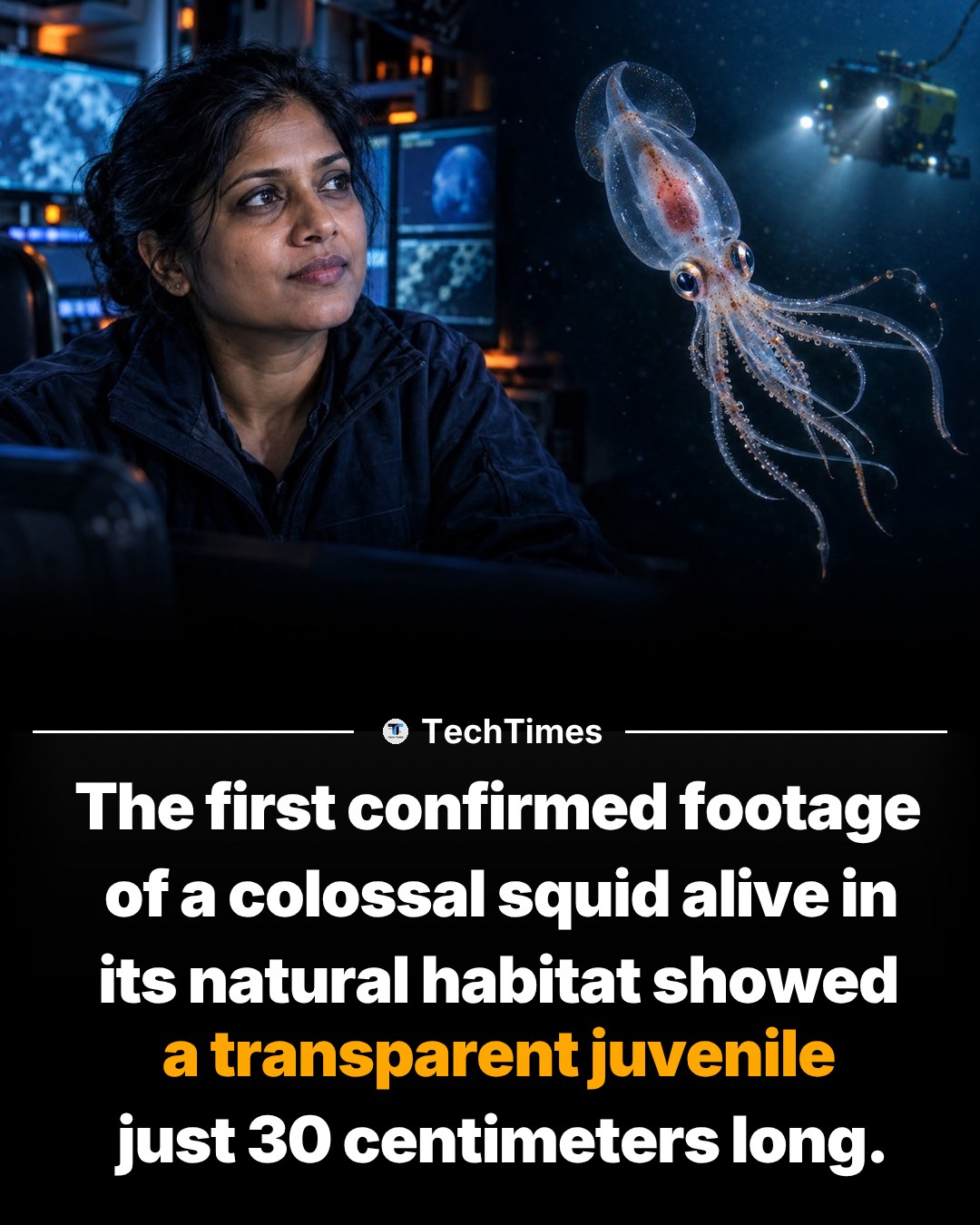
A colossal squid, mysterious and elusive, has been filmed alive in its natural habitat. Capable of growing to the size of a minivan, the creature is notoriously difficult to observe. In this case, the squid is a juvenile, just 30 centimeters long and almost entirely transparent.
Colossal Squid: The Giant of the Deep
The colossal squid is one of the largest and least understood invertebrates on the planet. Unlike its more famous relative, the giant squid, the colossal squid has a stockier build, longer, broader fins, and a lack of photophores, the organs used for bioluminescence. Colossal squids are predatory, using their massive size and powerful tentacles to feed on deep-ocean fish. While adults can reach up to 10 meters, juvenile squids appear as little as 30 centimeters, as seen in the recent TechTimes footage. The squid's transparent body is an adaptation to its deep-sea habitat, allowing it to avoid predators by effectively Vanishing. The squid's beak can crush hard prey like fish bones, and its tentacles have swiveling hooks to hold onto prey. These unique features apply brute force to their ecosystem.
The Deep Sea’s Vanishing Act
The sheer size and power of the colossal squid are more than enough to put it on the radar of naturalists. But what makes this recent footage especially notable is the rarity of seeing the animal in its natural habitat. The ocean’s far depths have long been a black box for marine biology due to the extreme conditions and dearth of available light. Even the most advanced technology struggles to survive these conditions.This makes the new footage an important piece of data for scientists trying to comprehend these vast and unfamiliar ecosystems. Yet the challenges of studying colossal squids extend beyond their elusive habitat. Barring a few fascinating encounters with animals that have died or been caught in nets, they remain largely a mystery. The recently captured footage of a juvenile squid alive in its natural habitat, showcased by TechTimes, is exceptionally rare. The recent footage offers a glimpse into the colossal squid’s life, but the squid's feeding habits and defensive mechanisms are still poorly understood. This dearth of information is complicated by colossal squid's haphazard hunting patterns. Like the swift predator it is, the colossal squid is capable of multiplying the force exerted by its muscles to crush hard prey. This muscular power is compounded by its powerful beak, which can crush prey with brute force. The squid's seven pairs of retractable suckers, each lined with sharp hooks, make it even more formidable. The combination of blunt and swiveling hooks allows these colossal predators to grasp and retain prey. The size and volume of this animal make it a powerful predator. Despite its fearsome hunting techniques, it remains a mystery, especially because of its deep-sea habitat.
A Few Steps to the Floor of the Ocean
These deep-sea giants of the ocean remained out of reach for human exploration for a long time. This is a strange world with minimal light. The airless darkness, freezing temperatures, and crushing pressure had always deterred exploration. Super-heated vents and lightless depths create an environment that is extremely difficult to penetrate. The darkness of the ocean floor has long made it an inscrutable mystery. Yet the colossal squid continues to evade human understanding, even as researchers acquire remarkable footage and artifacts from the depths of our world’s seas. In 1981, the first intact colossal squid was found in the stomach of sperm whales. In 2010, a juvenile specimen was captured for the first time on camera on the floor of the Ross Sea in the Antarctic. It took a significant amount of time for the specimen to be recovered and preserved for research. Even now, most of our information comes from pieces of dead squid found in the bellies of whales.
The Secret of the Colossal Squid's Agility
The squid's agility is another trait that allows it to survive in the deep sea. Its arms, unlike those of other species, are capable of moving independently of one another. Additionally, the colossal squid is a swift swimmer, able to move quickly through the water. The colossal squid's massive body allows it to move quickly through the water, and its agility is enhanced by its powerful muscles. The colossal squid has an unusual feeding strategy in this dark environment. Despite its size, its agility makes it an efficient predator. The squid's suction cup-lined arms and swiveling hooks make it a formidable hunter.
When the Deep Sea’s Top Predator Breaks its Shell
The colossal squid is not commonly seen by humans, let alone humans observing it in the wild. It is an animal that the public wants to know more about, but it is also an animal that naturalists, unable to observe it, struggle to understand. Such as the fighting techniques described by marine biologist Steve O’Shea, who has spent decades researching these creatures. In 2017, Steve O’Shea spoke about the swimming patterns of the colossal squid, and how his studies led him to believe that these creatures encapsulate themselves in a protective cocoon-like shell to hide from predators. When the squid is threatened, it uses its arms to gather prey in a web-like cocoon to break the shell, free itself, and swim away. The lack of knowledge about this colossal has made it the target of numerous studies. Researchers are still trying to understand their behavior as they try to learn more about these mysterious creatures that live in the depths of the ocean. It is rare to get a glimpse of a colossal squid in its natural habitat, but when you do, it is an experience that you'll never forget.
Sharing the Rarest Footage
If observing colossal squids in their natural habitats is impractical, the next best thing is to watch video footage like the footage of the juvenile observed by the researchers. The footage is rare, and we can get a small glimpse of the colossal squid's life in rare footage like the footage by TechTimes.
- Try to find footage.: Check for sources on deep-sea exploration, colossal squid studies, and marine life documentaries to get a glimpse of these colossal predators and their elusive environment.
- Explore ocean stories from the frontiers of science. Read about studies on colossal squids, how scientists have collected their data, and how they are still trying to disentangle this deep-sea mystery.
- Educate yourself on our watery cocoon. Keep an eye out for marine conservation projects, museums, and education centers that recommend programs or books to help the public learn about marine life, including deep-sea creatures like the colossal squid.
Ghosts in the depths
If the 2023 footage of a juvenile colossal squid tells us anything, it is that we have a lot to understand about one of the Earth's top predators. The colossal squid continues to be mysterious for the creatures it consumes and for those chasing the elusive aquatic predator.
Watch the Reel
Questions readers ask
What makes the colossal squid different from the giant squid?
The colossal squid is distinct from the giant squid in several ways. It has a stockier build, longer and broader fins, and lacks photophores, the organs used for bioluminescence. Additionally, the colossal squid is known for its powerful tentacles with swiveling hooks and a beak capable of crushing hard prey.
How does the colossal squid's size and transparency help it survive in the deep sea?
The colossal squid's size and transparency are both adaptations to its deep-sea habitat. Its massive size makes it a formidable predator, while its transparency helps it avoid predators by effectively vanishing in the dark waters. Juvenile colossal squids, seen in footage as small as 30 cm, are almost entirely transparent, aiding in their survival.
Why is it so challenging to study colossal squids?
Studying colossal squids is challenging due to their elusive deep-sea habitat and the extreme conditions of the ocean depths. The lack of available light, freezing temperatures, and crushing pressure make it difficult for even advanced technology to explore these environments. Additionally, the squid's haphazard hunting patterns and the rarity of encounters with live specimens complicate research efforts.
How exactly do the colossal squid's tentacles help it hunt?
The colossal squid's tentacles are equipped with seven pairs of retractable suckers, each lined with sharp, swiveling hooks. These hooks allow the squid to grasp and retain prey effectively. The combination of blunt and swiveling hooks, along with the squid's powerful beak, enables it to crush and hold onto prey with significant force.
What does the recent footage of a juvenile colossal squid reveal about the species?
The recent footage of a juvenile colossal squid, captured by TechTimes, provides a rare glimpse into the life of this elusive species. It shows the squid's transparent body and relatively small size at this stage, offering insights into its early development and adaptive features. However, much of the squid's feeding habits and defensive mechanisms remain poorly understood.
What are some of the challenges associated with exploring the deep sea?
Exploring the deep sea presents numerous challenges, including extreme conditions such as minimal light, freezing temperatures, and crushing pressure. These conditions make it difficult for both humans and technology to survive and operate effectively. The deep sea's harsh environment has long deterred exploration, making it a largely unexplored and mysterious part of our planet.
Related deep dives
Similar reads based on topic and creator.




Recent articles
Fresh deep dives from the latest Reels we unpacked.




Comments
Be the first to comment.