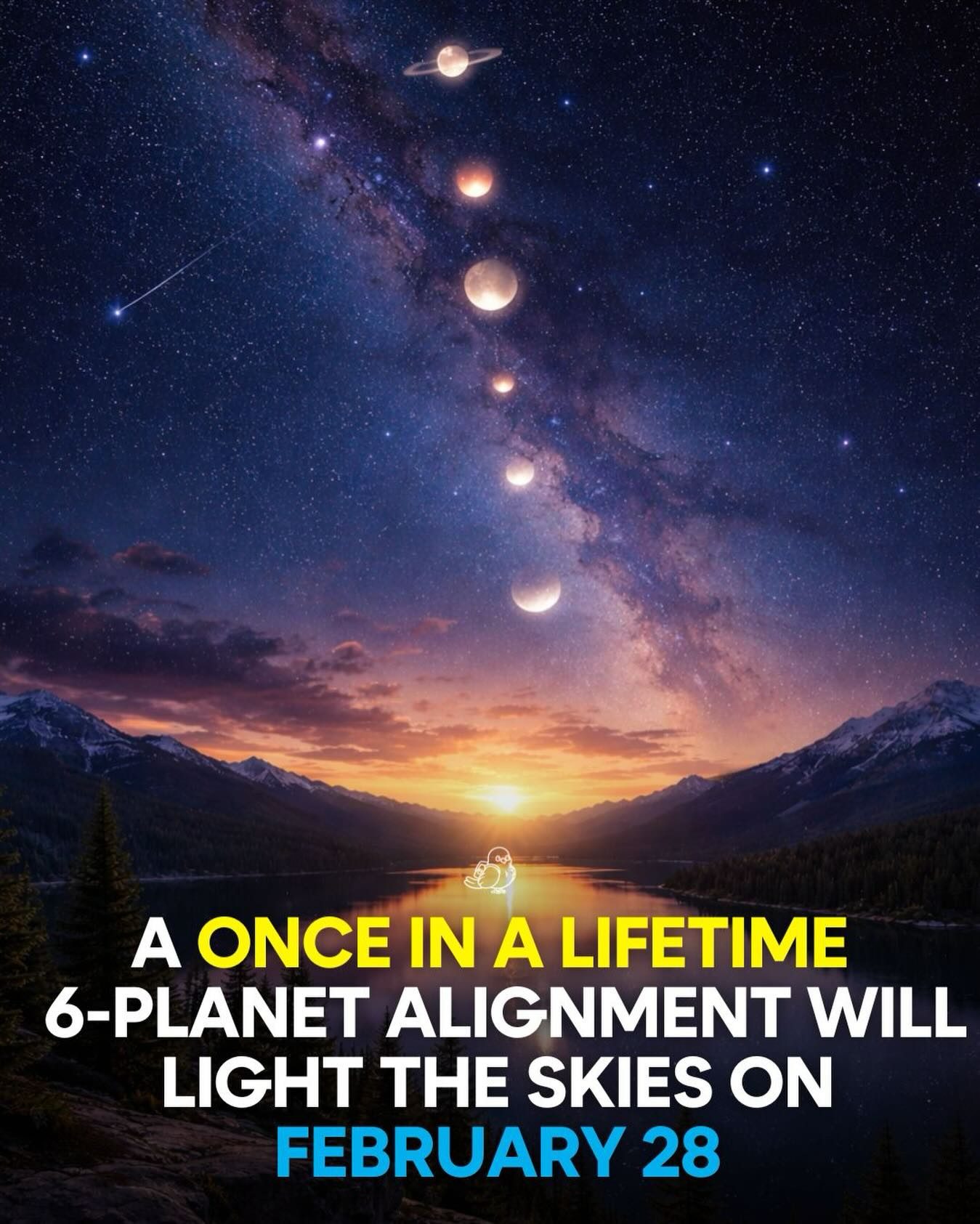
A Rare 6-Planet Alignment: A Once-in-a-Lifetime Celestial Event
Mark your calendars for February 28, as the night sky is set to host a spectacular celestial event: a rare 6-planet alignment. This extraordinary occurrence will see Mercury, Venus, Mars, Jupiter, Saturn, and the crescent Moon lined up in a straight path across the night sky. This alignment is a breathtaking sight for both seasoned astronomy enthusiasts and casual stargazers alike.
Why This Matters
Celestial events like the 6-planet alignment are not just visually stunning but also hold significant scientific and cultural importance. They offer a unique opportunity to observe multiple planets in a single view, providing a deeper understanding of the solar system's dynamics. For photography enthusiasts, this event presents an incredible chance to capture a once-in-a-lifetime image.
A Cosmic Experience
The alignment will be visible just after sunset or before sunrise, depending on your location. To get the best view, head to a dark, open area away from city lights. This will ensure minimal light pollution, allowing the planets and the crescent Moon to stand out clearly against the night sky.
Bringing a telescope can enhance your viewing experience, but even a simple pair of binoculars or just your eyes will suffice. The alignment is a cosmic spectacle that will leave you awestruck.
Spotlight on Each Planet
Mercury
Mercury will be the closest to the Sun, making it a bit challenging to spot. However, with the right viewing conditions and a bit of patience, you can catch a glimpse of this tiny, speedy planet.
Venus
Venus, often called the Morning Star or Evening Star, will be one of the brightest objects in the sky. It's relatively easy to spot and will shine prominently during the alignment.
Mars
Mars, the Red Planet, will also be visible. Just after sunset, look for a reddish-orange dot in the sky, which will become more distinct as the night progresses.
Jupiter
Jupiter, the largest planet in our solar system, will be another bright object in the alignment. With a good telescope, you might even spot its largest moons: Io, Europa, Ganymede, and Callisto.
Saturn
Saturn, known for its stunning rings, will be a beautiful addition to the alignment. While it might be a bit fainter compared to Jupiter, it's still a stunning sight with the right equipment.
The Crescent Moon
The crescent Moon will add a touch of lunar beauty to the alignment. Its position will complement the planets, creating a picturesque scene in the night sky.
Practical Tips for Viewing
Best Viewing Conditions
To fully appreciate the 6-planet alignment, plan your viewing in an open area with minimal light pollution. Dark skies will allow you to see the planets more clearly, enhancing your experience. Consider visiting a local observatory or joining an astronomy club for a more guided viewing experience.
Equipment for a Better View
While you can enjoy the alignment with just your eyes, a pair of binoculars or a telescope can significantly enhance your viewing experience. Telescopes allow you to see details like Jupiter's moons or Saturn's rings.
Photography Tips
For those interested in capturing this celestial event, a wide-angle lens and a long exposure setting are ideal. This setup will help you capture all six planets in a single shot, creating a memorable photograph. Experiment with different settings to get the best results.
Important Takeaways
Rare Occurrence
This 6-planet alignment is a once-in-a-lifetime event, occurring only once every few decades. Missing this opportunity means waiting for years to witness such a spectacle again.
Unique Opportunity
The alignment provides a unique chance to observe multiple celestial bodies in one view. This rare alignment not only offers a visual treat but also a deeper understanding of the solar system's dynamics.
Scientific Significance
For scientists and astronomers, this event is valuable for studying planetary positions and movements. Observing such alignments helps in refining scientific models and theories about planetary orbits.
Conclusion
The 6-planet alignment on February 28 is a celestial event not to be missed. Whether you're an experienced astronomer or a curious stargazer, this alignment promises a spectacle that will leave you with unforgettable memories. Plan your viewing spot, bring the right equipment, and get ready to witness the wonders of the cosmos. This is a night to remember and a sight to behold.
Watch the Reel
Questions readers ask
What planets will be visible during the February 28 alignment?
The alignment will feature Mercury, Venus, Mars, Jupiter, and Saturn, along with the crescent Moon. This is a unique opportunity to see multiple planets in a single view.
What makes the February 28, 2024, planetary alignment so special?
This alignment is particularly special because it involves six celestial bodies—five planets and the Moon—all visible in a straight line. Such a rare occurrence won't happen again for many years, making it a once-in-a-lifetime event.
What is the best time to view the February 28 celestial event?
The best time to view this alignment is just after sunset on February 28. As the sky darkens, the planets and the Moon will become more visible, offering a clear view of the alignment.
Do I need any special equipment to see the February 28 alignment?
While binoculars or a telescope can enhance the viewing experience, the alignment will be visible to the naked eye. Finding a location with minimal light pollution will improve your chances of spotting all the planets.
Where should I look in the sky to spot the planets on February 28?
The planets will align in a straight path across the night sky, stretching from the western horizon to the southeastern sky. You can consult a stargazing app or a star chart to pinpoint the exact positions of the planets and the Moon.
I am an avid photographer. What settings should I use to capture the alignment?
Photographing the alignment can be a rewarding experience. Use a tripod to keep your camera steady, and set a long exposure time to capture the details of the planets and the Moon. A wide-angle lens will help you fit all the planets in the frame.
Related deep dives
Similar reads based on topic and creator.




Recent articles
Fresh deep dives from the latest Reels we unpacked.




Comments
Be the first to comment.