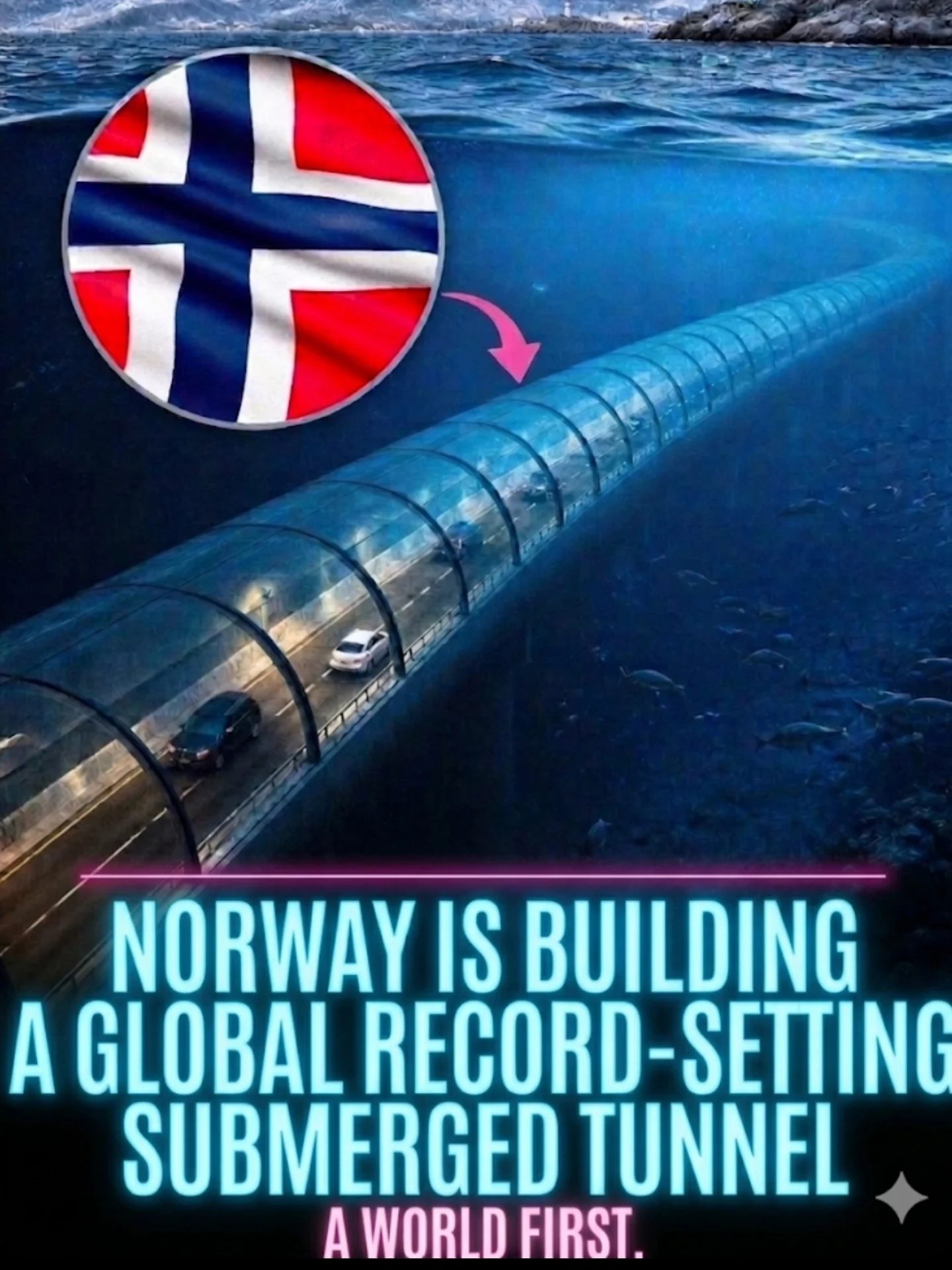
Submerged Tunnels: The Future of Underwater Infrastructure
Submerged tunnels represent a groundbreaking advancement in infrastructure engineering, particularly in regions challenged by deep waterways and rugged terrain. These innovative structures promise to revolutionize transportation by connecting communities that are currently separated by vast bodies of water.
Why This Matters
Submerged tunnels are particularly relevant in countries like Norway, where deep fjords and mountainous landscapes make traditional overland routes impractical or impossible. By constructing tunnels beneath these waterways, Norway aims to significantly reduce travel time and enhance connectivity between cities.
Engineering Challenges and Innovations
Design and Construction
Unlike conventional tunnels that are dug into the seabed, submerged tunnels are designed to float beneath the water's surface. These structures, often referred to as Submerged Floating Tube Bridges (SFTBs), would hang roughly 100 feet below the surface, supported by massive pontoons or tethered to the seafloor. This design allows for the creation of tunnels in areas where traditional digging methods are infeasible.
Materials and Stability
One of the primary challenges in constructing submerged tunnels is ensuring the stability and durability of the structure. Traditional tunnels use materials like concrete or steel, which are strong and resilient. However, submerged tunnels face additional stresses from water pressure and marine environments. Engineers must carefully select materials that can withstand these conditions while maintaining structural integrity.
The Role of Submerged Tunnels in Norway's E39 Project
One of the most ambitious projects involving submerged tunnels is Norway's E39 highway. This ambitious plan aims to create a ferry-free route along Norway's western coast, connecting major cities like Kristiansand and Trondheim. The E39 project is part of a broader effort to enhance transportation infrastructure and reduce travel times, making it easier for people to move between different parts of the country.
Current Status and Future Prospects
While the visual rendering of the Submerged Floating Tube Bridge appears to be a fully realized project, it is important to note that this specific design is largely conceptual and artistic. Norway is currently engaged in constructing the Rogfast tunnel, which, upon completion, will be the world’s deepest and longest subsea road tunnel. However, the Rogfast tunnel is a traditional bored tunnel rather than a floating tube.
Despite the current conceptual phase of the Submerged Floating Tube Bridge, the potential benefits of submerged tunnels are undeniable. As technology and engineering methods advance, it is likely that future projects will incorporate these innovative designs, further enhancing the connectivity and accessibility of regions with challenging terrain.
Practical Tips for Understanding Submerged Tunnels
When examining submerged tunnels, it is essential to focus on several key aspects to fully grasp their engineering and practical implications:
Understanding the Design
The design of a submerged tunnel involves intricate engineering and extensive planning. Key considerations include the depth at which the tunnel will be placed, the materials used for construction, and the methods for ensuring stability and safety.
Evaluating the Environmental Impact
Submerged tunnels, particularly those designed to float beneath the water's surface, must be evaluated for their environmental impact. This includes assessing how the construction and operation of the tunnel will affect marine life and the surrounding ecosystem.
Assessing the Engineering Feasibility
Before embarking on a submerged tunnel project, engineers must conduct thorough feasibility studies. These studies should analyze the geological conditions of the area, the technical challenges involved, and the economic viability of the project.
Considering Future Advancements
As technology and engineering methods continue to evolve, submerged tunnels are likely to become more common. Staying informed about the latest advancements can help in planning future infrastructure projects more effectively.
Important Takeaways
Submerged tunnels offer a revolutionary solution to the challenges posed by deep waterways and mountainous terrain. They provide a practical means of enhancing connectivity and reducing travel times in regions where traditional overland routes are impractical. As engineering methods and technologies continue to advance, the feasibility and viability of submerged tunnels are likely to increase, making them a crucial component of future infrastructure projects.
Conclusion
Submerged tunnels represent a significant leap forward in infrastructure engineering, particularly in regions with challenging terrain and deep waterways. By understanding the engineering principles, environmental considerations, and practical implications of these structures, it is possible to harness their potential to enhance connectivity and accessibility, paving the way for a more connected and efficient future.
Watch the Reel
Related deep dives
Similar reads based on topic and creator.




Recent articles
Fresh deep dives from the latest Reels we unpacked.




Comments
Be the first to comment.