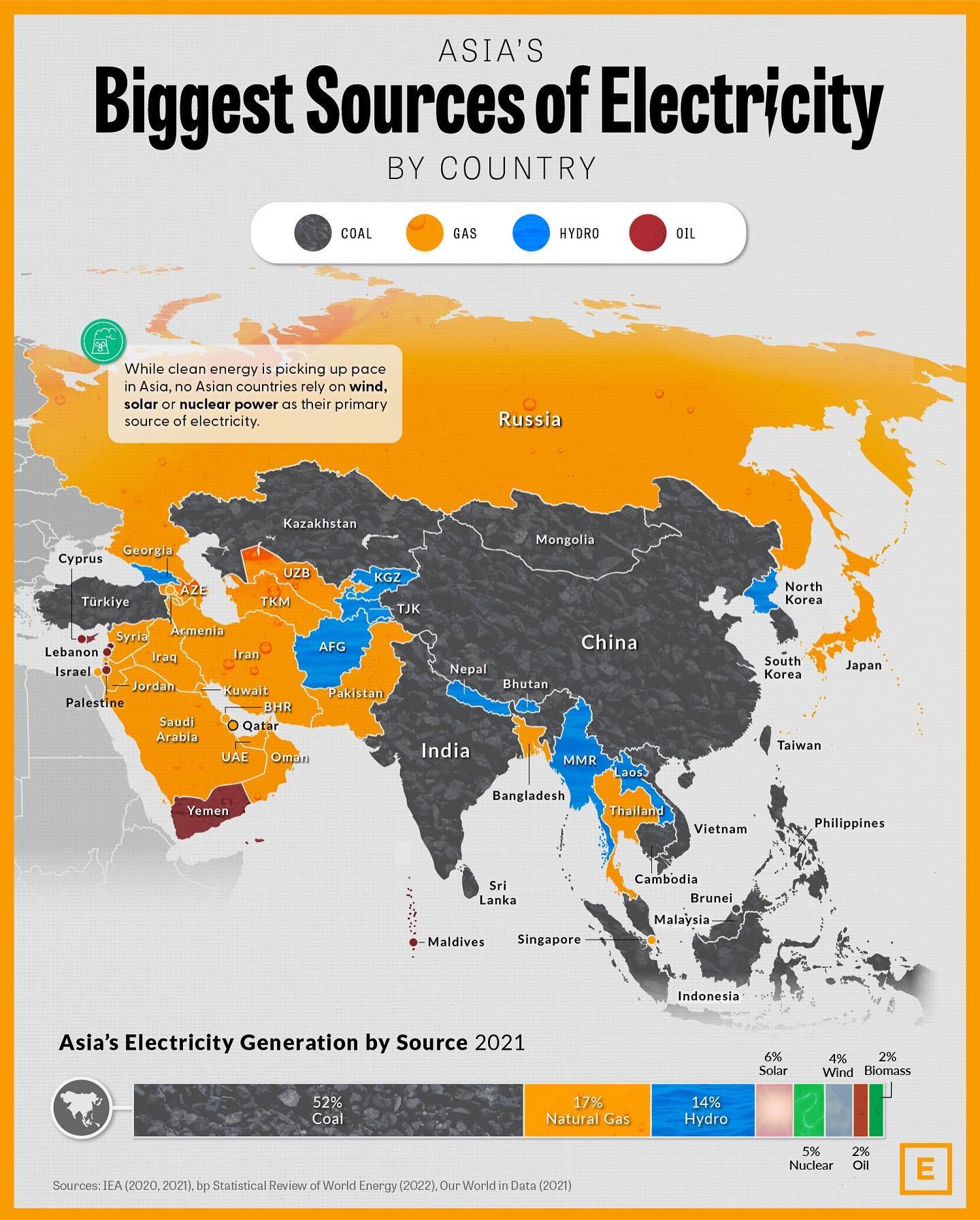
Asia's Electricity Generation: A 2021 Snapshot
Asia is at the forefront of global electricity consumption, with projections indicating that by 2025, it will account for half of the world’s total electricity demand. China alone is expected to consume one-third of the global electricity supply. To understand how this growing demand is being met, let’s explore the primary sources of electricity generation across Asia, based on 2021 data.
Why This Matters
The International Energy Agency (IEA) and other reliable sources like the bp Statistical Review of World Energy and Our World in Data paint a clear picture of Asia's energy landscape. This region's electricity generation is crucial for understanding global energy trends. The sources of electricity vary widely by country, reflecting diverse geological, economic, and political factors. An in-depth look at these sources provides insights into Asia’s energy security, environmental impact, and future energy planning.
Main Discussion
Coal: The Dominant Player
Coal remains the largest source of electricity in Asia, making up 52% of the region's total generation. This reliance on coal is particularly prominent in countries like China and India, where coal-fired power plants are numerous. While coal is a significant source of jobs and economic stability in many areas, it also contributes to air pollution and carbon emissions.
Natural Gas: A Growing Contributor
Natural gas accounts for 17% of Asia's electricity generation. This energy source is favored for its lower emissions compared to coal and its versatility in powering both large-scale and small-scale energy needs. Countries like Japan and South Korea have significantly increased their natural gas consumption for electricity, driven by the need to reduce emissions and enhance energy security.
Hydro Power: Renewable and Reliable
Hydro power contributes 14% to Asia's electricity mix, making it a vital renewable energy source in the region. Countries with extensive river systems, such as China and Russia, have leveraged hydro power to meet a substantial portion of their electricity needs. However, hydro power can face challenges related to seasonal variations in water availability and environmental concerns.
Wind: Harnessing Asia's Winds
Wind energy, though less prevalent than coal or hydro, is a growing force in Asia's electricity landscape. Wind-powered turbines are increasingly visible across the region, from the plains of India to the coastal areas of China and Japan. The wind sector is experiencing rapid technological advancements and investment, making it a promising area for future energy developments.
Nuclear Power: Consistent but Controversial
Nuclear power accounts for a smaller but consistent portion of Asia's electricity generation. Countries like Japan and South Korea have extensive nuclear power programs, while others, like China, are rapidly expanding their nuclear capabilities. Despite its reliability and low greenhouse gas emissions, nuclear power faces significant public opposition due to safety and waste management concerns.
Oil: A Minor but Essential Source
Oil, though not as significant as coal or natural gas, still plays a role in Asia's electricity mix. Primarily used in backup power generation and during peak demand periods, oil offers flexibility and reliability. However, its high cost and environmental impact make it a less favored option for long-term energy planning.
Practical Tips
For those interested in the energy landscape of Asia, the following tips can be useful:
Stay Informed
Keeping up with the latest reports and updates from organizations like the IEA, bp Statistical Review of World Energy, and Our World in Data is essential. These reports provide reliable data and insights into Asia's electricity generation trends.
Understand Regional Differences
Recognize that energy sources vary widely across Asia. For instance, while China and India heavily rely on coal, countries like Japan and South Korea have diversified their energy portfolios to include more natural gas and nuclear power.
Consider the Environmental Impact
Understand the environmental implications of different energy sources. Coal, while dominant, has significant environmental costs, while renewable sources like hydro and wind offer cleaner alternatives.
Explore Investment Opportunities
The energy sector in Asia offers various investment opportunities, particularly in renewable energy. Technologies like wind and solar power are gaining traction, and investing in these sectors can be both financially and environmentally beneficial.
Important Takeaways
-
Coal Dominance: Asia's electricity mix is dominated by coal, which raises concerns about air pollution and greenhouse gas emissions.
-
Transition to Gas: Natural gas is increasingly important due to its lower emissions and versatility, making it a key driver in reducing Asia's carbon footprint.
-
Renewable Growth: Renewable sources like hydro and wind are growing, but they face challenges related to sustainability and seasonality.
-
Nuclear Reliability: Nuclear power remains a reliable source but faces ongoing public and environmental concerns.
Conclusion
Asia's electricity generation landscape is dynamic, with coal leading the mix but renewable sources and natural gas gaining ground. As the region continues to grow and diversify its energy portfolio, understanding these trends is crucial for policymakers, investors, and environmentalists alike. The mix of conventional and renewable sources reflects the complex interplay of energy needs, environmental concerns, and technological advancements in the region.
Watch the Reel
Questions readers ask
Which countries in Asia are the largest consumers of electricity?
The largest consumers of electricity in Asia include China, India, and Japan. China, in particular, is expected to consume one-third of the global electricity supply by 2025, making it a significant player in the Asia electricity map 2021.
What are the primary sources of electricity in Asia in 2021?
In 2021, Asia's primary sources of electricity are coal, natural gas, and hydro power. Coal leads the region's power generation, contributing more than half of the total electricity produced. Natural gas and hydro power also significantly contribute to the energy mix.
How does the IEA Asia energy report present the energy landscape in 2021?
The International Energy Agency (IEA) provides a comprehensive overview of Asia's energy landscape in 2021, highlighting the dominance of coal, the significant role of natural gas, and the contribution of hydro power. The report also touches on the growing importance of renewable energy sources in the region.
Why is understanding Asia's electricity generation important for global energy trends?
Understanding Asia's electricity generation is crucial for global energy trends because Asia is at the forefront of global electricity consumption, accounting for half of the world's total electricity demand by 2025. This region's electricity mix and sources of electricity generation have a significant impact on global energy security and environmental concerns.
What role do renewable energy sources play in Asia's electricity generation in 2021?
In 2021, renewable energy sources are growing but still play a smaller role compared to coal, natural gas, and hydro power. However, there is a notable increase in the adoption of renewable energy sources like solar and wind power, which are expected to contribute more significantly to Asia's energy mix in the coming years.
How does China's electricity generation compare to the rest of Asia?
China is the largest electricity generator in Asia, accounting for a substantial portion of the region's total electricity production. In 2021, China's electricity generation is heavily reliant on coal, with significant contributions from renewable sources like hydro, solar, and wind power.
What factors influence the electricity mix in Asia in 2021?
The electricity mix in Asia in 2021 is influenced by a variety of factors, including each country's unique resource availability, energy policies, economic development, and environmental considerations. These factors contribute to the diverse energy sources and generation methods across the region.
Related deep dives
Similar reads based on topic and creator.



Recent articles
Fresh deep dives from the latest Reels we unpacked.




Comments
Be the first to comment.