U.S. Electricity Generation by Source
Electricity generation in the United States has undergone significant transformations, with coal once being the dominant source but no longer holding that position. This shift in energy sources reflects the changing landscape of power generation and consumption in the country. The evolution of the U.S. energy mix since 1950 reveals a dynamic shift from coal and crude oil to more diverse and cleaner energy sources, highlighting the nation's ongoing efforts to diversify its energy portfolio.
Why This Matters
Understanding the evolution of U.S. electricity generation is crucial for anyone interested in energy policy, sustainability, and the future of power production. The shift from fossil fuels to renewable and cleaner energy sources impacts not only environmental concerns but also economic stability and technological advancements. Whether you are a policy maker, energy professional, or simply curious about the subject, grasping the historical trends and future projections provides valuable insights into the nation's energy landscape.
The Evolution of U.S. Electricity Generation
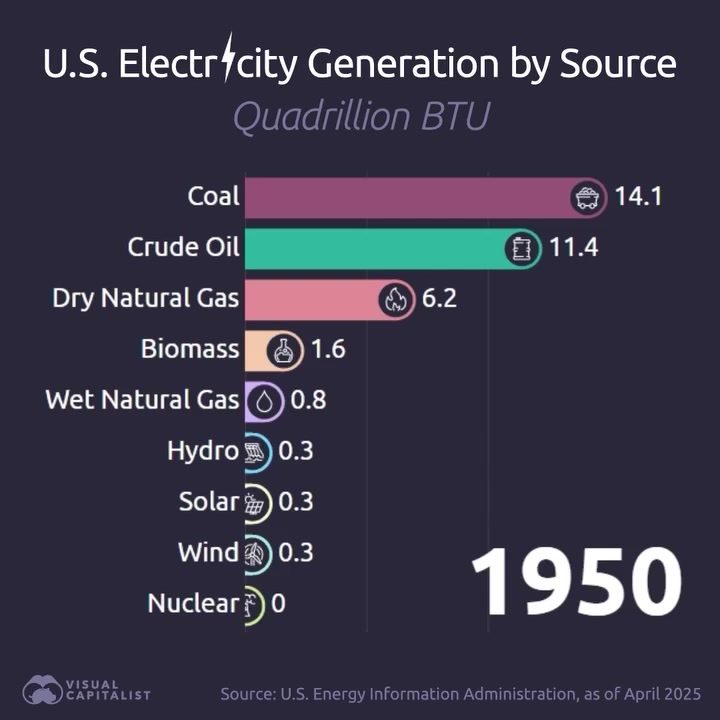
The infographics presented by Visual Capitalist show a clear evolution in the U.S. energy mix over the decades. Let's dive into the key periods and the significant shifts that have occurred.
1950: The Era of Coal and Crude Oil
In 1950, coal and crude oil were the primary sources of electricity generation in the United States. These fossil fuels accounted for a significant portion of the energy mix, with coal being the dominant player. The reliance on these non-renewable resources was a reflection of the technological capabilities and economic considerations of the time. Coal, in particular, was abundant and relatively inexpensive, making it a go-to fuel for power generation.
1985: The Rise of Natural Gas
By 1985, the energy landscape had started to change. Natural gas emerged as a more prominent source of electricity generation. While coal and crude oil still held substantial shares, natural gas began to play a more significant role. This shift was driven by various factors, including advancements in gas extraction technologies, environmental concerns over coal emissions, and the need for more flexible and cleaner energy sources. Resources like nuclear and biomass also started to contribute more significantly to the energy mix.
2016: The Transition to Cleaner Energy
The year 2016 marked a transition towards cleaner energy sources. Natural gas continued to dominate, but renewable energy sources like solar and wind started to gain traction. Nuclear power remained a steady contributor, while biomass and wet natural gas maintained their roles in the energy mix. Hydroelectric power, which has been a consistent source, continued to be a significant contributor. The increasing importance of renewable energy sources reflects growing environmental awareness and the advancement of clean energy technologies.
2024: The Future of Renewable Energy
Looking ahead to 2024, the trend towards renewable energy sources is expected to continue. Natural gas remains a key player, but solar, wind, and other renewable sources are projected to increase their contributions. Hydro and nuclear power will likely remain essential components of the energy mix, while biomass and wet natural gas continue to play their roles. The shift towards renewable energy sources is driven by the need for sustainability, technological advancements, and policy initiatives aimed at reducing carbon emissions and mitigating climate change.
Main Energy Sources
Coal
Coal, once the dominant source of electricity, has seen a significant decline in its contribution to the U.S. energy mix. This shift is driven by environmental concerns, the availability of cleaner alternatives, and advancements in renewable energy technologies. While coal still plays a role in power generation, its share has decreased considerably over the decades.
Natural Gas
Natural gas has become increasingly important in U.S. electricity generation. Its flexibility, cleaner burn, and economic viability have made it a preferred choice for power plants. The rise of natural gas has been driven by advancements in extraction technologies, such as hydraulic fracturing, which have made natural gas more accessible and cost-effective.
Renewable Energy
Renewable energy sources like solar, wind, and hydro have seen a gradual increase in their contributions to the U.S. energy mix. These sources are driven by the need for sustainability, environmental concerns, and policy initiatives aimed at reducing dependence on fossil fuels and promoting cleaner energy.
Practical Tips
For those interested in monitoring and understanding the evolution of U.S. electricity generation, it's important to stay informed about the latest developments and trends. Here are some practical tips:
Stay Updated with Energy Reports
Regularly review reports and publications from the U.S. Energy Information Administration (EIA). The EIA provides comprehensive data and analysis on energy trends, projections, and policy developments. Their reports are a valuable resource for staying updated on the latest changes in the energy landscape.
Engage with Energy Policy Discussions
Participate in discussions and debates around energy policy. Engaging with policy makers, energy experts, and environmental advocates can provide deeper insights into the factors driving the shift in energy sources and the future of power generation.
Invest in Clean Energy Solutions
Consider investing in renewable energy solutions, such as solar panels or wind turbines, for personal or business use. This not only supports the transition to cleaner energy but also provides long-term economic benefits.
Promote Sustainable Practices
Advocate for and implement sustainable practices in your daily life and business operations. Reduce energy consumption, promote energy efficiency, and support policies that encourage the use of renewable energy sources.
Important Takeaways
The shift in U.S. electricity generation from coal and crude oil to a more diverse energy mix highlights the dynamic nature of the energy landscape. Key takeaways include:
- Diversification: The energy mix has become more diverse, with natural gas, renewable sources, and nuclear power playing significant roles.
- Environmental Awareness: The shift towards cleaner energy sources reflects growing environmental awareness and the need to mitigate climate change.
- Technological Advancements: Advancements in extraction, energy storage, and renewable technologies have driven the transition towards cleaner, more efficient energy sources.
Conclusion
The evolution of U.S. electricity generation from 1950 to 2024 is a testament to the country's commitment to diversifying its energy mix and transitioning towards cleaner, more sustainable sources. From the dominance of coal and crude oil to the rise of natural gas and renewable energy, the journey reflects technological advancements, environmental concerns, and policy initiatives. As we look towards the future, staying informed and engaging with the energy landscape will be crucial for navigating the ongoing changes in U.S. electricity generation.
Watch the Reel
Questions readers ask
What were the primary sources of electricity in the U.S. in 1950?
In 1950, coal and crude oil were the primary sources of electricity in the U.S. Coal, in particular, dominated the energy mix, with natural gas and hydropower playing smaller but significant roles. Nuclear and renewable energy sources were not significant.
How has the role of coal in U.S. electricity generation changed over time?
The role of coal in U.S. electricity generation has significantly decreased since 1950. Once the dominant source, coal's share has declined due to environmental concerns and the rise of natural gas and renewable energy sources.
What factors have driven the transition from coal to natural gas?
The transition from coal to natural gas has been driven by several factors, including the abundance of natural gas reserves, lower emissions compared to coal, and advancements in natural gas extraction technologies like hydraulic fracturing.
What is the current state of renewable energy in the U.S. energy mix?
Renewable energy, including solar, wind, and hydropower, has seen substantial growth in the U.S. energy mix. While still not the largest source, renewable energy is increasingly important, contributing a larger share of the country's electricity generation compared to decades past.
How does nuclear energy factor into the U.S. electricity generation landscape?
Nuclear energy has been a consistent and significant contributor to the U.S. electricity generation landscape since the 1970s. It provides a large portion of the country's electricity with low greenhouse gas emissions, but its growth has slowed due to concerns about safety and waste management.
What role does hydropower play in the U.S. energy portfolio today?
Hydropower remains a key renewable energy source in the U.S., providing a stable and significant portion of the country's electricity. It is a crucial component of the energy portfolio, especially in regions with abundant water resources.
Where can I find detailed and up-to-date information on U.S. electricity sources?
The Energy Information Administration (EIA) provides comprehensive and up-to-date information on U.S. electricity sources. The EIA's reports and data offerings are available online, covering all aspects of the energy portfolio, including coal, natural gas, renewable, and nuclear energy sources.
Related deep dives
Similar reads based on topic and creator.


Recent articles
Fresh deep dives from the latest Reels we unpacked.




Comments
Be the first to comment.