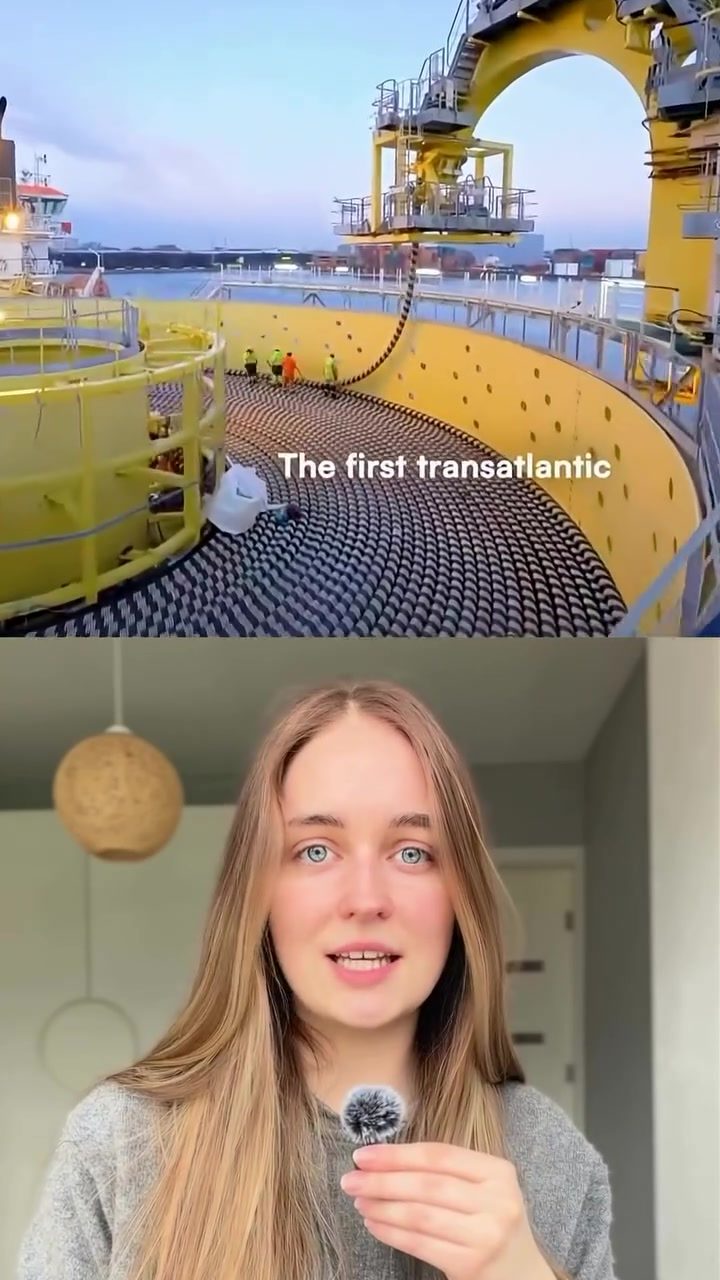
The First Transatlantic Internet Connection: The Story of TAT-8
Submarine cables form the backbone of global communication, facilitating the transmission of vast amounts of data across oceans. Recently, the retrieval of TAT-8, the first transatlantic fiber-optic cable, from the Atlantic seabed has sparked interest in the evolution of these critical infrastructure elements. This cable, which went live in 1988, was a groundbreaking advancement in global connectivity, linking Europe and the United States for the first time via fiber-optic technology.
Why This Matters
The retrieval of TAT-8 is more than a historical curiosity; it underscores the rapid evolution of technology and the unanticipated growth of internet demand. Initially, engineers believed that fiber-optic technology was so advanced that it would satisfy global bandwidth needs indefinitely. However, the exponential growth of the internet quickly outpaced this infrastructure, leading to an ongoing race to lay more cables and expand global connectivity.
The Evolution of Submarine Cables
The Launch of TAT-8
In 1988, TAT-8 was hailed as a revolutionary achievement. Isaac Asimov, the renowned science fiction writer, dubbed its launch "the maiden voyage across the sea on a beam of light." This fiber-optic cable was the first to connect Europe and the United States directly, utilizing technology that was vastly superior to traditional copper cables. The optimism surrounding TAT-8's launch was palpable; engineers believed it would be the last transatlantic cable ever needed. The fiber-optic technology was so far ahead of its time that it seemed the global bandwidth problem had been solved for good.
The Rise of Internet Demand
However, the internet grew at an unprecedented pace. Within a short period, the demand for bandwidth outstripped the capacity of TAT-8. This was the first indication that infrastructure would continually need to be upgraded to keep pace with the escalating data demands. The industry was prompted to start laying more cables almost immediately.
The Retirement and Recovery of TAT-8
Despite its pioneering status, TAT-8 developed a fault that was too expensive to repair. In 2002, it was retired and left dormant on the seabed. Fast forward to today, and a small crew aboard a specialized ship is now dragging it back up, marking a significant milestone in the history of global connectivity.
The Current Landscape of Subsea Cables
Project Waterworth: Meta's Ambitious Initiative
In 2021, Meta announced Project Waterworth, a new 50,000-kilometer cable system that will span five continents. This project is partly driven by the growing data demands of artificial intelligence and aims to enhance the global internet infrastructure significantly. The entire global internet relies on an intricate network of submarine cables, highlighting the critical role these cables play in modern communication.
The Modern Submarine Cable Industry
Today's submarine cables are designed to withstand the harsh conditions of the ocean floor and transmit data at astonishing speeds. The technology involved in laying and maintaining these cables is complex and requires specialized engineering and maintenance. Workers operate in remote and challenging environments to ensure the seamless operation of these vital communication links.
Practical Tips for Understanding Submarine Cables
Learning About Submarine Cables
For those interested in delving deeper into the world of submarine cables, there are several resources available. Understanding the technology behind these cables can provide valuable insights into the underlying infrastructure of the internet and the broader implications for global connectivity.
Staying Informed About AI and Robotics
Given the increasing reliance on AI, staying informed about the latest developments in this field can be beneficial. Projects like Meta's Project Waterworth are designed to feed the data demands of AI, underscoring the interconnected nature of these technologies.
Important Takeaways
- TAT-8, the first transatlantic fiber-optic cable, went live in 1988 and was believed to be the last cable needed. It was retired in 2002 and is now being recovered.
- The rapid growth of the internet outpaced early infrastructure, leading to a continuous need for new cables.
- Submarine cables form the backbone of global communication, facilitating vast amounts of data transmission.
- Projects like Meta's 50,000 km Project Waterworth are expanding the network to meet the increasing data demands of AI and the global web.
Conclusion
The retrieval of TAT-8 is a poignant reminder of the rapid evolution of technology and the ongoing need to upgrade infrastructure to meet escalating data demands. As we look to the future, projects like Meta's Project Waterworth underscore the critical role submarine cables play in global communication. With the entire global internet running on cables like TAT-8, the efforts to maintain and expand this infrastructure are essential for sustaining and advancing connectivity worldwide.
Watch the Reel
Questions readers ask
What was the significance of the TAT-8 cable in the history of global communication?
The TAT-8 cable was a groundbreaking development as it established the first transatlantic fiber-optic connection between Europe and the United States in 1988. This cable laid the foundation for the high-speed data transmission that would become crucial for the growing internet infrastructure.
Why was the TAT-8 cable retired from service?
The TAT-8 cable was retired due to the rapid advancement of technology and the increasing demands for internet bandwidth. As new, more efficient cables were deployed, TAT-8 became obsolete and was decommissioned in 2002.
What role do submarine fiber optic cables play in global communication?
Submarine fiber optic cables are the backbone of global communication, enabling the transmission of vast amounts of data across oceans at high speeds. They facilitate international phone calls, internet connectivity, and other forms of digital communication.
How has the demand for internet bandwidth influenced the evolution of submarine cables?
The demand for internet bandwidth has grown exponentially, driving the need for more advanced and efficient submarine cable infrastructure. This has led to the development of cables with higher capacities and better performance, such as those using coherent technology and wider bandwidths.
What are transatlantic internet cables and why are they important?
Transatlantic internet cables are underwater cables that connect continents across the Atlantic Ocean, enabling data transmission between Europe, North America, and other regions. They are vital for maintaining seamless internet connectivity and supporting various online services, from streaming to cloud computing.
What technologies have contributed to the evolution of submarine cables?
Advancements in fiber-optic technology, such as the use of erbium-doped fiber amplifiers, wavelength-division multiplexing, and coherent detection, have significantly improved the capacity and efficiency of submarine cables. These technologies have enabled higher data transmission speeds and greater reliability.
What sparked the retrieval of the TAT-8 cable from the Atlantic seabed?
The retrieval of the TAT-8 cable was driven by historical and technological interests. The cable's retrieval offers insights into the early days of fiber-optic technology and the rapid evolution of internet infrastructure, providing a tangible link to the past and a testament to technological progress.
Related deep dives
Similar reads based on topic and creator.


Recent articles
Fresh deep dives from the latest Reels we unpacked.
Comments
Be the first to comment.