EV Charging Infrastructure Growth in the U.S.
Context / Why this matters
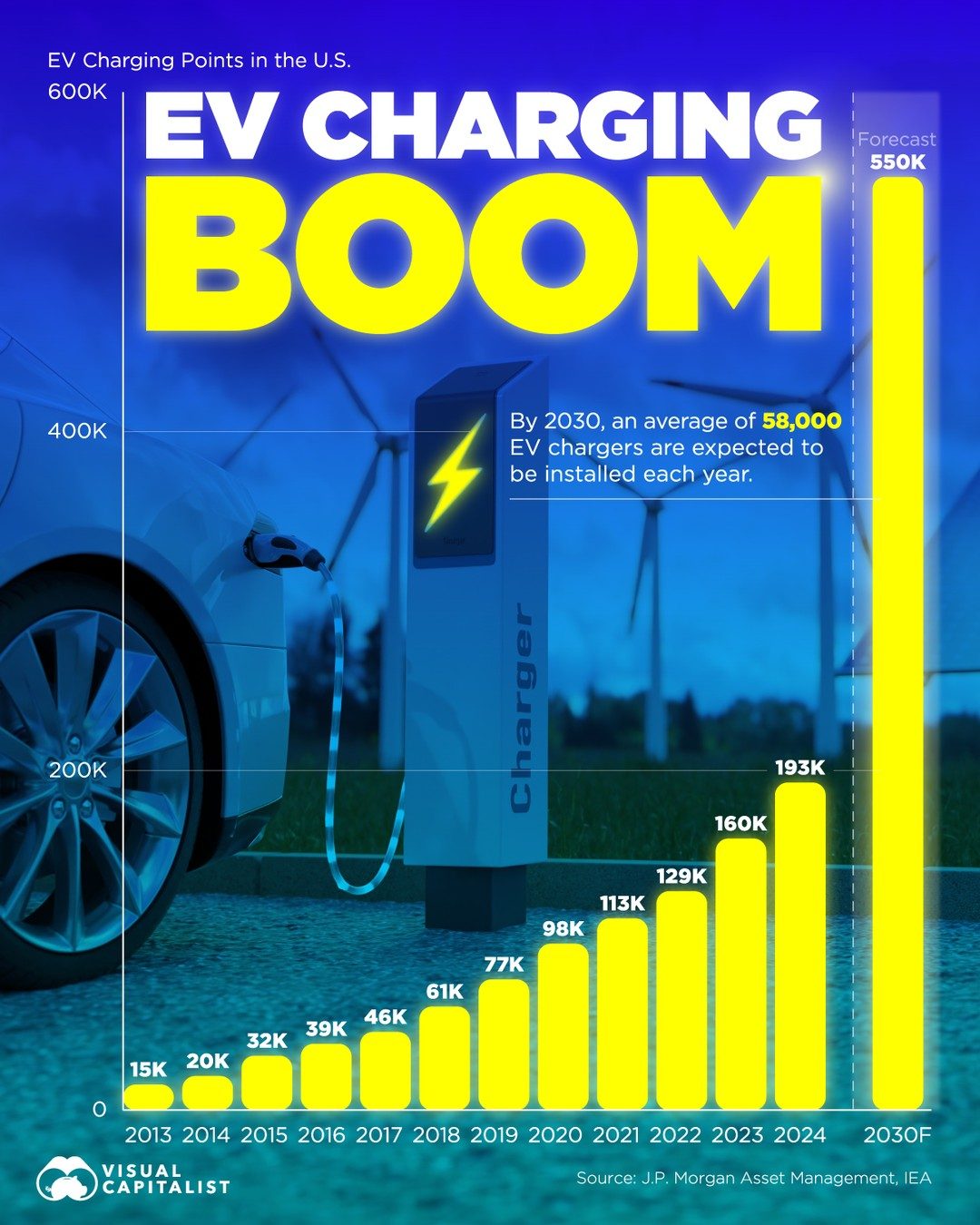
The transition to electric vehicles (EVs) is accelerating, and with it, the need for a robust charging infrastructure. As EV adoption surges across the U.S., the infrastructure must keep pace to ensure that drivers have convenient access to charging stations. According to J.P. Morgan Asset Management and the International Energy Agency (IEA), significant growth in EV charging points is expected, with an average of 58,000 chargers projected to be installed each year by 2030. This infrastructure expansion is crucial for supporting the increasing number of EVs on the road and ensuring that the shift to electric transportation is smooth and efficient.
Main discussion
The Current State of EV Charging Infrastructure
The U.S. has seen a steady increase in the number of EV charging points over the past decade. From 2013 to 2024, the number of charging stations has grown significantly, driven by both public and private investments. This growth is a response to the rising demand for electric vehicles, as more consumers and businesses adopt EVs for their environmental and economic benefits.
Projected Growth and Future Trends
Looking ahead, the forecast for EV charging infrastructure is even more promising. By 2030, the average number of EV chargers installed each year is expected to reach 58,000. This projection is based on current trends and anticipated advancements in technology, policy support, and increased consumer demand. The growth is expected to be particularly robust in key areas such as urban centers, highways, and workplace parking lots, where the demand for charging stations is highest.
Key Drivers of Growth
Several factors are driving the growth of EV charging infrastructure:
-
Government Initiatives: Federal and state governments are providing incentives and grants to support the installation of new charging stations. These programs aim to accelerate the adoption of EVs by making charging more accessible and convenient.
-
Private Investment: Companies across various sectors, including automotive manufacturers, energy providers, and technology firms, are investing heavily in EV charging infrastructure. These investments are driven by the potential for long-term returns and the desire to stay competitive in a rapidly evolving market.
-
Technological Advancements: Innovations in charging technology are making it easier and more efficient to install and maintain charging stations. Fast-charging capabilities, wireless charging, and smart grid integration are some of the advancements that are expected to boost the growth of EV charging infrastructure.
Regional Variations and Opportunities
The growth of EV charging infrastructure is not uniform across the U.S. Urban areas and coastal regions tend to have more charging stations due to higher EV adoption rates and denser populations. However, there are significant opportunities for growth in rural and suburban areas, where the availability of charging stations is still limited.
Rural communities, in particular, face unique challenges in terms of EV adoption and charging infrastructure. The lower population density and longer distances between potential charging locations make it more difficult to justify the installation of new stations. However, with the right incentives and support, these areas could see substantial growth in EV charging infrastructure, providing more options for EV drivers and supporting the broader transition to electric transportation.
Practical tips
For EV Owners
-
Plan Your Route: Use apps and online tools to plan your trips, including the locations of charging stations along your route. This will help you avoid range anxiety and ensure that you can recharge your vehicle as needed.
-
Invest in Home Charging: If possible, consider installing a home charging station. This will allow you to conveniently charge your vehicle overnight, ensuring that you start each day with a full battery.
-
Stay Informed: Keep up-to-date with the latest developments in EV charging technology and infrastructure. This will help you make informed decisions about your vehicle and charging needs.
For Businesses
-
Assess Your Needs: Determine the charging needs of your employees, customers, and visitors. This will help you select the right charging solutions for your business.
-
Incentivize EV Adoption: Offer incentives for employees and customers who use EVs, such as discounted charging rates or reserved parking spots.
-
Plan for the Future: As EV adoption grows, plan for future infrastructure needs. This may include installing additional charging stations or upgrading existing ones to accommodate higher demand.
For Policy Makers
-
Provide Incentives: Offer financial incentives, such as tax credits or rebates, to encourage the installation of new charging stations.
-
Support Research and Development: Invest in research and development to advance charging technology and make it more efficient and affordable.
-
Promote Public-Private Partnerships: Foster collaboration between the public and private sectors to accelerate the growth of EV charging infrastructure.
Important takeaways
- The U.S. is experiencing a significant increase in EV charging infrastructure, driven by government initiatives, private investment, and technological advancements.
- By 2030, an average of 58,000 EV chargers are expected to be installed each year, with growth anticipated in urban centers, highways, and workplace parking lots.
- Regional variations in EV charging infrastructure present unique opportunities and challenges, particularly in rural and suburban areas.
- Both EV owners and businesses can play a crucial role in supporting the growth of EV charging infrastructure by planning ahead, investing in home charging, and staying informed about the latest developments.
Conclusion
The growth of EV charging infrastructure in the U.S. is poised to accelerate in the coming years, driven by a combination of government support, private investment, and technological innovation. As more EVs hit the roads, the demand for convenient and accessible charging options will only increase. By understanding the current state and future trends of EV charging infrastructure, EV owners, businesses, and policymakers can all contribute to a more sustainable and efficient transportation system.
Watch the Reel
Questions readers ask
Why is there a need for a surge in EV charging points in the U.S.?
The surge in EV charging points is needed to keep up with the increasing number of electric vehicles on the road. As more drivers make the switch to EVs, having convenient access to charging stations becomes crucial for widespread adoption and efficient transportation.
How many new EV charging points are expected to be installed annually by 2030?
By 2030, the U.S. is projected to install an average of 58,000 new EV charging points each year, according to J.P. Morgan Asset Management and the International Energy Agency (IEA).
What drives the demand for new EV charging stations?
The demand for new EV charging stations is driven by the rapid increase in electric vehicle adoption. As more consumers switch to EVs, the need for accessible and convenient charging infrastructure grows to support their daily travel and long-distance journeys.
How will the EV charging infrastructure expansion benefit drivers?
The expansion of EV charging infrastructure will benefit drivers by providing convenient access to charging stations. This ensures that drivers can easily recharge their vehicles, reducing 'range anxiety' and making long trips more feasible. Additionally, a robust charging network supports the overall growth and adoption of electric vehicles.
What challenges might the U.S. face in achieving the projected EV charging station growth?
The U.S. may face several challenges in achieving this projected growth, including securing funding for installation, navigating regulatory hurdles, and addressing potential grid stability issues. Ensuring that charging stations are evenly distributed to avoid congestion and meet local demand will also be critical.
Which regions in the U.S. might see the most significant growth in EV charging points?
While the specific regional distribution is not detailed, urban areas and major transportation corridors are likely to see significant growth in EV charging points. These areas have higher EV concentrations and greater demand for convenient charging access.
What role do government and private investments play in the expansion of EV charging infrastructure?
Investments from both government and private sectors are crucial for the expansion of EV charging infrastructure. These investments help fund the installation of new charging points, develop advanced technologies, and implement policies that support the growth and accessibility of charging stations across the country.
Related deep dives
Similar reads based on topic and creator.


Recent articles
Fresh deep dives from the latest Reels we unpacked.




Comments
Be the first to comment.