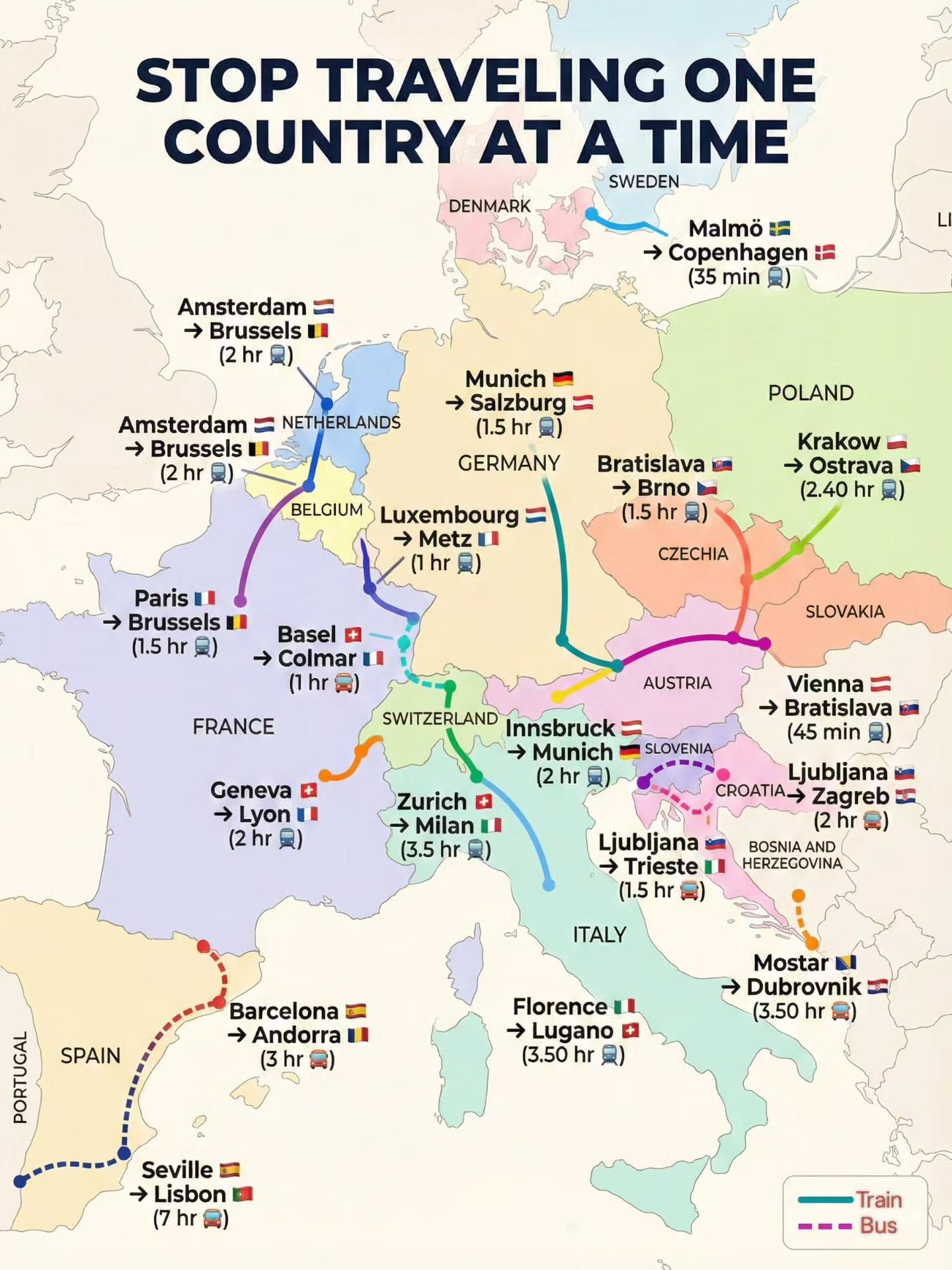
European Travel Route
Exploring Europe does not have to mean dedicating an entire trip to a single country. The continent is compact and well-connected, making it perfect for multi-country itineraries. By planning your trip to include multiple destinations, you can experience a variety of cultures, landscapes, and cuisines in a short amount of time. This guide will help you navigate some of the best travel routes between cities in Western and Central Europe, highlighting travel times and modes of transportation.
Why This Matters
Adopting a multi-country travel style is not only exciting but also practical. It allows you to make the most of your time and budget. With efficient travel routes and various modes of transportation, you can easily hop from one country to another, immersing yourself in diverse experiences. Moreover, this approach encourages spontaneity and discovery, as you might stumble upon hidden gems and unexpected adventures along the way.
Main Discussion
Europe’s interconnected cities offer a seamless travel experience. Here’s a breakdown of some popular routes, travel times, and modes of transportation to help you plan your journey effectively.
Western Europe
Amsterdam to Brussels
Amsterdam and Brussels are both cultural hubs with rich histories. The journey between these two cities takes approximately 1.5 hours by train, making it a convenient option for a day trip or a weekend getaway.
Amsterdam to Paris
The route from Amsterdam to Paris is another popular one. This journey takes around 3.5 hours by train, allowing you to experience the vibrant energy of Paris after a short travel time.
Central Europe
Munich to Vienna
Munich and Vienna are iconic cities known for their art, music, and architecture. Traveling between these two cities by train takes about 4 hours, providing ample time to explore both destinations in a single trip.
Munich to Salzburg
For a shorter trip, consider traveling from Munich to Salzburg, a journey that takes around 1.5 hours by train. Salzburg, the birthplace of Mozart, offers a rich cultural experience with its striking Baroque architecture and beautiful landscapes.
Southern Europe
Barcelona to Seville
The journey from Barcelona to Seville takes approximately 5.5 hours by train, making it a perfect route for those who want to experience the vibrant cultures of Spain. Barcelona's cosmopolitan charm and Seville's rich history and arts make for a fascinating contrast.
Barcelona to Lisbon
If you’re looking to venture further south, consider the route from Barcelona to Lisbon. This journey takes about 9 hours by bus or 12 hours by train. Lisbon offers a blend of rich history, vibrant culture, and stunning landscapes, making it a must-visit destination.
Eastern Europe
Vienna to Bratislava
The trip from Vienna to Bratislava is a quick and convenient one, taking only 1.5 hours by train. This route is perfect for those who want to explore the charm of both cities in a short amount of time.
Bratislava to Budapest
For a longer trip, consider traveling from Bratislava to Budapest, a journey that takes around 3.5 hours by train. Budapest, known for its thermal baths, stunning architecture, and rich cultural heritage, is a must-visit destination in Eastern Europe.
Scenic Routes
Zurich to Geneva
For a scenic ride, consider the route from Zurich to Geneva. This journey takes about 2.5 hours by train, offering stunning views of the Swiss Alps and the picturesque countryside. Both cities are known for their high quality of life, making it a perfect route for those who enjoy luxury and beauty.
Ljubljana to Bratislava
Another scenic route is from Ljubljana to Bratislava, a journey that takes around 4.5 hours by train. This route offers beautiful landscapes and a charming atmosphere, making it a perfect choice for nature lovers and culture enthusiasts.
Practical Tips
Choosing the Right Transportation
Traveling by train is often the most convenient and comfortable way to get around Europe. Many cities have efficient train networks, making it easy to hop from one destination to another. However, buses can also be a cost-effective option, especially for shorter distances. Consider your budget and travel preferences when choosing your mode of transportation.
Planning Your Itinerary
When planning your multi-country itinerary, consider the travel times and your interests. Some routes offer more scenic views, while others provide easier access to cultural attractions. Use your travel guide to map out the best routes for your trip and make the most of your time.
Packing for Multi-Country Travel
Packing for a multi-country trip requires careful planning. Bring versatile clothing that can be layered and easily mixed and matched. Choose a comfortable backpack or suitcase that is easy to carry and navigate through crowded train stations and airports. Also, don’t forget to pack travel essentials like a travel adapter, a portable charger, and a reusable water bottle.
Important Takeaways
Traveling between multiple European countries is not only feasible but also highly rewarding. By choosing the right routes and modes of transportation, you can experience a rich variety of cultures, landscapes, and cuisines in a short amount of time. Whether you prefer the convenience of train travel or the cost-effectiveness of buses, there are plenty of options to suit your needs.
Remember to plan your itinerary carefully, considering travel times and your interests. With the right preparation, you can make the most of your European adventure and create unforgettable memories.
Conclusion
Europe offers a wealth of travel opportunities, from the vibrant cities of Western Europe to the picturesque landscapes of Central and Eastern Europe. Embrace the spirit of multi-country travel and explore the diverse beauty of the continent. By following the tips and routes outlined in this guide, you can create a memorable and enriching travel experience that will leave you with lasting memories and a deeper appreciation for European culture.
Watch the Reel
Questions readers ask
What are the benefits of planning a multi-country trip in Europe?
A multi-country trip in Europe allows you to experience diverse cultures, landscapes, and cuisines efficiently. It helps you maximize your time and budget by enabling quick transitions between countries.
Which cities are highlighted in the best European intercity travel routes?
The routes mentioned include Amsterdam, Paris, Munich, Vienna, and Salzburg. These cities offer a mix of iconic landmarks, rich history, and vibrant cultures.
What are the most efficient ways to travel between these European cities?
The most efficient ways to travel between these cities are by train and bus. Both modes of transportation are well-connected and offer quick travel times, making them ideal for multi-country itineraries.
How long does it typically take to travel from Amsterdam to Paris?
The travel time from Amsterdam to Paris by train is approximately 3 hours and 15 minutes, making it a convenient and quick journey between these two popular European destinations.
What is the best mode of transportation for traveling from Munich to Vienna?
The best mode of transportation for traveling from Munich to Vienna is by train. The journey takes about 4 to 5 hours, depending on the specific train, and offers a scenic route through the European countryside and the Alps.
How can I plan an efficient travel itinerary for a multi-country Europe trip?
Plan your itinerary by choosing cities that are well-connected by train or bus. Consider travel times and modes of transportation to ensure a smooth journey. Use travel planning apps or websites to help structure your trip effectively.
What are some must-see attractions along the Vienna to Salzburg travel route?
The Vienna to Salzburg route offers beautiful scenery, with some must-see attractions including the Wachau Valley, known for its vineyards and castles, and the picturesque town of Salzburg, famous for its baroque architecture and as the birthplace of Mozart.
Related deep dives
Similar reads based on topic and creator.




Recent articles
Fresh deep dives from the latest Reels we unpacked.




Comments
Be the first to comment.