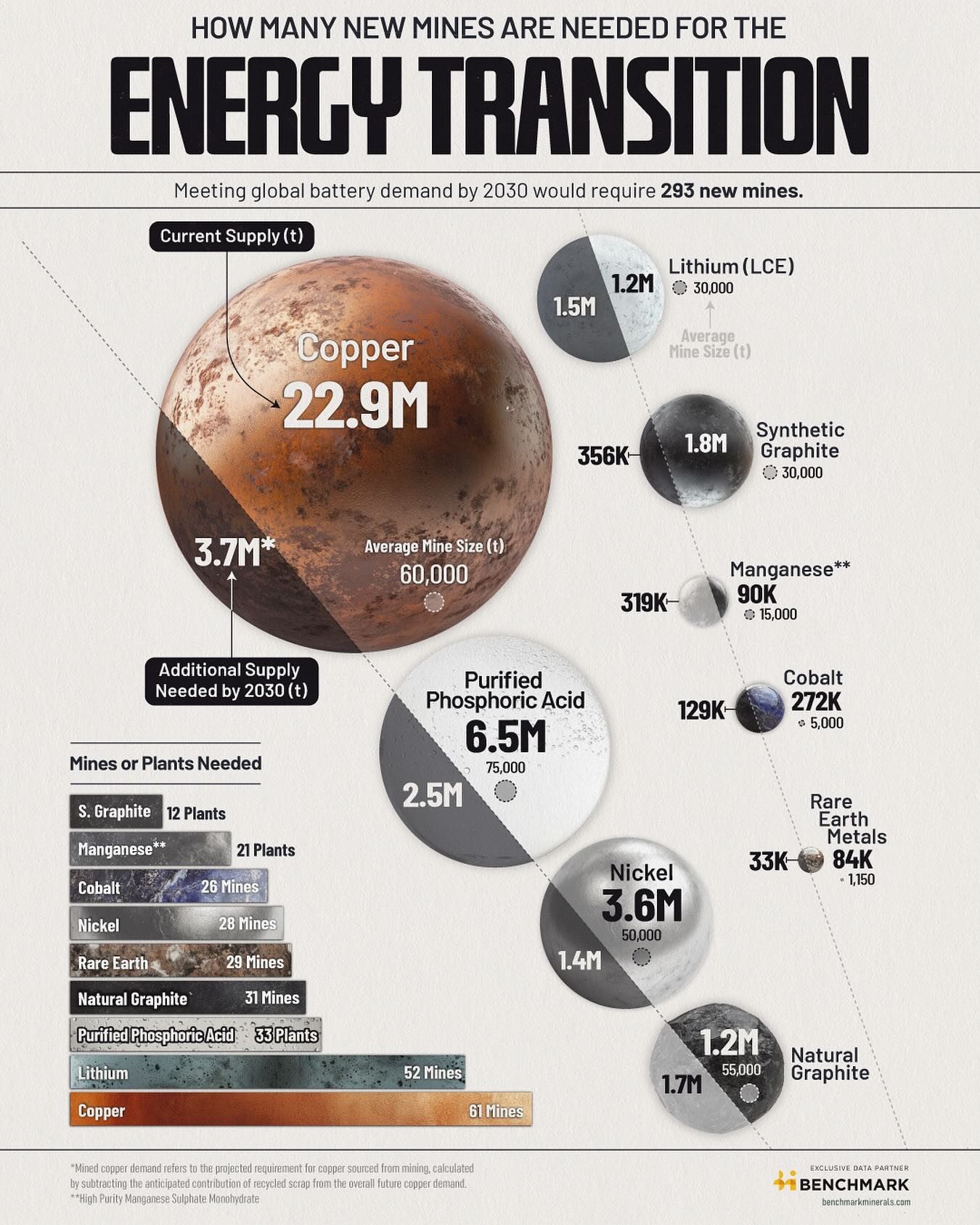
Energy Transition Mineral Needs
The global shift away from fossil fuels has sparked a pressing need for raw materials essential for clean energy technologies. Meeting global battery demand by 2030 requires significant investment in mining and processing infrastructure. This demand is driven by the anticipated growth in electric vehicle (EV) adoption, renewable energy storage, and other clean energy technologies.
Context / Why this matters
The energy transition relies heavily on batteries, which require a variety of critical minerals. These include lithium, copper, nickel, manganese, cobalt, and graphite. Securing a sustainable supply of these materials is a major challenge as the world aims to reduce carbon emissions and transition to cleaner energy sources.
Main discussion
Current Supply and Demand
The current global supply of these critical minerals is insufficient to meet the projected demand by 2030. Lithium, for example, is a key component in rechargeable batteries. Currently, the global supply of lithium stands at around 1.5 million tonnes, but an additional 6.5 million tonnes will be needed to meet the demand by 2030. This significant gap highlights the urgent need for new mining projects and processing plants. Similarly, copper, another crucial material, will require an additional 1.8 million tonnes from mining sources, as the demand is calculated by subtracting the anticipated recycled scrap from the overall future copper demand.
New Mining Projects
To bridge the supply gap, an estimated 293 new mines or plants will need to be developed by 2030. This includes:
- 12 plants for purified phosphoric acid
- Cobalt: 21 plants
- Nickel: 26 mines
- Natural Graphite: 29 mines
- Purified Phosphoric Acid: 33 plants
- Lithium: 52 mines
- Copper: 61 mines
Each of these minerals plays a vital role in various clean energy technologies. For instance, lithium and cobalt are essential for battery production, while copper and nickel are crucial for electrical infrastructure and renewable energy systems.
Challenges in Mineral Supply
The demand for these minerals is not only driven by the energy transition but also by other sectors such as electronics and construction. This multifaceted demand creates additional challenges in securing a stable supply. Several factors contribute to the complexity of meeting this demand:
- Geographical Constraints: Many of these minerals are concentrated in specific regions, leading to supply chain vulnerabilities and geopolitical risks.
- Environmental Concerns: Mining operations can have significant environmental impacts, including habitat destruction, water pollution, and air quality issues. Balancing the need for these minerals with environmental sustainability is a critical challenge.
- Regulatory Hurdles: The development of new mining projects often faces regulatory barriers, including permitting processes and environmental impact assessments.
- Technological Limitations: Extracting and processing some of these minerals, such as rare earth metals, can be technologically challenging and resource-intensive.
Key Minerals in Detail
Lithium
Lithium is a cornerstone of modern battery technology, particularly in electric vehicles and portable electronics. The demand for lithium is projected to surge as more countries and companies commit to reducing their carbon footprints. The current global supply of lithium is around 1.5 million tonnes, but meeting the expected demand by 2030 will require an additional 6.5 million tonnes. This significant gap necessitates the development of 52 new mines to ensure a stable supply.
Copper
Copper is essential for electrical wiring, motors, and various other components in renewable energy systems. The current copper supply from mining sources is approximately 1.8 million tonnes, but an additional 2.5 million tonnes will be needed to meet future demand. This includes copper for both new installations and the replacement of aging infrastructure. Developing 61 new mines will be crucial for meeting this demand.
Nickel
Nickel is used in stainless steel, batteries, and other applications. The current supply is around 2.29 million tonnes, but an additional 3.7 million tonnes will be needed by 2030. Nickel is particularly important for the production of nickel-based batteries, which offer higher energy density and improved performance. To meet this demand, 26 new mines will be required.
Cobalt
Cobalt is a critical component in lithium-ion batteries, which power electric vehicles and portable electronics. The current supply of cobalt is around 272,000 tonnes, but an additional 129,000 tonnes will be needed. The primary source of cobalt is the Democratic Republic of Congo, which raises concerns about supply chain vulnerabilities and ethical sourcing. The development of 21 new plants will be essential for meeting the anticipated demand.
Graphite
Graphite is used in lithium-ion batteries as an anode material. The current supply is around 1.3 million tonnes, but an additional 1.2 million tonnes will be needed to meet the projected demand. Developing 31 new mines for natural graphite will be crucial for ensuring a stable supply.
Practical tips
For policymakers and industry stakeholders, understanding these challenges and opportunities is vital. Here are some practical tips for navigating the energy transition mineral landscape:
- Diversify Supply Chains: Reduce reliance on single sources by diversifying supply chains. This involves exploring new mining regions and investing in recycling technologies.
- Invest in Research and Development: Encourage innovation in mining and processing technologies to improve efficiency and reduce environmental impacts. This includes investing in research and development for new battery technologies that require fewer critical minerals.
- Promote Sustainable Practices: Implement stringent environmental and social standards for mining operations. This includes enforcing regulations, conducting environmental impact assessments, and ensuring ethical sourcing practices.
- Strengthen International Collaboration: Foster cooperation between governments, industries, and international organizations to address supply chain vulnerabilities and ensure a stable supply of critical minerals.
Important takeaways
- Global Battery Demand: Meeting global battery demand by 2030 will require 293 new mines or plants, highlighting the urgent need for investment in mining infrastructure.
- Critical Minerals: Key minerals like lithium, copper, nickel, manganese, cobalt, and graphite are essential for the energy transition. Ensuring a stable supply of these minerals is crucial for the development of clean energy technologies.
- Environmental and Social Considerations: Balancing the need for critical minerals with environmental and social sustainability is a significant challenge. Implementing stringent standards and promoting ethical sourcing practices are essential.
- Geopolitical Risks: The concentration of critical minerals in specific regions creates supply chain vulnerabilities and geopolitical risks. Diversifying supply chains and strengthening international cooperation are crucial for mitigating these risks.
Conclusion
The energy transition presents a complex but necessary challenge as the world shifts away from fossil fuels. Securing a stable supply of critical minerals is essential for the development of clean energy technologies and the reduction of carbon emissions. By understanding the current supply and demand dynamics, addressing environmental and social considerations, and promoting international cooperation, we can navigate the challenges of the energy transition and build a more sustainable future.
Watch the Reel
Questions readers ask
Why are 293 new mines needed by 2030?
The projected increase in demand for clean energy technologies, particularly electric vehicles and energy storage, necessitates a significant expansion in mining operations. These new mines are essential to meet the growing need for critical minerals that power the energy transition.
What are the most important minerals for the energy transition?
The most important minerals for the energy transition include lithium, copper, cobalt, nickel, manganese, and graphite. These minerals are crucial for the production of batteries and other clean energy technologies that facilitate the shift towards cleaner energy sources.
How will these new mines impact the global battery market?
The development of 293 new mines by 2030 will significantly boost the global supply of battery metals, enabling the production of more electric vehicles and energy storage solutions. This expansion is vital for supporting the anticipated growth in the electric vehicle market and the broader energy storage industry.
What challenges are associated with meeting the demand for clean energy minerals?
Meeting the demand for clean energy minerals presents several challenges, including environmental concerns, regulatory hurdles, and the need for substantial capital investment. Additionally, ensuring a sustainable and ethical supply chain for these minerals is a major priority for many companies and governments.
What role do electric vehicles play in the energy transition?
Electric vehicles (EVs) are a key driver of the energy transition due to their reliance on batteries, which require a variety of critical minerals. The anticipated growth in EV adoption is expected to significantly increase the demand for minerals like lithium, cobalt, and nickel, making new mining projects essential for supporting this market.
What is the significance of copper mining for the energy transition?
Copper is crucial for the energy transition due to its role in electric vehicle motors, charging infrastructure, and renewable energy systems. The increased demand for copper by 2030 will require the development of new copper mines to support the growth of these clean energy technologies.
How will the supply of cobalt be affected by 2030?
The supply of cobalt will need to significantly increase to meet the demands of the energy transition, particularly for battery production. Ensuring a stable and ethical supply of cobalt will require the development of new mines and the implementation of sustainable mining practices to avoid potential shortages and supply chain disruptions.
Related deep dives
Similar reads based on topic and creator.


Recent articles
Fresh deep dives from the latest Reels we unpacked.




Comments
Be the first to comment.