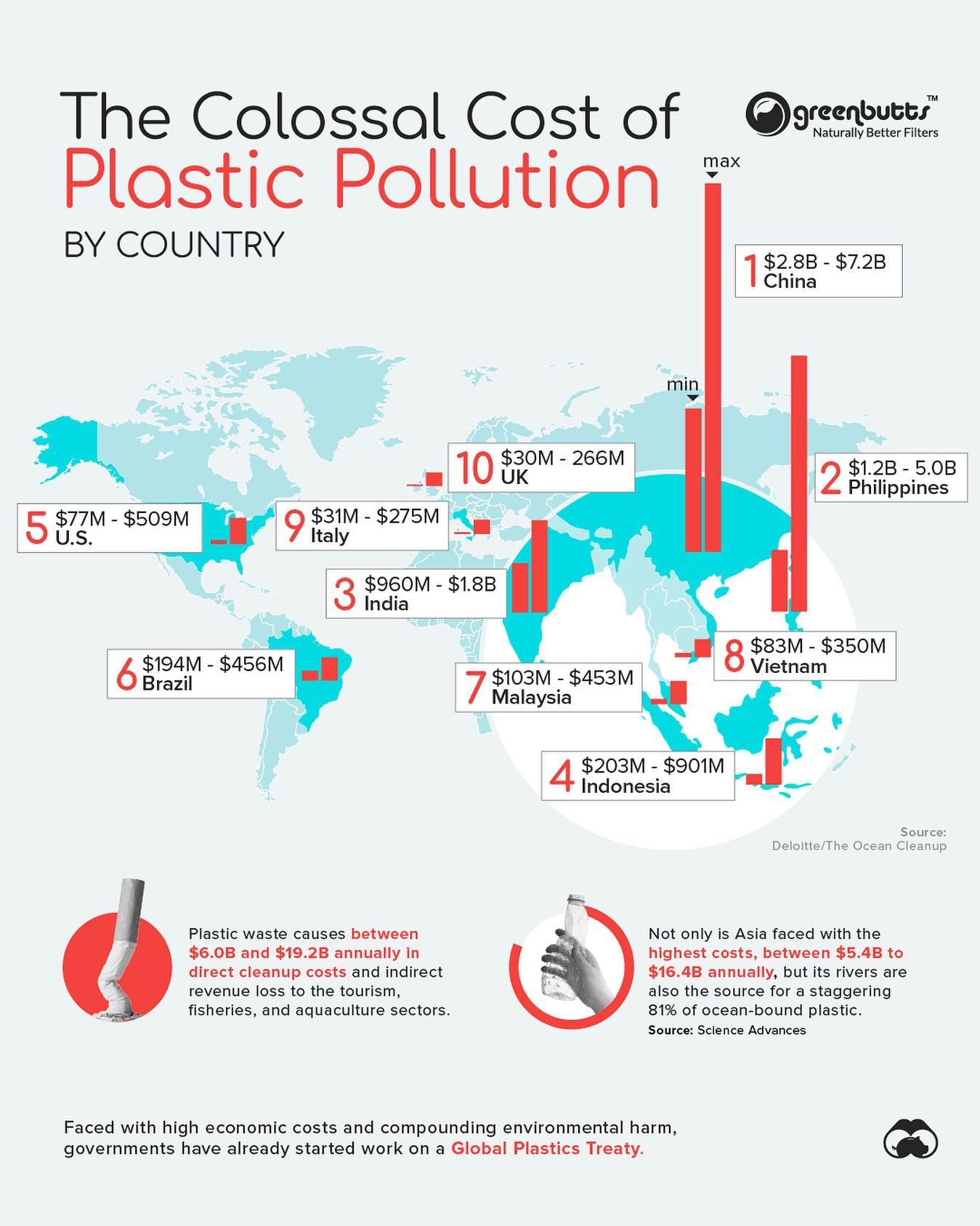
The Colossal Cost of Plastic Pollution
The global issue of plastic pollution extends far beyond its visible environmental impact, costing economies billions annually in cleanup and lost revenue. According to recent data, the world's oceans, seas, and rivers hold a staggering 139 million tons of plastic waste. Among the most prevalent pollutants are cigarette filters, which contribute significantly to this environmental crisis.
Why This Matters
Plastic pollution poses a significant threat to marine life and ecosystems, but its economic impact is equally alarming. The costs associated with plastic waste cleanup and the subsequent revenue loss in industries such as tourism, fisheries, and aquaculture are substantial. Understanding these economic ramifications is crucial for governments and organizations working towards sustainable solutions.
Economic Impact by Country
The cost of plastic pollution varies widely by country, with some nations bearing a heavier burden than others. Here’s a breakdown of the economic impact in some of the most affected regions:
Asia
China
China faces one of the highest costs associated with plastic pollution, ranging from $77 million to $31 million annually. This significant financial burden highlights the urgent need for effective waste management strategies in the country.
India
India's economic losses due to plastic waste are even more pronounced, with costs ranging from $960 million to $1.8 billion annually. The sheer volume of plastic waste in Indian waters underscores the need for comprehensive waste management and recycling initiatives.
Philippines
The Philippines faces an economic impact of between $1.2 billion and $5.0 billion annually due to plastic pollution. The high costs reflect the country's struggle with waste disposal and the urgent need for improved infrastructure and policies.
Vietnam
Vietnam's costs range from $83 million to $350 million annually. The economic impact is significant, particularly in coastal regions where tourism and fisheries are major contributors to the economy.
Malaysia
Malaysia's economic losses due to plastic pollution range from $103 million to $453 million annually. The high costs highlight the need for stricter regulations and better waste management practices.
Indonesia
Indonesia is another country heavily impacted by plastic pollution, with costs ranging from $203 million to $901 million annually. The high financial burden underscores the importance of investing in sustainable waste management solutions.
Europe and North America
United Kingdom
The UK's economic impact ranges from $30 million to $266 million annually. The costs reflect the need for continued efforts in waste reduction and recycling, as well as stricter regulations on single-use plastics.
United States
The U.S. faces costs between $194 million and $456 million annually. The high economic impact underscores the need for comprehensive waste management strategies and the promotion of sustainable practices.
The Global Plastics Treaty
Faced with high economic costs and compounding environmental harm, governments around the world have started work on a Global Plastics Treaty. This international agreement aims to address plastic pollution through coordinated efforts, including regulations, waste management strategies, and initiatives to reduce plastic use.
Key Objectives
- Reducing Plastic Waste: The treaty aims to reduce the amount of plastic waste entering the environment by promoting recycling and waste management initiatives.
- Promoting Sustainable Practices: Governments and organizations will work together to promote sustainable practices, such as the use of biodegradable materials and the reduction of single-use plastics.
- Enhancing International Cooperation: The treaty will foster international cooperation to address plastic pollution on a global scale, sharing best practices and resources.
Practical Tips for Individuals and Communities
While governments and organizations work on global solutions, individuals and communities can also play a crucial role in reducing plastic pollution:
Reduce Single-Use Plastics
Avoid using single-use plastics such as bags, bottles, and cutlery. Opt for reusable alternatives and encourage friends and family to do the same.
Proper Disposal
Ensure that all plastic waste is properly disposed of in designated recycling bins. Avoid littering and encourage others to do the same.
Support Sustainable Brands
Choose brands that prioritize sustainability and use eco-friendly packaging. Support initiatives that promote the use of biodegradable materials and reduce plastic waste.
Participate in Cleanup Efforts
Join local cleanup efforts and community initiatives to remove plastic waste from natural environments. Organize beach cleanups, river cleanups, and other environmental activities to raise awareness and take action.
Important Takeaways
The economic impact of plastic pollution is a global issue that requires coordinated efforts from governments, organizations, and individuals. The costs associated with plastic waste cleanup and revenue loss in key industries are staggering, highlighting the need for effective waste management strategies and sustainable practices.
- Plastic pollution costs countries billions annually.
- Asia faces some of the highest economic impacts.
- The Global Plastics Treaty aims to address plastic pollution through international cooperation.
- Individuals and communities can play a crucial role in reducing plastic waste.
Conclusion
Plastic pollution is a pressing global issue with significant economic and environmental consequences. By understanding the economic impact and taking collective action, we can work towards a cleaner, more sustainable future. Whether through government initiatives, community efforts, or individual actions, every step counts in the fight against plastic pollution.
Watch the Reel
Questions readers ask
How much does plastic pollution cost the global economy annually?
Plastic pollution costs the global economy billions of dollars each year. This includes both direct costs, such as cleanup operations, and indirect costs, like lost revenue in industries affected by plastic waste, such as tourism and fisheries.
Which countries are most affected by the economic toll of plastic pollution?
Countries with significant maritime economies, such as China, India, and the Philippines, are particularly hard hit. These nations bear substantial costs due to cleanup efforts and revenue loss in industries dependent on clean waters.
What is the most common type of plastic waste found in oceans and rivers?
Cigarette filters are among the most common types of plastic waste found in oceans and rivers. This highlights a significant source of the plastic pollution problem that often goes unnoticed.
How does plastic pollution impact the fishing industry?
Plastic pollution negatively affects the fishing industry by damaging marine ecosystems, which can reduce fish populations. Additionally, the presence of plastic waste can make fishing areas unsafe and unappealing, leading to revenue loss and job insecurity for those who depend on fisheries.
What are the environmental costs of plastic pollution?
The environmental costs of plastic pollution are vast, including the harm it causes to marine life and ecosystems. Plastic waste can entangle and kill marine animals, damage habitats, and disrupt food chains, leading to long-term ecological damage.
What is the total amount of plastic waste in the world's oceans and rivers?
The world's oceans, seas, and rivers hold a staggering 139 million tons of plastic waste. This immense amount of waste not only poses a threat to marine life but also incurs significant economic costs for cleanup and lost revenue in various industries.
How does plastic pollution affect tourism?
Plastic pollution can deter tourists from visiting affected areas, leading to significant revenue loss. Beaches and waterfronts littered with plastic waste are less appealing to visitors, which can harm local economies that rely on tourism for income.
Related deep dives
Similar reads based on topic and creator.


Recent articles
Fresh deep dives from the latest Reels we unpacked.




Comments
Be the first to comment.