The double-edged sword of human influence
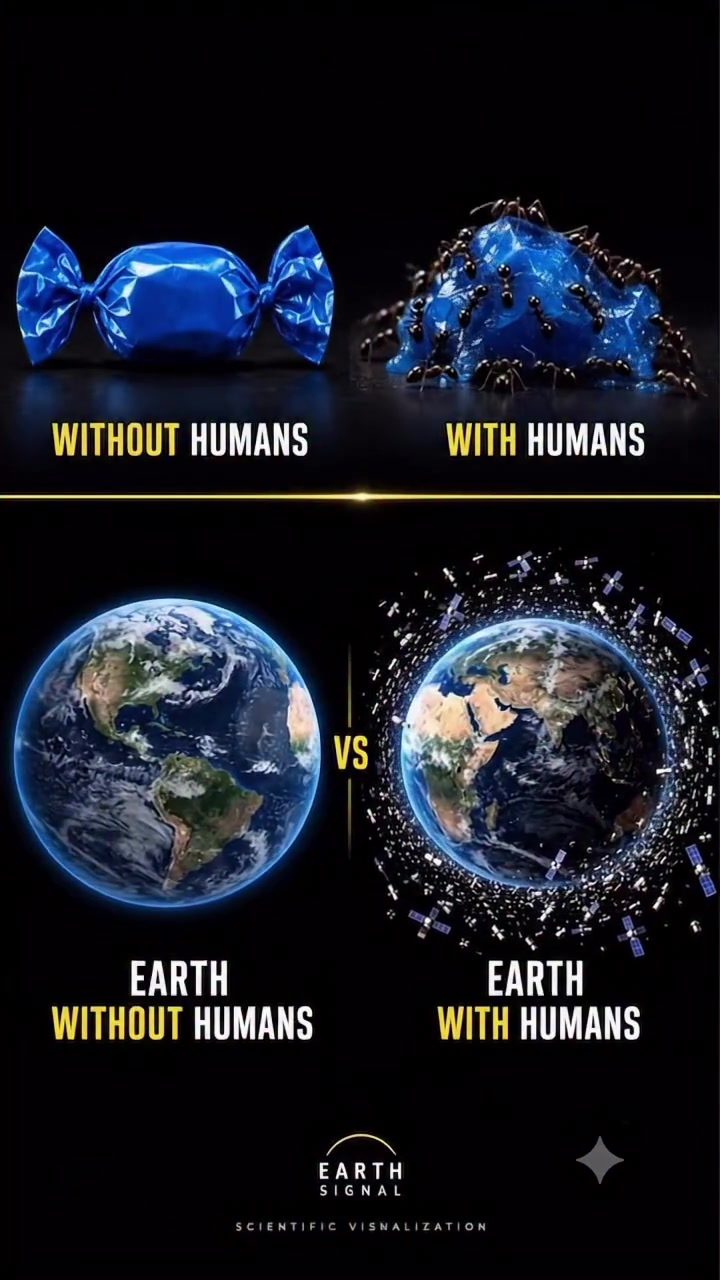
Humanity's footprint is vast and only expanding. Humanity's presence has morphed the once pristine earth into something else—a construct called “Earth With Humans.” Considering the scale of human impact, the difference is evident. We participated in creating a human swarm, not unlike the ants in a candy wrapper, but with far more complex intentions and broader, sometimes less desirable, consequences. The image may resonate with humanity's global impact on the planet, but its effect goes beyond Earth.
The new frontier: satellites and space
Drifting farther from Earth is the human presence in space. Visual representations of our planet reveal the ever-growing constellation of satellites, each one a testament to human ingenuity and the relentless push to explore and exploit. These satellites serve a variety of purposes, including communication, navigation, and scientific research. Without these satellites, the connection between humanity and the cosmos would be lessened. Nevertheless, the increasing number of satellites has opened a new problem for humans: Space debris.
Space sustainability
If space is the new frontier, then space debris presents a significant barrier to humanity's ambitions. Space sustainability is critical. Given the increasing human presence in space, it's crucial to monitor and mitigate the risks associated with space debris. Without careful management, space debris can pose a threat to the safety of satellites, spacecraft, and astronauts. There simply isn't enough room for all of the satellites, debris, internet constellations, wakes, and launch paths. Furthermore, the increasing number of satellites can cause collisions, disrupt satellite communication, and even pose a threat to human spaceflight. Therefore, collaborative effort is needed to ensure the sustainable use of space.
The role of scientific visualization
For any of these questions to be addressed, we must rely on the precision of scientific visualization. Translating scientific data into visual formats makes complex information more comprehensible. Visual representations in "Earth With Humans" fit the scientific visualization. As technology continues to evolve, so too will the tools and techniques used to create these visualizations, making the study of space more accessible and engaging. The future of humanity depends, in part, on the sustainability of space.
Watch the Reel
Related deep dives
Similar reads based on topic and creator.

Recent articles
Fresh deep dives from the latest Reels we unpacked.
Comments
Be the first to comment.