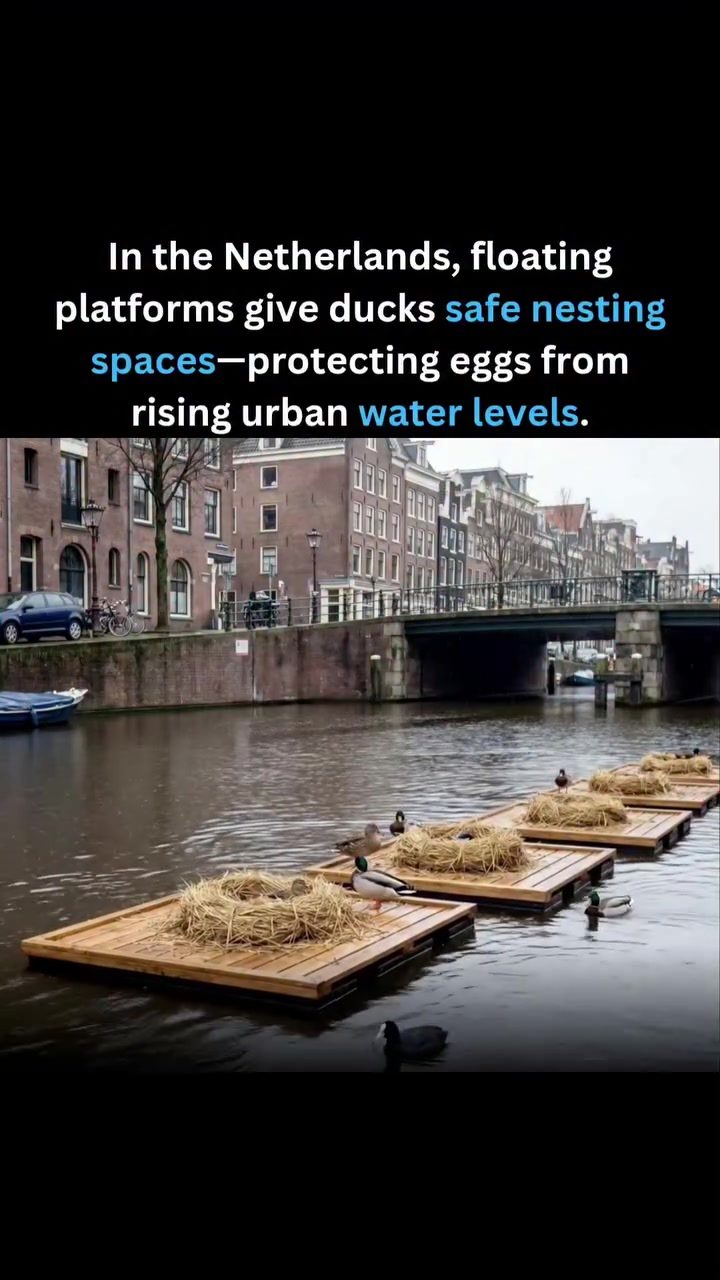
Floating Duck Nesting Platforms: An Environmental Solution
Floating duck nesting platforms, as seen in the Netherlands, offer a innovative approach to protecting urban waterfowl from the impacts of rising water levels. These platforms are carefully designed to provide safe nesting spaces for ducks, ensuring the survival of their eggs in an environment where urbanization and climate change pose significant threats.
Context / Why This Matters
Urbanization and climate change are increasingly affecting wildlife, particularly those that rely on water bodies for nesting and breeding. Ducks, for example, need safe and stable spaces to lay their eggs and raise their young. However, rising water levels due to urban development and climate change can inundate traditional nesting sites, leaving ducks vulnerable. In the Netherlands, floating platforms have emerged as a practical solution to this problem. By providing stable, floating nesting areas, these platforms help ducks adapt to changing water levels and ensure the protection of their eggs.
Main Discussion
The Design and Functionality of Floating Duck Nesting Platforms
Floating duck nesting platforms are cleverly designed to rise and fall with the water levels. This design ensures that the nesting spaces remain accessible and secure for ducks, regardless of fluctuations in water height. The platforms are typically constructed using durable, buoyant materials that can withstand the elements and provide a stable surface for nesting. In the Netherlands, these platforms are strategically placed in areas where ducks are known to congregate, making them easily accessible to the birds.
Benefits for Ducks and Urban Environments
The primary benefit of these floating platforms is the protection they offer to duck eggs. Nesting on the ground or in areas prone to flooding can lead to the loss of eggs and, consequently, the failure of breeding attempts. Floating platforms mitigate this risk by keeping the nesting sites above water, even during periods of high water levels. This not only helps in maintaining the duck population but also contributes to the overall biodiversity of urban water bodies. Additionally, these platforms can serve as educational tools, raising awareness about the importance of wildlife conservation in urban environments.
Implementation and Maintenance
Implementing floating duck nesting platforms requires careful planning and execution. The platforms need to be designed to withstand the elements and provide a stable surface for nesting. Regular maintenance is also essential to ensure that the platforms remain functional and accessible to ducks. This includes cleaning the platforms to remove debris, checking for structural integrity, and repairing any damage that may occur over time. In the Netherlands, local authorities and wildlife conservation organizations often collaborate to implement and maintain these platforms, ensuring their effectiveness in protecting duck populations.
Practical Tips
If you're considering implementing floating duck nesting platforms in your area, here are some practical tips to get you started:
Site Selection
Choose a location that is known to be frequented by ducks. This will increase the likelihood that the platforms will be used by the birds. Additionally, ensure that the site is easily accessible for maintenance and monitoring.
Design and Materials
Use durable, buoyant materials for constructing the platforms. This will ensure that they can withstand the elements and provide a stable surface for nesting. Consider incorporating features like ramps or steps to make it easier for ducks to access the platforms.
Maintenance and Monitoring
Regularly inspect the platforms for any signs of damage or wear and tear. Clean them to remove debris and ensure that they remain functional. Monitoring the platforms can also provide valuable data on their effectiveness and help in making necessary adjustments.
Important Takeaways
Floating duck nesting platforms are a practical and effective solution for protecting urban waterfowl from the impacts of rising water levels. By providing safe and stable nesting spaces, these platforms help ducks adapt to changing environments and ensure the protection of their eggs. Implementing and maintaining these platforms requires careful planning and execution, but the benefits they offer to both the duck population and the overall biodiversity of urban water bodies make them a worthwhile investment.
Conclusion
The floating duck nesting platforms in the Netherlands serve as an excellent example of how innovative design and practical solutions can address environmental challenges. By providing safe nesting spaces for ducks, these platforms help protect urban waterfowl from the impacts of rising water levels. Whether you're a wildlife conservationist, urban planner, or simply someone who cares about the environment, understanding and implementing these solutions can make a significant difference in protecting wildlife and promoting biodiversity in urban areas.
Watch the Reel
Questions readers ask
What are Dutch floating platforms and why are they important for ducks?
Dutch floating platforms are specially designed structures that rise and fall with water levels, providing stable nesting spaces for ducks. They are important because they protect duck eggs and support the survival of young ducks in urban areas where water levels are changing rapidly.
How do floating duck nesting platforms help mitigate the effects of climate change?
Floating duck nesting platforms help mitigate the effects of climate change by providing adaptable nesting spaces for ducks. As water levels rise due to climate change, these platforms ensure that ducks have safe places to lay their eggs and raise their young, promoting the preservation of duck populations in urban areas.
What are the benefits of floating platforms for urban wildlife protection?
Floating platforms offer several benefits for urban wildlife protection. They provide stable nesting spaces for ducks in areas where urban development has reduced natural habitats. Additionally, they help protect duck eggs from predators and rising water levels, ensuring the survival of young ducks in changing environments.
What are the main threats to urban ducks and their habitats?
The main threats to urban ducks and their habitats include rising water levels due to climate change and urban development. Traditional nesting sites can become inundated, leaving ducks without safe places to lay their eggs and raise their young. Additionally, urbanization can lead to habitat loss and increased predation.
How do Dutch floating platforms support urban water management?
Dutch floating platforms support urban water management by providing a flexible solution to rising water levels. These platforms can adapt to changing water conditions, making them an effective tool for protecting urban wildlife while managing water resources in densely populated areas.
Are floating duck nests difficult to install and maintain?
Floating duck nests are designed to be easy to install and maintain. They are typically anchored to the ground with a simple system that allows them to rise and fall with water levels. Regular maintenance involves checking the structure for any damage and ensuring that the anchoring system is secure.
What types of ducks can benefit from floating nesting platforms?
Several types of ducks can benefit from floating nesting platforms, including mallards, wood ducks, and other species that nest in urban and semi-urban areas. These platforms offer a safe and stable nesting environment, which can help support the survival of various duck populations in changing climates.
Related deep dives
Similar reads based on topic and creator.


Recent articles
Fresh deep dives from the latest Reels we unpacked.




Comments
Be the first to comment.