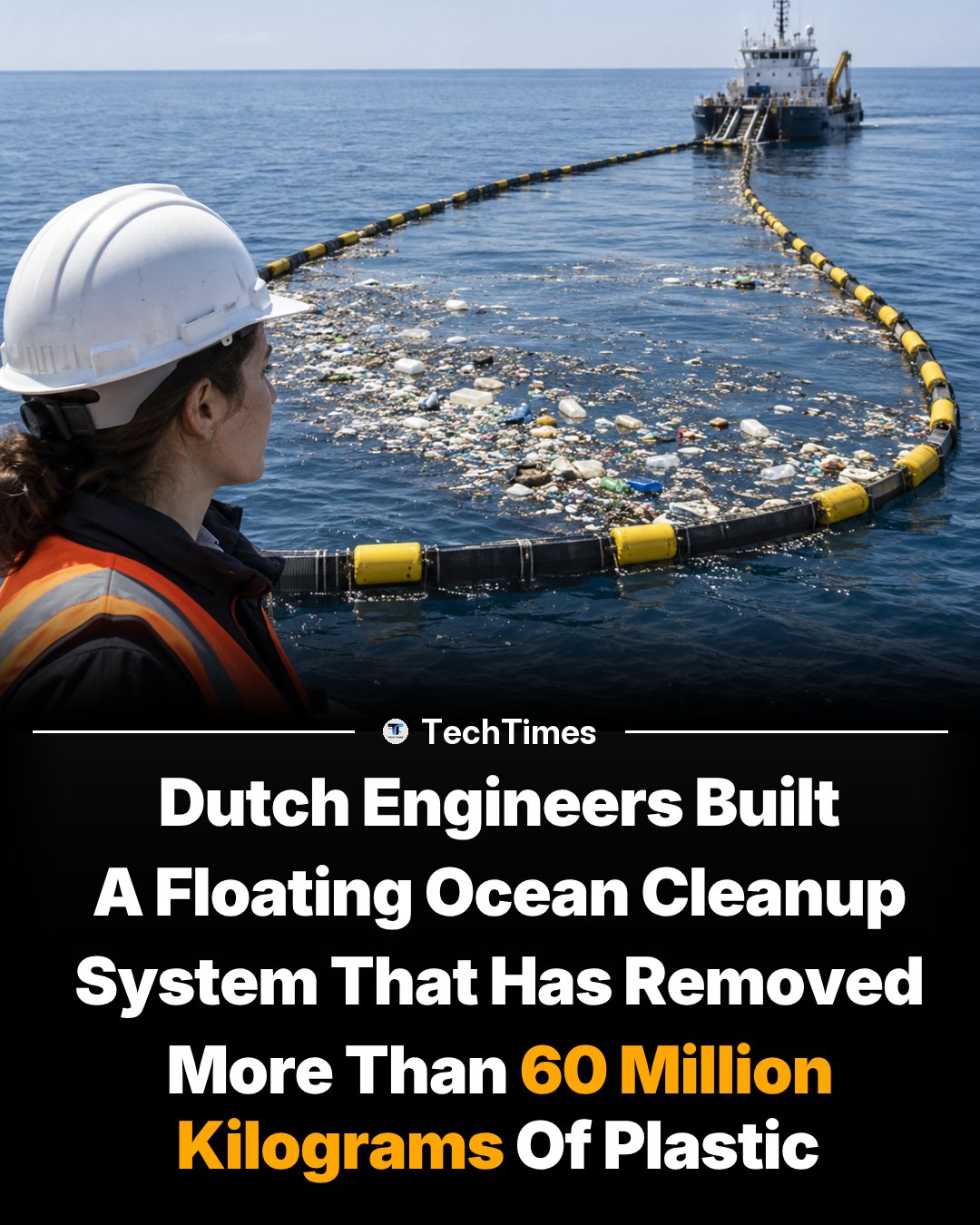
When Dutch engineers deployed the Ocean Cleanup system, the world got a glimpse of a promising leap in waste removal. This floating device, the size of a football field, has successfully collected over 60 million kilograms of plastic since its deployment.
The Ocean Cleanup System: A Giant Sweeper
The Ocean Cleanup System is an ocean-based contraption designed to extract plastic waste from water. The device uses an enormous floating barrier that traps debris. Natural ocean currents and wave energy assist in the collection process. The device houses a solid, dense screen that hangs below the water, preventing marine life from entering the barrier. The system works by passively drifting with the ocean currents and concentrating plastic in a high-density area. Crews then remove the collected debris from the system, which reduces the plastic in waterways and protects sea creatures from ingestion. The Ocean Cleanup System is the first system in the world that has removed more than 1 million kilograms of plastic. This distinction is due to its size (about 1 solar football stadium) and unique design. Several reasons make this product unique:
- Its size is a major differentiator. The device is 900m long and designed to withstand harsh ocean conditions.
- The system uses a U-shaped design with a 3-meter deep bypass skirt below the surface, which allows marine life to pass underneath.
- The Ocean Cleanup System is designed to be widely used. It can be used across the globe to clean up different bodies of water with plastic pollution.
The Plastic Threat
The Ocean Cleanup System provides hope in tackling a problem that impacts marine ecosystems, entire food chains, and even the economy. The problem is widespread: the vast majority of plastic in the ocean takes hundreds of years to degrade, and every year, an estimated 8 million tons of plastic ends up in the ocean. Plastic pollution can disrupt ecosystems and harm the animals who mistake it for food, or get entangled in the debris. As a problem, plastic pollution costs the global economy billions of dollars. Plastic waste impacts fisheries, tourism, and other industries. It costs governments and industries billions of dollars annually to clean up plastic pollution, among other concerns.
A Floating Ocean Marathon
The Ocean Cleanup
The Ocean Cleanup System focuses on cleaning the "Great Pacific Garbage Patch," which is an area larger than Texas. According to experts, this floating continent of waste is choking marine life and damaging the ecosystem. As the systems were moved and installed to maximize plastic pollution recovery, Dutch engineers attempted to bypass issues with marine life such as fish and seabirds by keeping them out of the way of the system.
The Ocean Cleanup System: How It Works
Each system uses a system of a float and a skirt, which is an underwater barrier. The float is shaped like an orange, and it is designed to float on the ocean surface. The skirt is made of a dense material that traps the plastic. The design separates plastic from marine life. The skirt is made of durable and flexible material that reduces damage to marine life, while also being strong enough to withstand damage from the ocean as it continues collecting plastic. The systems are being improved with each iteration. Recent deployments use an updated version of the Ocean Cleanup System, which has a stronger structure and an improved design for trapping plastic. This results in a higher rate of plastic removal, among other improvements. Similarly, the new Ocean Cleanup System has onboard instruments designed to monitor and improve plastic collection. The system has a control system that measures the devices' movements, the amount of plastic collected, and the direction of the device.
The Ocean Cleanup in Practice
Despite the many challenges, The Ocean Cleanup has systematic approaches to maximizing sustainability and efficiency. The organization has a manual method of collecting and removing the plastic from its system. This is done using a floating device that is lowered into the water, and which can be operated by one person. Since its inception, the Ocean Cleanup project has collected over 60 million kilograms of plastic. Recent headlines showcased how the system proved that plastic collection was possible and operationally effective. However, deploying, retrieving, and maintaining these devices is challenging due to environmental conditions and the need to manage the collected waste.
Harnessing Tech for Change
Navigating the ocean is a dangerous task. The journey of the Ocean Cleanup System highlights a new era for waste management. The system is part of a bigger strategy for removing plastic from the ocean. One of the main tasks of the Ocean Cleanup System is identifying the scale of plastic pollution in different regions and making sure that the system can remove the plastic. Given that every piece of plastic the Ocean Cleanup collects reduces pollution and helps the environment, finding ways to clean the ocean is essential. Therefore, finding more efficient ways to coordinate efforts is required.
Watch the Reel
Questions readers ask
How does the Ocean Cleanup System distinguish between plastic and marine life?
The Ocean Cleanup System uses a dense, 3-meter deep skirt that hangs below the water surface. This design allows marine life to pass underneath while trapping plastic debris, ensuring that sea creatures are not harmed or caught in the system.
What makes the Ocean Cleanup System different from other plastic removal methods?
The Ocean Cleanup System stands out due to its massive size, unique U-shaped design, and ability to passively drift with ocean currents. Its large scale and innovative design allow it to collect vast amounts of plastic efficiently, making it a significant advancement in ocean cleanup efforts.
Can the Ocean Cleanup System be used in different parts of the world, or is it limited to specific areas?
The Ocean Cleanup System is designed to be widely used and can be deployed in various bodies of water with plastic pollution issues. Its versatility allows it to be effective in different ocean environments, making it a global solution to plastic pollution.
How does the Ocean Cleanup System address the problem of plastic pollution in the Great Pacific Garbage Patch?
The Ocean Cleanup System has been deployed in the Great Pacific Garbage Patch, a massive area of plastic waste. The system focuses on collecting plastic from this region by using natural ocean currents and wave energy to trap debris, which is then removed by crews. This approach helps to reduce the plastic concentration and protect marine life.
What economic impact does the Ocean Cleanup System have on industries affected by plastic pollution?
The Ocean Cleanup System plays a crucial role in mitigating the economic burden of plastic pollution. By reducing the amount of plastic in the ocean, it helps protect fisheries, tourism, and other industries that are negatively impacted by plastic waste, potentially saving governments and industries billions of dollars annually.
Related deep dives
Similar reads based on topic and creator.

Recent articles
Fresh deep dives from the latest Reels we unpacked.




Comments
Be the first to comment.