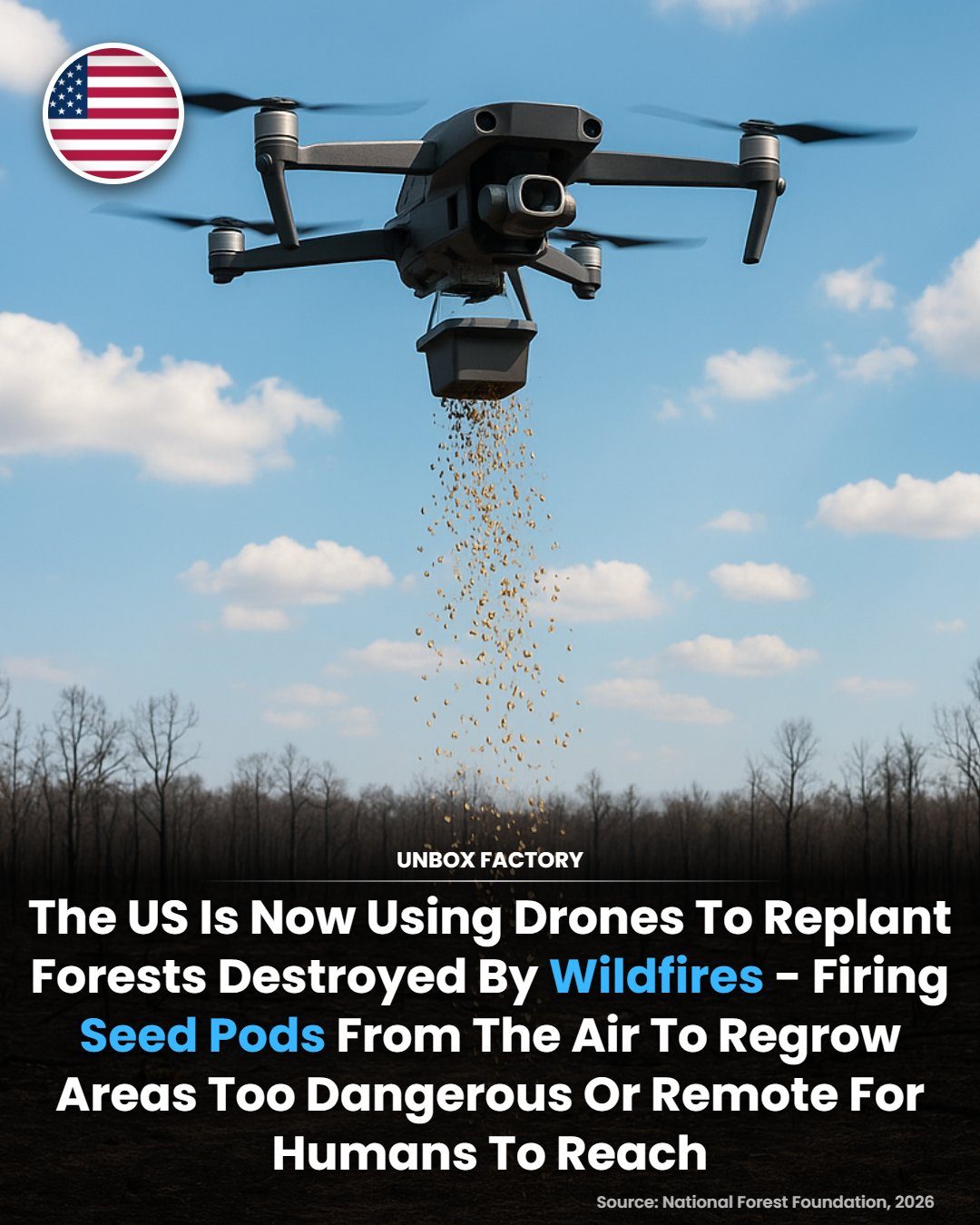
Drone Reforestation: A Revolutionary Approach to Restoring Wildfire-Damaged Landscapes
The United States is at the forefront of a groundbreaking initiative to restore forests ravaged by wildfires using autonomous drones. These advanced machines are equipped to fire biodegradable seed pods directly into burned landscapes, making reforestation possible in areas that are difficult or dangerous for humans to access. This technology is not just a novel idea; it is a practical solution that is already being implemented to accelerate ecosystem recovery.
Why This Matters
Wildfires have become an increasingly pressing issue, burning millions of acres across North America each year. Traditional reforestation methods, which involve manual planting, are often slow, expensive, and unsafe in the aftermath of wildfires. This is where drone-assisted reforestation comes into play, offering a scalable and efficient solution to restore these damaged ecosystems. By planting tens of thousands of seed pods in a single day, drones can dramatically speed up the recovery process, making it possible to rebuild forests, capture carbon, and protect biodiversity.
The Technology Behind Drone Reforestation
Drone reforestation is not just about flying over a landscape and dropping seeds. The technology involves a careful combination of precision engineering and ecological science.
Precision Planting
Modern reforestation drones are equipped with advanced GPS systems and high-precision cameras that allow them to navigate and plant seeds in the most challenging terrains. These drones can fly over steep mountains, remote terrains, and hazardous areas, ensuring that even the most inaccessible regions are not left behind in the reforestation effort. The drones are programmed to release biodegradable seed pods containing a variety of tree species tailored to the specific ecosystem they are replanting. This ensures that the right types of trees are planted in the right places, maximizing the chances of successful regrowth.
Biodegradable Seed Pods
The seed pods used in drone reforestation are designed to be both effective and environmentally friendly. These pods are made from biodegradable materials that break down over time, leaving no trace behind. Each pod contains a nutrient-rich mixture that supports the growth of the seed, increasing the chances of successful germination and plant growth. The pods are also designed to protect the seeds from harsh environmental conditions, such as extreme temperatures and wildlife, ensuring that they remain viable until they are ready to sprout.
Efficiency and Scalability
One of the most significant advantages of using drones for reforestation is their ability to cover large areas quickly and efficiently. Traditional reforestation methods often involve teams of workers manually planting trees, a process that can be time-consuming and costly. In contrast, a single drone can plant tens of thousands of seed pods in a day, significantly reducing the time and resources required to restore large areas of damaged forest. This scalability makes drone reforestation an ideal solution for addressing the vast areas affected by wildfires each year.
How Drones are Changing the Game
The impact of drone-assisted reforestation goes beyond just planting trees. This technology is revolutionizing the way we approach environmental restoration and sustainability.
Rapid Ecosystem Recovery
Drones can plant seeds in areas that would otherwise remain barren for years, accelerating the recovery of ecosystems. The rapid regrowth of forests helps to stabilize soil, prevent erosion, and restore habitats for wildlife. By planting a diverse range of tree species, drones contribute to the re-establishment of biodiversity, creating healthier and more resilient ecosystems.
Carbon Capture
Forests play a crucial role in capturing and storing carbon, helping to mitigate the effects of climate change. By quickly restoring damaged forests, drones contribute to carbon sequestration, reducing the amount of carbon dioxide in the atmosphere. This makes drone reforestation an essential tool in the fight against climate change, providing a natural solution to a global problem.
Protecting Biodiversity
The diverse range of tree species planted by drones helps to restore habitats for a variety of wildlife. This includes birds, mammals, and insects that depend on forests for survival. By creating a more diverse and resilient ecosystem, drone reforestation supports biodiversity, ensuring that future generations can continue to benefit from the rich natural environments that exist today.
Practical Tips for Implementing Drone Reforestation
While the technology is advanced, there are practical steps that can be taken to implement drone reforestation effectively.
Collaboration with Local Communities
Collaborating with local communities and environmental organizations is crucial for the success of drone reforestation projects. These groups can provide valuable insights into the specific needs of the ecosystem and the best places to plant, ensuring that the reforestation efforts are tailored to the local environment.
Data-Driven Decision Making
Using data from drones and other environmental monitoring tools can help to inform decision-making and improve the effectiveness of reforestation efforts. By analyzing data on soil health, weather patterns, and plant growth, it is possible to optimize the planting process and ensure that the seeds are planted in the most suitable conditions.
Continuous Monitoring
Continuous monitoring of the reforested areas is essential to ensure that the planted seeds are thriving and that the ecosystem is recovering as expected. This can involve using drones to regularly survey the area and collect data on plant growth, soil health, and wildlife activity. By continuously monitoring the reforested areas, it is possible to make adjustments to the planting process and ensure that the reforestation efforts are successful.
Important Takeaways
Drone reforestation is a groundbreaking technology that offers a practical and effective solution to restoring forests damaged by wildfires. By planting tens of thousands of seed pods in a single day, drones can dramatically accelerate ecosystem recovery, contributing to carbon capture and protecting biodiversity. This technology provides a scalable and efficient way to address the vast areas affected by wildfires, making it an essential tool in the fight against environmental degradation.
Conclusion
Drones are revolutionizing the way we approach reforestation, offering a new and efficient tool for restoring damaged ecosystems. By planting seeds in areas that are difficult or dangerous for humans to access, drones can help to rebuild forests, capture carbon, and protect biodiversity. As wildfires continue to ravage landscapes across North America, drone-assisted reforestation emerges as a promising solution to environmental challenges, bringing hope for a greener and more sustainable future.
Watch the Reel
Questions readers ask
How do drones assist in reforesting wildfire damaged areas?
Drones are used to plant seeds in areas affected by wildfires. They fire biodegradable seed pods into landscapes that are hard to reach or dangerous for humans, speeding up the reforestation process.
What are the advantages of using drones for wildfire reforestation?
Drones increase efficiency and safety by accessing remote and dangerous areas. This makes them ideal for planting seeds in post-wildfire landscapes, reducing the time and risk involved in manual planting.
What type of seeds do drones plant in wildfire damaged areas?
Drones plant seeds encased in biodegradable pods. These pods contain a nutrient-rich gel that promotes seed growth and protects the seeds from harsh environmental conditions.
Why is drone reforestation important for wildfire recovery?
Wildfires can destroy vast areas of forest, making traditional reforestation methods slow and costly. Drones help accelerate ecosystem recovery by quickly planting seeds in large, damaged areas.
What are some other uses of drones in forestry besides reforestation?
In addition to reforestation, drones are used for monitoring forest health, tracking wildlife, and assessing damage after wildfires or other environmental events. They provide valuable data for forest management.
Can drones operate safely in areas damaged by wildfires?
Yes, drones are well-suited for post-wildfire environments. They can navigate through difficult terrains and hazardous conditions, making them safer than human crews for these tasks.
What is the impact of drone reforestation on the environment?
The use of drones for reforestation has a positive environmental impact. Drones reduce the need for heavy machinery and human labor, minimizing soil compaction and disturbance in sensitive areas.
Related deep dives
Similar reads based on topic and creator.

Recent articles
Fresh deep dives from the latest Reels we unpacked.
Comments
Be the first to comment.