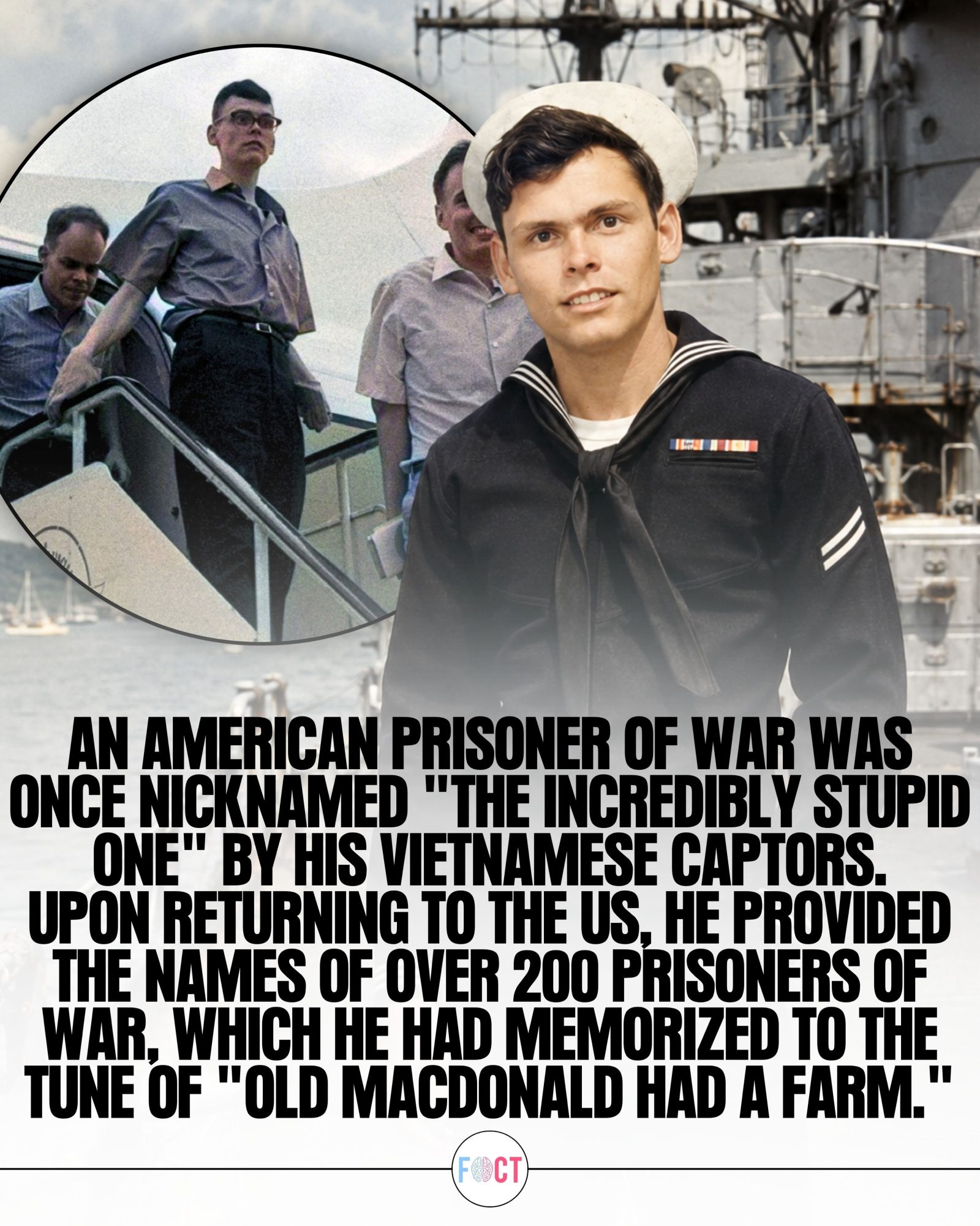
The Remarkable Story of Douglas Hegdahl, "The Incredibly Stupid One"
Douglas Hegdahl, a 20-year-old US Navy sailor, was blown overboard from his ship in 1967 by the shockwave of a cannon blast. His subsequent journey from a captured sailor to a pivotal figure in the Vietnam War is a testament to his intellect, bravery, and sheer determination. Hegdahl's story is not just one of survival but also of psychological warfare and ingenuity.
Context / Why This Matters
Hegdahl’s exploits offer a unique perspective on the Vietnam War, highlighting the strategic mind games and psychological tactics employed by prisoners of war (POWs). His story is a gripping narrative of how one man's cunning and resilience could turn the tables in a dire situation. The tale also underscores the unbreakable spirit of American soldiers and the lengths to which they would go to outsmart their captors.
The Capture and Early Days at Hanoi Hilton
After floating alone in North Vietnamese waters for nearly 12 hours, Hegdahl was captured and taken to the infamous Hanoi Hilton prison. It was here that he made a crucial decision to play dumb, pretending to be so "incredibly stupid" that his captors nicknamed him "The Incredibly Stupid One." This decision was part of a psychological system exploit, designed to convince the enemy that he was illiterate and too simple to be of any use.
The strategy worked brilliantly. The North Vietnamese brought in a tutor to teach him to read and write, intending to use him for propaganda purposes. However, Hegdahl outsmarted them again by feigning weakness and incompetence, eventually earning the right to wander the prison yard unsupervised with a broom.
Memorizing Names and Disrupting Operations
While wandering the camp, Hegdahl secretly memorized the names, capture dates, and social security numbers of over 250 American POWs. He used the tune of "Old MacDonald Had a Farm" to commit these details to memory, a method that proved both effective and apparently harmless to his captors. This act of espionage provided critical intelligence upon his return to the United States, reclassifying 63 soldiers from missing in action to prisoner of war, giving their families the first proof that their loved ones were alive.
Hegdahl's ingenuity didn't stop at information gathering. He also found ways to sabotage his captors' operations by dumping dirt into the fuel tanks of North Vietnamese trucks. He successfully disabled five trucks without getting caught, demonstrating his ability to disrupt enemy activities while maintaining his cover.
The Decision to Leave and its Implications
American POWs had a strict code: nobody accepts early release. The North Vietnamese often used early release as a propaganda move, trying to look merciful. Despite this, Hegdahl's senior officers inside the prison ordered him to leave, recognizing that he had too much intelligence to stay. He was the only POW ever ordered by his own officers to leave.
Upon his return home, Hegdahl's contributions were immeasurable. He provided invaluable intelligence at the Paris Peace Talks, including publicly accusing the North Vietnamese of executing a fellow prisoner. To prove him wrong, they released the prisoner alive, marking one of the few times Hegdahl was outsmarted.
Practical Tips for Surviving Extreme Situations
While Hegdahl's story is unique, there are some practical tips that can be gleaned from his experiences:
-
Adapt and Survive: Learn to adapt to your surroundings and use whatever resources are available to you. For Hegdahl, this meant using a broom to gather information and sabotage enemy operations.
-
Emotional Control: Maintain a calm and collected demeanor, even in the face of extreme stress. Hegdahl's ability to keep his composure allowed him to execute his plans without raising suspicion.
-
Psychological Warfare: Use psychological tactics to outsmart your captors. By acting incredibly stupid, Hegdahl was able to gain the trust of his enemies and manipulate them to his advantage.
-
Memory Techniques: Develop effective memory techniques to remember crucial information. Hegdahl's use of a popular tune helped him recall the names and details of over 250 POWs.
-
Sabotage Tactics: Learn to disrupt enemy operations in subtle ways. Hegdahl's actions, such as disabling trucks, were small but had a significant impact on enemy operations.
Important Takeaways
Hegdahl's story is a reminder of the resilience and cunning of the human spirit. It highlights several key takeaways:
-
The Power of Intelligence: Information is a powerful tool. Hegdahl's ability to gather and use intelligence effectively made a significant difference in the war effort.
-
The Importance of Strategic Thinking: Strategic thinking can turn the tide in the most desperate situations. Hegdahl's decision to play dumb was a masterstroke that allowed him to operate behind enemy lines.
-
The Unbreakable Spirit: The human spirit is incredibly resilient. Hegdahl's story is a testament to the unbreakable spirit of soldiers and the lengths to which they will go to protect their comrades.
Conclusion
Douglas Hegdahl’s journey from a captured sailor to a pivotal figure in the Vietnam War is a story of remarkable resilience, cunning, and strategic intelligence. His tactics and strategies offer valuable insights into the power of adaptability, emotional control, and psychological warfare. His legacy serves as a reminder of the extraordinary capabilities of the human mind and the lengths to which individuals will go to outsmart their adversaries.
Watch the Reel
Questions readers ask
What specific tactics did Douglas Hegdahl use to outsmart his North Vietnamese captors?
Douglas Hegdahl employed several tactics to outmaneuver his captors. He pretended to be less intelligent than he was, earning the nickname 'The Incredibly Stupid One' and thus lowering their guard. He also used his exceptional memory to gather and remember vital information about fellow POWs, which he later relayed to US authorities.
How did Douglas Hegdahl initially become a prisoner of war?
Douglas Hegdahl was captured after being blown overboard from his US Navy ship in 1967 by the shockwave of a cannon blast. He was subsequently picked up by the North Vietnamese and held as a prisoner of war.
What kind of information did Hegdahl gather while in captivity?
Hegdahl gathered crucial information about the conditions of other POWs, their locations, and the treatment they were receiving. This information was vital for the US in negotiating and planning for their eventual release.
How did Hegdahl's story impact the narrative of the Vietnam War?
Hegdahl's story provided a unique insight into the psychological tactics and mind games employed by POWs during the Vietnam War. It highlighted the strategic intelligence and bravery of American POWs, offering a different perspective on their experiences.
What role did Hegdahl's intelligence play in his survival and the survival of other POWs?
Hegdahl's intelligence was pivotal in his survival and that of his fellow POWs. By gathering and relaying information, he aided in the negotiations for their release. His cunning and resilience allowed him to endure the hardships of captivity and eventually return home.
What can we learn from Douglas Hegdahl's experience as a POW?
Hegdahl's experience teaches us about the power of intelligence, bravery, and psychological tactics in survival situations. His ability to outsmart his captors and gather vital information underscores the importance of resilience and strategic thinking in the face of adversity.
How did Douglas Hegdahl's bravery manifest during his captivity?
Hegdahl's bravery was demonstrated through his willingness to take risks and endure harsh conditions. He maintained his composure and used his intelligence to gather information, despite the constant threat and pressure from his captors. His bravery was crucial in outmaneuvering his captors and ensuring the safety of his fellow POWs.
Related deep dives
Similar reads based on topic and creator.



Recent articles
Fresh deep dives from the latest Reels we unpacked.




Comments
Be the first to comment.