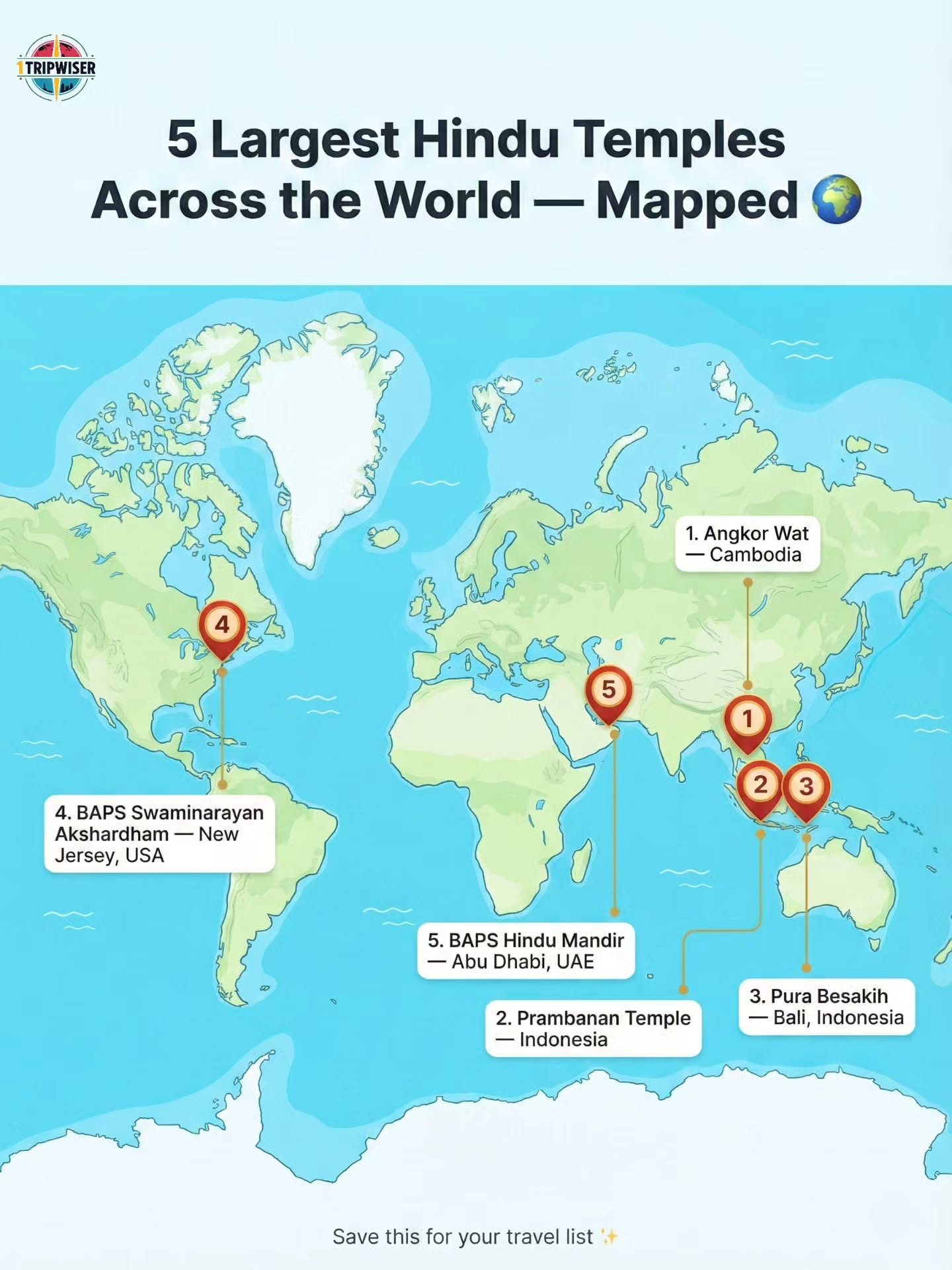
The Five Largest Hindu Temples Around the World
Hindu temples around the world are renowned for their architectural beauty and spiritual significance. Here, we'll explore the five largest Hindu temples that are not only impressive in size but also hold immense cultural and religious importance.
Why These Temples Matter
These temples are not just architectural marvels but also significant cultural and religious sites for Hindus worldwide. They attract millions of visitors annually, offering unique insights into Hinduism's rich history and diverse practices. Understanding these temples provides a deeper appreciation for the global impact of Hinduism and its architectural heritage.
The Five Largest Hindu Temples
BAPS Mandir, Abu Dhabi, UAE
Nestled in the heart of Abu Dhabi, the BAPS Mandir, also known as the BAPS Swaminarayan Mandir Abu Dhabi, is one of the largest Hindu temples outside of India. Constructed using traditional Hindu architecture, the temple is known for its intricate carvings and beautiful stonework. The temple's construction was overseen by the Bochasanwasi Shri Akshar Purushottam Swaminarayan Sanstha (BAPS) organization, which has built numerous temples worldwide.
Angkor Wat, Cambodia
Angkor Wat, located in Siem Reap, Cambodia, is one of the most famous and largest Hindu temples in the world. Built during the Khmer Empire, it is a stunning example of Khmer architecture. The temple complex is adorned with intricate carvings and bas-reliefs depicting scenes from Hindu mythology. It was originally dedicated to the Hindu god Vishnu and later became a significant cultural and religious site, attracting millions of visitors each year.
Prambanan Temple, Indonesia
The Prambanan Temple, located on the island of Java in Indonesia, is another architectural gem and the largest Hindu temple in Indonesia. Dedicated to the Trimurti, the expression of God as the Creator (Brahma), the Preserver (Vishnu), and the Destroyer (Shiva), the temple is renowned for its towering spires and intricate reliefs. The temple complex, a UNESCO World Heritage site, offers a unique blend of Hindu and Buddhist influences, reflecting Indonesia's rich cultural heritage.
Pura Besakih, Bali, Indonesia
Pura Besakih, also known as the "Mother Temple," is the largest and holiest temple in Bali, Indonesia. Located on the slopes of Mount Agung, it is a complex of 23 separate temples. Each temple within the complex is dedicated to different deities, such as Shiva, Vishnu, and Brahma. The temple's stunning location and historical significance make it a must-visit for pilgrims and tourists alike. The intricate architecture and traditional ceremonies add to its allure.
BAPS Swaminarayan Akshardham, New Jersey, USA
Located in Robbinsville, New Jersey, the BAPS Swaminarayan Akshardham is one of the largest Hindu temples in the Western Hemisphere. This magnificent temple, built by the BAPS organization, showcases the rich heritage of Hinduism through its beautiful architecture and intricate carvings. The temple complex includes a cultural center, a museum, and a vast garden, making it a comprehensive cultural and spiritual destination.
Practical Tips for Visiting These Temples
Planning Your Trip
Visiting these temples requires careful planning. Research the best time to visit, as some temples may have specific periods when they are more accessible. For example, Angkor Wat is best visited during the dry season, from November to April, when the weather is pleasant and the crowds are relatively smaller. Similarly, Prambanan Temple is more comfortable to explore during the cooler months.
Dress Appropriately
Most Hindu temples have a strict dress code. Visitors are expected to dress modestly, covering their shoulders and knees. In some temples, you may be required to remove your shoes before entering. Carrying a scarf or shawl can be useful for covering up when needed.
Respect Local Customs
Respecting local customs and traditions is essential when visiting these temples. Follow the guidelines provided, such as removing shoes, not using flash photography, and being quiet and respectful. Engaging with local guides can enhance your experience by providing deeper insights into the temple's history and cultural significance.
Essential Items to Carry
Carry essential items such as water, sunscreen, and comfortable walking shoes. Many of these temples involve a lot of walking, so being prepared can make your visit more enjoyable. Also, keep a small bag for any offerings or souvenirs you may purchase.
Important Takeaways
Visiting the largest Hindu temples around the world is a journey of cultural and spiritual discovery. Each temple offers a unique perspective on Hinduism's rich history and architectural brilliance. Whether you are a devotee or a curious traveler, these temples provide an unforgettable experience that celebrates the beauty and diversity of Hindu culture.
Conclusion
Exploring the five largest Hindu temples around the world is a journey that transcends time and space. From the architectural marvels of Angkor Wat and Prambanan Temple to the spiritual significance of Pura Besakih and BAPS Mandir, each temple offers a unique glimpse into the rich tapestry of Hinduism. Their beauty, history, and cultural importance make them must-visit destinations for anyone interested in travel and spirituality.
Watch the Reel
Questions readers ask
What makes the BAPS Mandir in Abu Dhabi unique among the largest Hindu temples?
The BAPS Mandir in Abu Dhabi is unique for several reasons. It is one of the first traditional Hindu stone temples in the Middle East, constructed without using any steel or concrete. The temple boasts intricate carvings and a stunning display of Hindu architecture, making it a significant cultural and religious site for Hindus in the region.
How does Angkor Wat, a World Heritage Site, relate to Hinduism?
Angkor Wat, located in Cambodia, is renowned for its association with Hinduism, particularly during the Khmer Empire. The temple was originally dedicated to the Hindu god Vishnu and is a testament to the religious and architectural achievements of the Khmer civilization. Angkor Wat's immense scale and intricate design showcases the profound influence of Hinduism in Southeast Asia.
What is the significance of the Prambanan Temple in Indonesia among the top five Hindu temples?
Prambanan Temple in Indonesia holds immense significance due to its architectural grandeur and historical context. This 9th-century temple complex is dedicated to the Trimurti, the expression of God as the Creator, Preserver, and Destroyer. Prambanan's intricate carvings and towering shikharas make it a standout among the world's largest Hindu temples, attracting visitors from around the globe.
Are there any notable Hindu temples in the United States?
While the article focuses on the largest temples, there are notable Hindu temples in the United States, such as the Swaminarayan Akshardham in New Jersey and the Sri Meenakshi Temple in Pennsylvania. These temples serve as important cultural and spiritual centers for the Hindu community in the United States, offering a rich experience of Hindu architecture and traditions.
Why is a map of Hindu temples useful for visitors?
A map of Hindu temples is useful for visitors as it helps them plan their pilgrimages or visits effectively. It provides a visual guide to the locations of significant temples, allowing visitors to explore the architectural highlights and understand the global distribution of Hinduism. Additionally, a temple map can assist in navigating between multiple sites, enhancing the overall experience of discovering Hinduism's most majestic temples.
What are some key features to look for when visiting these world-famous Hindu temples?
When visiting these world-famous Hindu temples, visitors should look out for intricate carvings, ornate sculptures, and grand architectural designs. Each temple has unique highlights, such as the detailed stonework at the BAPS Mandir in Abu Dhabi, the vast moats at Angkor Wat, or the towering shikharas at Prambanan. Paying attention to these features will enhance the visitor's appreciation for the craftsmanship and cultural significance of these sites.
How do these temples serve as cultural and religious centers?
These temples serve as vibrant centers of cultural and religious importance by hosting festivals, ceremonies, and community gatherings. They provide a place for worship, spiritual reflection, and cultural preservation. Visiting these temples offers an immersive experience into the practices, traditions, and history of Hinduism, fostering a deeper understanding of the religion's global influence.
Related deep dives
Similar reads based on topic and creator.




Recent articles
Fresh deep dives from the latest Reels we unpacked.




Comments
Be the first to comment.